MCQ
Polarization of light confirms :
- ALongitudinal wave nature of light
- BTransverse wave nature of light
- CThe particle nature of light
- DQuantum nature of light
Generate a complete, print-ready paper with questions like this in minutes — across 16+ boards, with answer keys.
In the figure magnetic energy stored in the coil is
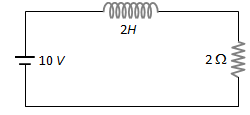
|
(a) Zero |
(b) Infinite |
(c) 25 joules |
(d) None of the above |
At room temperature, copper has free electron density of 8.4  per
per  . The copper conductor has a cross-section of 10–6 m2 and carries a current of 5.4 A. The electron drift velocity in copper is
|
(a) 400 m/s |
(b) 0.4 m/s |
(c) 0.4 mm/s |
(d) 72 m/s |
A metallic sphere has a charge of 10μC. A unit negative charge is brought from A to B both 100 cm away from the sphere but A being east of it while B being on west. The net work done is
|
(a) Zero |
(b) 2/10 joule |
(c) -2/10 joule |
(d) -1/10 joule |
An example of a diamagnetic substance is
|
(a) Aluminium |
(b) Copper |
(c) Iron |
(d) Nickel |
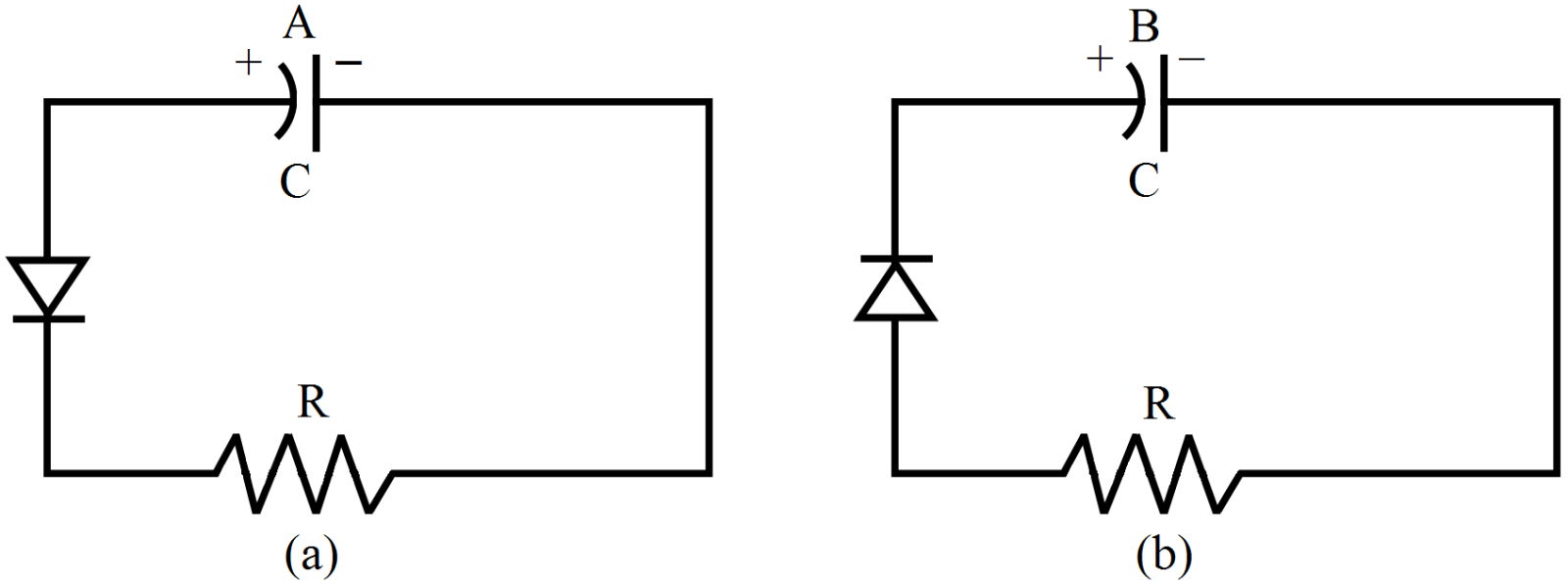
Four charges are placed on corners of a square as shown in figure having side of 5cm. If Q is one microcoulomb, then electric field intensity at centre will be
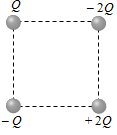
|
(a) 1.02 |
(b) 2.04 |
|
(c) 2.04 |
(d) 1.02 |
A straight wire carrying a current  runs along the axis of a circular current
  . Then the force of interaction between the two current carrying conductors is
|
(a) ∞ |
(b) Zero |
(c) |
(d) |


