MCQ
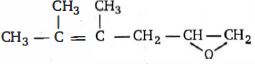
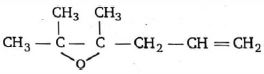
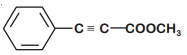
Predict the major product of the reaction.

  • A


  • C
    $\begin{matrix}
       C{{H}_{3}}\,\,C{{H}_{3}}\,\,\,\,\,\,\,\,\,\,\,\,\,\,\,\,\,\,\,\,\,\,\,\,\,\,\,  \\
       |\,\,\,\,\,\,\,\,\,|\,\,\,\,\,\,\,\,\,\,\,\,\,\,\,\,\,\,\,\,\,\,\,\,\,\,\,\,\,\,\,\,\,\,\,  \\
       C{{H}_{3}}-C=C-C{{H}_{2}}-CH-C{{H}_{2}}  \\
       \,\,\,\,\,\,\,\,\,\,\,\,\,\,\,\,\,\,\,\,\,\,\,\,\,\,\,\,\,\,\,\,\,\,\,\,\,\,\,\,\,\,\,\,\,\,\,\,\,\,\,\,\,|\,\,\,\,\,\,\,\,\,\,\,\,\,|  \\
       \,\,\,\,\,\,\,\,\,\,\,\,\,\,\,\,\,\,\,\,\,\,\,\,\,\,\,\,\,\,\,\,\,\,\,\,\,\,\,\,\,\,\,\,\,\,\,\,\,\,\,\,\,\,\,\,\,\,OH\,\,\,\,\,OH  \\
    \end{matrix}$
  • D
    $\begin{matrix}
       C{{H}_{3}}\,\,C{{H}_{3}}\,\,\,\,\,\,\,\,\,\,\,\,\,\,\,\,\,\,\,\,\,\,\,\,\,\,\,\,  \\
       |\,\,\,\,\,\,\,\,\,|\,\,\,\,\,\,\,\,\,\,\,\,\,\,\,\,\,\,\,\,\,\,\,\,\,\,\,\,\,\,\,\,\,\,\,\,  \\
       C{{H}_{3}}-C-C-C{{H}_{2}}-CH=C{{H}_{2}}  \\
       |\,\,\,\,\,\,\,\,\,|\,\,\,\,\,\,\,\,\,\,\,\,\,\,\,\,\,\,\,\,\,\,\,\,\,\,\,\,\,\,\,\,\,\,\,\,\,  \\
       OH\,\,OH\,\,\,\,\,\,\,\,\,\,\,\,\,\,\,\,\,\,\,\,\,\,\,\,\,\,\,\,\,\,  \\
    \end{matrix}$
Answer

Correct option: B.

b
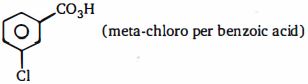
will act as on electrophile and attack on that alkene which has more electron  density. 
$\therefore$ More $\alpha $ -hydrogen

Need a full question paper?

Generate a complete, print-ready paper with questions like this in minutes — across 16+ boards, with answer keys.

Start Generating Free

Similar questions

Which one of the following is an acyl group :
Which of the following is only acidic in nature
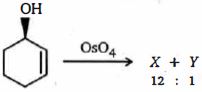
Product $(X)$ will be
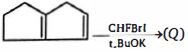
What is the product $(Q)$ of the following reaction ?
If compound $MX_4$ is non-polar without lone pair at central atom than bond angle $ <  XMX$ in compound may be
The standard reduction potential data at $25^{\circ} C$ is given below.

$E ^0\left( Fe ^{3+} . Fe ^{2+}\right)=+0.77 V $

$E ^0\left( Fe ^{2+} . Fe \right)=-0.44 V $

$E ^{\circ}\left( Cu ^{2+} . Cu \right)=+0.34 V $

$E ^0\left( Cu ^{+} . Cu \right)=+0.52 V $

$E ^{\circ}\left( O _2( g )+4 H ^{+}+4 e ^{-} \rightarrow 2 H _2 O \right)=+1.23 V $

$E ^{\circ}\left( O _2( g )+2 H _2 O +4 e ^{-} \rightarrow 4 OH \right)=+0.40 V $

$E ^0\left( Cr ^{3+} . Cr \right)=-0.74 V $

$E ^{\circ}\left( Cr ^{2+} . Cr \right)=-0.91 V$

Match $E ^{\circ}$ of the rebox pair in List $I$ with the values given in List $II$ and select the correct answer using the code given below the lists:

List $I$ List $II$
$P.$ $\quad E ^{\circ}\left( Fe ^{3+}, Fe \right)$ $1.$ $\quad-0.18 V$
$Q.$ $\quad E ^{\circ}\left(4 H _2 O \rightleftharpoons 4 H ^{+}+4 OH ^{-}\right)$ $2.$ $\quad-0.4 V$
$R.$ $\quad E ^{\circ}\left( Cu ^{2+}+ Cu \rightarrow 2 Cu ^{+}\right)$ $3.$ $\quad-0.04 V$
$S.$ $\quad E ^{\circ}\left( Cr ^{3+}, Cr ^{+2}\right)$ $4.$ $\quad-0.83 V$

Codes: $ \quad P \quad Q \quad R \quad S $ 

How many (i) $sp ^{2}$ hybridised carbon atoms and (ii) $\pi$ bonds are present in the following compound?
Given below are two statements:

Statement $I$ : Sulphanilic acid gives esterification test for carboxyl group.

Statement $II$ : Sulphanilic acid gives red colour in Lassigne's test for extra element detection.

In the light of the above statements, choose the most appropriate answer from the options given below :

The correct statement regarding electrophile is
Bond order of $1.5$ is shown by-