MCQ
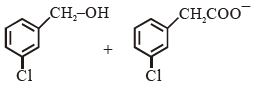
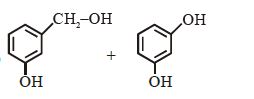
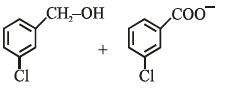
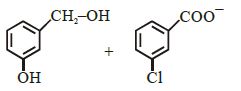
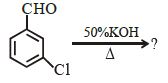
Predict the product in the given reaction
  • A

  • B


  • D

Answer

Correct option: C.

c

Need a full question paper?

Generate a complete, print-ready paper with questions like this in minutes — across 16+ boards, with answer keys.

Start Generating Free

Similar questions

In the given nuclear reaction, how many $\beta$ and $\alpha$ particles are emitted $_{92}{X^{235}} \to {\;_{82}}{Y^{207}}$
Given below are two statements : one is labelled as Assertion A and the other is labelled as Reason $R$. Assertion A : The nuclear density of nuclides ${ }_5^{10} B ,{ }_3^6 Li ,{ }_{26}^{56} Fe ,{ }_{10}^{20} Ne$ and ${ }_{83}^{209} Bi$ can be arranged as $\rho_{ Bi }^{ N }>\rho_{ Fe }^{ N }>\rho_{ Ne }^{ N }>\rho_{ B }^{ N }>\rho_{ Li }^{ N }$.

Reason $R$ : The radius $R$ of nucleus is related to its mass number $A$ as $R=R_0 A^{1 / 3}$, where $R_0$ is a constant.

In the light of the above statement, choose the correct answer from the options given below :
The equation of a travelling wave is $y = 60\cos (1800t - 6x)$ where $y$ is in microns, $t$ in seconds and $x$ in metres. The ratio of maximum particle velocity to velocity of wave propagation is
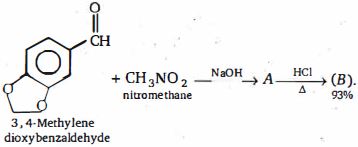
Product $(B)$ is
If ${E_0}$ represents the peak value of the voltage in an ac circuit, the r.m.s. value of the voltage will be
The average translational kinetic energy of ${O_2}$ (molar mass $32$) molecules at a particular temperature is $ 0.048\, eV.$ The translational kinetic energy of ${N_2}$ (molar mass $28$) molecules in $eV$ at the same temperature is
Which of the following statement is incorrect for a spherical body rolling without slipping on a rough horizontal ground at rest?
$n$ drops of $a$ liquid, each with surface energy $E$, joining to form a single drop
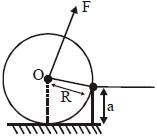
A uniform cylinder of mass $M$ and radius $R$ is to be pulled over a step of height $a (a < R$) by applying a force $F$ at its centre $'O'$ perpendicular to the plane through the axes of the cylinder on the edge of the step ( see figure). The minimum value of $F$ required is 
Periodic time of a satellite revolving above Earth’s surface at a height equal to $R$, radius of Earth, is $R$ [$g$ is acceleration due to gravity at Earth’s surface]