MCQ
Primary and secondary amines are distinguished by
  • A
    $B{r_2}/KOH$
  • B
    $HCl{O_4}$
  • $HN{O_2}$
  • D
    $N{H_3}$

Answer

Correct option: C.
$HN{O_2}$
c
(c) $\mathop {C{H_3}C{H_2} - N{H_2}}\limits_{{{\rm{1}}^{\rm{o}}}} + HN{O_2} \to $$\mathop {C{H_3}C{H_2} - OH\,}\limits_{{\rm{Alcohol}}} + {N_2} + {H_2}O$

$\mathop {{{(C{H_3}C{H_2})}_2}NH + HN{O_2}}\limits_{{2^o}} \to $

$\mathop {{{(C{H_3}C{H_2})}_2}N - N = O}\limits_{{\rm{Nitroso}}\,\,{\rm{amine}}} + {H_2}O$

Need a full question paper?

Generate a complete, print-ready paper with questions like this in minutes — across 16+ boards, with answer keys.

Start Generating Free

Similar questions

$\alpha -D-$ Glucose and $\beta -D-$ Glucose are not
Which of the following shows half filled configuration
Which of the following is correct order of acidity?
The concentration of an aqueous solution of $0.01\,M\,\,C{H_3}OH$ solution is very nearly equal to which of the following
If $(P)\,and\, (Q)$ are major products, then find incorrect statement for given sequence 

$\begin{array}{*{20}{c}} {\,\,\,\,\,\,\,\,\,\,\,\,\,\,\,\,\,\,\,\,\,\,\,\,\,\,\,\,\,\,\,\,OH} \\ {\,\,\,\,\,\,\,\,\,\,\,\,\,\,\,\,\,\,\,\,\,\,\,\,\,\,\,|} \\ {( \pm )\,\,C{H_3} - C{H_2} - CH - C{H_3}} \end{array}$  $\xrightarrow[\Delta ]{{{H_3}P{O_4}}}P\,\xrightarrow[{Ni}]{{{D_2}}}Q$

Which reaction is correct in the conversion of chloroform to acetylene
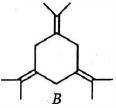
Compound $A$ was treated with a large excess of $CH_3MgBr$. The resulting  product was exposed to $POCl_3$ /pyridine to give compound $B$, as one of  many products

Which of the following compounds can be $A$ ?
The final product obtained by distilling ethyl alcohol with the excess of chlorine and $Ca{(OH)_2}$ is
When $1\,F $ of electricity is passed through acidulated water, ${O_2}$ evolved is ............. $\mathrm{dm}^{3}$
Given below are two statements :

Statement $I$ : The rate law for the reaction $A+B \rightarrow C$ is rate $(r)=k[A]^2[B]$. When the concentration of both $\mathrm{A}$ and $\mathrm{B}$ is doubled, the reaction rate is increased " $\mathrm{x}$ " times.

Statement $II$ :

(Image)

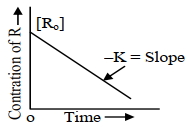
The figure is showing "the variation in concentration against time plot" for a $"y"$ order reaction. The value of $x+y$ is . . . . . .