MCQ
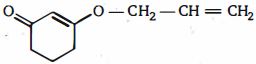
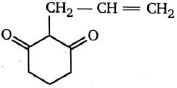
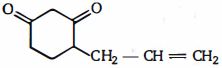
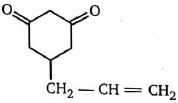
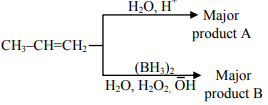
Product $(A)$ is

  • A


  • C

  • D

Answer

Correct option: B.

b

Need a full question paper?

Generate a complete, print-ready paper with questions like this in minutes — across 16+ boards, with answer keys.

Start Generating Free

Similar questions

Bond energy of covalent $O-H$ bond in water is
The correct order of atomic radii in group $13$ elements is
Which one of the following reaction sequences will give an azo dye ?
Match List $I$ with List $II$.

List I (Complex) List $II$ (Type of isomerism)
$A$. $\left[\mathrm{Co}\left(\mathrm{NH}_3\right)_5\left(\mathrm{NO}_2\right)\right] \mathrm{Cl}_2$ $I$. Solvate isomerism
$B$. $\left[\mathrm{Co}\left(\mathrm{NH}_3\right)_5\left(\mathrm{SO}_4\right)\right] \mathrm{Br}$ $II$. Linkage isomerism
$C$. $\left[\mathrm{Co}\left(\mathrm{NH}_3\right)_6\right]\left[\mathrm{Cr}(\mathrm{CN})_6\right]$ $III$. Ionization isomerism
$D$. $\left[\mathrm{Co}\left(\mathrm{H}_2 \mathrm{O}\right)_6\right] \mathrm{Cl}_3$ $IV$. Coordination isomerism

Choose the correct answer from the options given below:

When the electron passes from energy state nearest to the nucleus to third energy level, it will :
$2.5 \mathrm{~g}$ of a non-volatile, non-electrolyte is dissolved in $100 \mathrm{~g}$ of water at $25^{\circ} \mathrm{C}$. The solution showed a boiling point elevation by $2^{\circ} \mathrm{C}$. Assuming the solute concentration in negligible with respect to the solvent concentration, the vapour pressure of the resulting aqueous solution is . . . . . .  $\mathrm{mm}$ of $\mathrm{Hg}$ (nearest integer)

[Given : Molal boiling point elevation constant of water $\left(\mathrm{K}_{\mathrm{b}}\right)=0.52 \mathrm{K.} \mathrm{kg} \mathrm{mol}^{-1}$,

$1 \mathrm{~atm}$ pressure $=760 \mathrm{~mm}$ of $\mathrm{Hg}$, molar mass of water $\left.=18 \mathrm{~g} \mathrm{~mol}^{-1}\right\rfloor$
Total number of secondary amines (Excluding stereo isomer) possible with the molecular formula $C_5H_{13}N$ is
Among halogens, the one which can oxidise water to oxygen is:
 Identify the product A and product B in the following set of reactions. 

 Image 
Consider the statements $S_1$ and $S_2$:
$S_1$: Conductivity always increases with decrease in the concentration of electrolyte.
$S_2$: Molar conductivity always increases with decrease in the concentration of electrolyte.
The correct option among the following is