MCQ
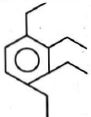
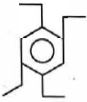
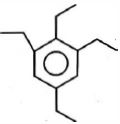
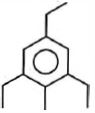
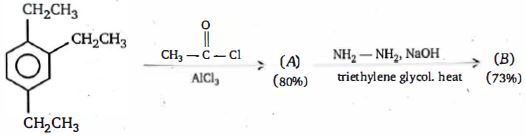
Product $(B)$ is
  • A


  • C

  • D

Answer

Correct option: B.

b

Need a full question paper?

Generate a complete, print-ready paper with questions like this in minutes — across 16+ boards, with answer keys.

Start Generating Free

Similar questions

Select the odd one w.r.t. $EAN$ :-
The main vitamin found in orange and amla:
The slope of Arrhenius Plot $\left(\ln \mathrm{k}\,\, \mathrm{v} / \mathrm{s} \,\,\frac{1}{\mathrm{~T}}\right)$ of first order reaction is $-5 \times 10^{3} \,\mathrm{~K} .$ The value of $\mathrm{E}_{\mathrm{a}}$ of the reaction is. Choose the correct option for your answer. (In $\mathrm{~kJ} \mathrm{~mol}^{-1}$)

$\left[\right.$ Given $\left.\mathrm{R}=8.314 \,\mathrm{JK}^{-1} \,\mathrm{~mol}^{-1}\right]$

Which is not the correct Statement? (At. nos. $Ce = 58,\,Lu = 71,\,La = 57,\,Yb = 70$ )
Which of the following pair is $C_2$ -epimer ?
For a first order reaction $A \rightarrow P$ the temperature $(T)$ dependent rate constant $(k)$ was found to follow the equation $\log_{10}\,k = -(2000) \frac{1}{T}+ 6.$ Then activation energy equation of reaction will be ......... $kJ\,mol^{-1}$ $(\ln x=2.3\times \log x$ and $R = 8 \, J/mole-K)$
Consider the reactions.

$(i)\,\,(CH_3)_2CH - CH_2Br  \xrightarrow{{{C_2}{H_5}OH}}$ $ (CH_3)_2CH - CH_2OC_2H_5 + HBr$

$(ii)\,\,(CH_3)_2CH - CH_2Br  \xrightarrow{{{C_2}{H_5}O^-}} $ $(CH_3)_2CH - CH_2OC_2H_5 + Br^-$

The mechanisms of reactions $(i)$ and $(ii)$ are respectively

The reaction $A\xrightarrow{K}{\text{Product,}}$ is zero order while the reaction $B\xrightarrow{K}{\text{Product,}}$ is first order, for what initial concentration of $A$, the half lives of the two reactions will be equal ?
The rate constant, the activation energy and the arrhenius parameter of a chemical reaction at ${25\,^o}C$ are $3.0 \times {10^{ - 4}}\,{s^{ - 1}}$, $104.4\,kJ\,mo{l^{ - 1}}$ and $6.0 \times {10^{14}}\,{s^{ - 1}}$ respectively. The value of the rate constant as $T \to \infty $ is
A solution is obtained by dissolving $ 12\,g$ of urea (mol.wt. $60$) in a litre of water. Another solution is obtained by dissolving $68.4\,g$ of cane sugar (mol.wt. $342$) in a litre of water at are the same temperature. The lowering of vapour pressure in the first solution is