MCQ
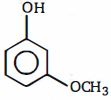
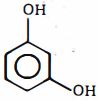
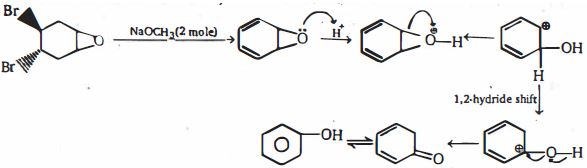
Product $(B)$ of above reaction is

  • A


  • C

  • D

Answer

Correct option: B.

b

Need a full question paper?

Generate a complete, print-ready paper with questions like this in minutes — across 16+ boards, with answer keys.

Start Generating Free

Similar questions

Product $(C)$ of the reaction is
In a constant volume calorimeter, $3.5 \mathrm{~g}$ of a gas with molecular weight $28$ was burnt in excess oxygen at $298.0 \mathrm{~K}$. The temperature of the calorimeter was found to increase from $298.0 \mathrm{~K}$ to $298.45 \mathrm{~K}$ due to the combustion process. Given that the heat capacity of the calorimeter is $2.5 \mathrm{~kJ} \mathrm{~K}^{-1}$, the numerical value for the enthalpy of combustion of the gas in $\mathrm{kJ} \mathrm{mol}^{-1}$ is
If one strand of a DNA has the sequence ATGCTTCA, sequence of the bases in complementary strand is:
Among the following oxide of $\mathrm{p}$ - block elements, number of oxides having amphoteric nature is

$\mathrm{Cl}_2 \mathrm{O}_7, \mathrm{CO}, \mathrm{PbO}_2, \mathrm{~N}_2 \mathrm{O}, \mathrm{NO}, \mathrm{Al}_2 \mathrm{O}_3, \mathrm{SiO}_2, \mathrm{~N}_2 \mathrm{O}_5,\mathrm{SnO}_2$

Under isothermal condition, a gas at $300 \;K$ expands from $0. 1\;L$. to $0.25\;L$. against a constant external pressure of $2\;bar$. The work done by the gas is .... [Given that $1 \;\mathrm{L} \text { bar }=100 \;\mathrm{J}$]
The products $A$ and $B$ obtained in the following reactions, respectively, are

$ 3 \mathrm{ROH}+\mathrm{PCl}_3 \rightarrow 3 \mathrm{RCl}+\mathrm{A} $

$ \mathrm{ROH}+\mathrm{PCl}_5 \rightarrow \mathrm{RCl}+\mathrm{HCl}+\mathrm{B}$

The equilibrium constant for the reaction

$SO_3(g) \rightleftharpoons  SO_2(g)+ \frac{1}{2} O_2(g)$

is $K_c= 4.9 \times 10^{-2}.$ The value of $K_c$ for the reaction

$2SO_2(g) + O_2(g) \rightleftharpoons  2SO_3(g)$

will be

Which of them is not equal to zero for an ideal solution ?
Which is the most suitable reagent among the following to distinguish compound $(3)$ from rest of the compounds ?

$1.\,\,CH_3-C  \equiv  C -CH_3$

$2.\,\,CH_3 - CH_2 - CH_2 - CH_3$

$3. \,\,CH_3 - CH_2C  \equiv CH$

$4.\,\,CH_3 - CH = CH_2$

$R-COOH$ $\xrightarrow{{\operatorname {Reagent}}}$ $R-CH_2-OH$

suitable reagent for the above conversion is