MCQ
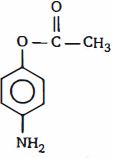
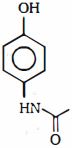
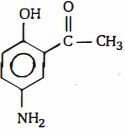
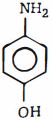
Product $(B)$ of this reaction is
  • A


  • C

  • D

Answer

Correct option: B.

b

Need a full question paper?

Generate a complete, print-ready paper with questions like this in minutes — across 16+ boards, with answer keys.

Start Generating Free

Similar questions

The total no. of stereoisomer of the product is

$C{H_3} - CH = CH - COOH\xrightarrow{{B{r_2}}}$

The electrode potentials for

$Cu^{2+}_{(aq)} + e^-\to Cu^+_{(aq)}$ and

$Cu^+_{(aq)} + e^-\to Cu_{(s)}$

are $+0.15\,V$ and $+0.50\,V$ respectively. The value of $E^o_{Cu^{2+}/Cu}$ will be ............ $\mathrm{V}$

$\text{Phenol }\underset{\text{Distillation}}{\mathop{\xrightarrow{Zn}}}\,A\underset{\text{Conc}\text{. }HN{{O}_{3}}}{\mathop{\xrightarrow{\text{Conc}\text{. }{{H}_{2}}S{{O}_{4}}}}}\,B\underset{NaOH}{\mathop{\xrightarrow{Zn}}}\,C$   

In the above reaction  $A, B$  and $C $  are the following compounds

Carbon and silicon belong to $(IV)$ group. The maximum coordination number of carbon in commonly occurring compounds is $4$, whereas that of silicon is $6$. This is due to
The osmotic pressure of a $5\%$ $(w/V)$ solution of cane sugar at $150\,^oC$ will be ....... $atm.$
When but $-3-$ en $-2-$  ol reacts with aq.$HBr,$ the product formed is
Assuming the bond direction to the $z$ -axis, which of the overlapping of atomic  orbitals of two atom $(A)$ and $(B)$ will result in bonding?

$(I)\, s-$ orbital of $A$ and $P_x$ -orbital of $B$

$(II)\, s-$ orbital of $A$ and $P_z$ orbital of $B$

$(Ill)\, p_y$ -orbital of $A$ and $p_z$ orbital of $B$

$(IV)\, s-$ orbital of both $(A)$ and $(B)$

The correct match between Item $I$ and Item $II$ is
Item $I$  Item $II$
$A$ Allosteric effect $P$ Molecule binding to the active site of enzyme
$B$ Competitive inhibitor $Q$ Molecule crucial for communication in the body
$C$ Receptor $R$ Molecule binding to a site other than the active site of enzyme
$D$ Poison $S$ Molecule binding to the enzyme covalently
According to $MO$ theory the bond orders for $O _2{ }^{2-}$, $CO$ and $NO ^{+}$respectively, are
The ionization energy of nitrogen is more than that of oxygen because