MCQ
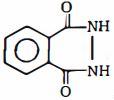
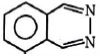
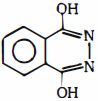
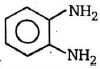
Product $(C)$ is
  • A


  • C

  • D

Answer

Correct option: B.

b

Need a full question paper?

Generate a complete, print-ready paper with questions like this in minutes — across 16+ boards, with answer keys.

Start Generating Free

Similar questions

Which of the following $0.10\,m$ aqueous solutions will have the lowest freezing point ?
Find out $Ka$ for acid when degree of hydrolysis of $0.1\, M\, CH_3COONa$ is $1\%$
Compound $(A)$ will be

$\mathop {(A)}\limits_{{C_{11}}{H_8}O}  \to $ does not under go self aldol condensation

$\mathop {(A)}\limits_{{C_{11}}{H_8}O} \xrightarrow{{{O_3}}}ph\, - \,CHO\, + \,2B\,\xrightarrow{{A{g^ + }}}$ Oxalic acid

When two pairs of electrons are shared, bond is
$N{a_2}{B_4}{O_7}.10{H_2}O \xrightarrow{\Delta } X + NaB{O_2} + {H_2}O$

$X + C{r_2}{O_3}\xrightarrow{\Delta }Y$ (Green coloured)

$X$ and $Y$ are

Fusion of $MnO _2$ with $KOH$ in presence of $O _2$ produces a salt $W$. Alkaline solution of $W$ upon eletrolytic oxidation yields another salt $X$. The manganese containing ions present in $W$ and $X$, respectively, are $Y$ and $Z$. Correct statement($s$) is (are)

$(1)$ $Y$ is diamagnetic in nature while $Z$ is paramagnetic

$(2)$ Both $Y$ and $Z$ are coloured and have tetrahedral shape

$(3)$ In both $Y$ and $Z , \pi$-bonding occurs between $p$-orbitals of oxygen and $d$-orbitals of manganese.

$(4)$ In aqueous acidic solution, $Y$ undergoes disproportionation reaction to give $Z$ and $MnO _2$.
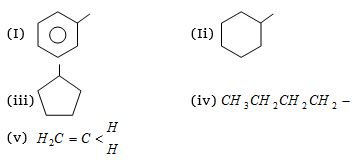
Which of the following carbon contains only one element
Examine the following common chemical structures to which simple functional groups are often attached Which of these systems have essentially planar geometry
$PH_3$ is non-inflammable gas but becomes inflammable owing to the presence of
Which of the following can show geometrical isomerism :-