MCQ
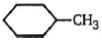
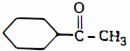
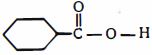
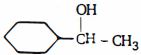
Product $(N)$ is
  • A

  • B


  • D

Answer

Correct option: C.

c

Need a full question paper?

Generate a complete, print-ready paper with questions like this in minutes — across 16+ boards, with answer keys.

Start Generating Free

Similar questions

A compound whose aqueous solution will have the highest $pH$
For the non-stoichiometric reaction $2A + B \to C + D,$ the following kinetic data were  obtained in three separate experiments, all at $298\,K$.

Initial Conc.
 $(A)$
Initial Conc.
 $(B)$

Initial rate of
formation of $C\,(mol\, L^-S^-)$

$0.1\,M$ $0.1\,M$ $1.2 \times 10^{-3}$
$0.1\,M$ $0.2\,M$ $1.2 \times 10^{-3}$
$0.2\,M$ $0.1\,M$ $2.4 \times 10^{-3}$

For the reaction the rate of formation of $C$ will be
The atomic radius of elements of which of the following series would be nearly the same
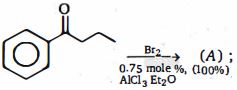
Product $(A)$ of the above reaction is (bromination occur not in the benzene ring)
An alkane forms isomers if the number at least carbon atom is
Positronium consists of an electron and a positron (a particle which has the same mass as an electron, but opposite charge) orbiting round their common centre of mass. Calculate the value of the Rydberg constant for this system.
Which of the following has maximum heat of hydrogennation
With reference to aqua regia, choose the correct option($s$).

$(1)$ Reaction of gold with aqua regia produces $NO _2$ in the absence of air

$(2)$ Aqua regia is prepared by mixing conc. $HCl$ and conc. $HNO _3$ in $3: 1$ ($v/v$) ratio

$(3)$ Reaction of gold with aqua regia produces an anion having $Au$ in +$3$ oxidation state

$(4)$ The yellow colour of aqua regia is due to the presence of $NOCl$ and $Cl _2$

If the total energy of an electron in a hydrogen atom in an excited state is $-3.4\, eV$, then the de-Broglie wavelength of the electron is
Consider the following data for the given reaction  $2 \mathrm{HI}_{(\mathrm{g})} \rightarrow \mathrm{H}_{2(\mathrm{~g})}+\mathrm{I}_{2(\mathrm{~g})}$ .  The order of the reaction is................
  $1$ $2$ $3$
$\mathrm{HI}\left(\mathrm{mol} \mathrm{L}^{-1}\right)$ $0.005$ $0.01$ $0.02$
Rate $\left(\mathrm{mol} \mathrm{L}^{-1} \mathrm{~s}-1\right)$ $7.5 \times 10^{-4}$ $3.0 \times 10^{-3}$ $1.2 \times 10^{-2}$