MCQ
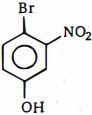
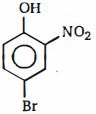
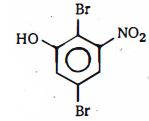
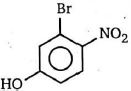
Product of the given reaction is
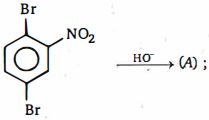
  • A


  • C

  • D

Answer

Correct option: B.

b
$(b)\, -NO_2$ is ortho-para director for $S_NAr$.

Need a full question paper?

Generate a complete, print-ready paper with questions like this in minutes — across 16+ boards, with answer keys.

Start Generating Free

Similar questions

Assertion : $RCOCl, (RCO)_2O$ and $RCOOR$’ all react with Grignard reagents to form $3^o$ alcohols.
Reason : $RCOCl$ reacts with $R_2Cd$ to form ketones but $(RCO)_2O$ and $RCOOR'$ do not react at all.
A catalyst increases the rate of a chemical reaction by
For the disproportionation reaction $2 Cu ^{+}( aq ) \rightleftharpoons Cu ( s )+ Cu ^{2+}( aq )$ at $298\, K$ In $K$ (where $K$ is the equilibrium constant) is....... $\times 10^{-1}$

Given $\left( E _{ Cu ^{2+} / Cu ^{+}}^{0}=0.16 V \right.$ $E _{ Cu ^{+} / Cu }^{0}=0.52 V$$\left.\frac{ RT }{ F }=0.025\right)$

Which will give same osazone when treated with phenyl hydrazine ?

$(A)$ Glucose  $(B)$ Gulose
$(C)$ Fructose  $(D)$ Maltose
$(E)$ Mannose

$108\; \mathrm{g}$ of silver (molar mass $108\; \mathrm{g}\; \mathrm{mol}^{-1}$ ) is deposited at cathode from $AgNO_3 (aq)$ solution by a certain quantity of electricity. The volume (in $L$) of oxygen gas produced at $273 \;\mathrm{K}$ and $1\; bar$ pressure from water by the same quantity of electricity is ............. $\mathrm{litre}$
Which of the following is non reducing sugar
Given below are two statement one is labeled as

Assertion $(A)$ and the other is labeled as Reason $(R)$. Assertion $(A)$: $\mathrm{CH}_2=\mathrm{CH}-\mathrm{CH}_2-\mathrm{Cl}$ is an example of allyl halide

Reason$(R)$: Allyl halides are the compounds in which the halogen atom is attached to $\mathrm{sp}^2$ hybridised carbon atom.

In the light of the two above statements, choose the $most \ appropriate$ answer from the options given below:

Product $(E)$ is
In the reaction sequence :

$CH_2OH-CHOH-CH_2OH$ $\xrightarrow{{KHS{O_4}/\Delta }}(X)\mathop {\xrightarrow{{{{({C_2}{H_5}O)}_3}Al}}}\limits_\Delta  (Y)$ 

$(Y)$ will be:

The noble gas which forms maximum number of compounds is