MCQ
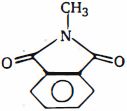
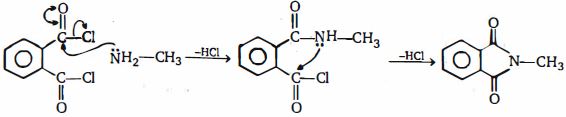
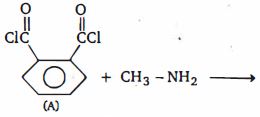
Product of the reaction is 
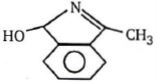
  • B

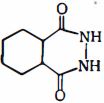
  • C

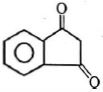
  • D

Answer

Correct option: A.

a

Need a full question paper?

Generate a complete, print-ready paper with questions like this in minutes — across 16+ boards, with answer keys.

Start Generating Free

Similar questions

Which complex follow the Sidgwick $EAN$ rule (where atomic number of $M = 24$)
Assertion : If  ${\lambda ^o}_{N{a^ + }}$ and ${\lambda ^o}_{C{l^ - }}$ are molar limiting conductivity of sodium and chloride ions respectively, then the limiting molar conductivity for sodium chloride is given by the equation :

      ${\Lambda ^o}_{NaCl}\, = \,{\lambda ^o}_{N{a^ + }} + {\lambda ^o}_{C{l^{\, - }}}$

Reason : This is according to Kohlrausch law of independent migration of ions

Which one of the following will produce a primary alcohol by reacting with $C{H_3}MgI$
 $C{H_2} = CH - {(C{H_2})_5}COOH\mathop {\xrightarrow{{{\text{Peroxide}}}}}\limits_{HBr} Z$  where $Z$ is
Number of ambidentate ligands among the following is ................ $\mathrm{NO}_2^{-}, \mathrm{SCN}^{-}, \mathrm{C}_2 \mathrm{O}_4^{2-}, \mathrm{NH}_3, \mathrm{CN}^{-}, \mathrm{SO}_4^{2-}, \mathrm{H}_2 \mathrm{O}$.
The $IUPAC$ name of the Wilkinson's catalyst $[RhCl(PPh_3)_3]$ is
$1$ -Propanol can be prepared from propene by
The transitional element of $ III-B $ group is isomorphic with $A{l_2}{(S{O_4})_3}$. Therefore the compound will be
Number of complexes from the following with even number of unpaired "$d$" electrons is  . . . . . . . . . .

${\left[\mathrm{V}\left(\mathrm{H}_2 \mathrm{O}\right)_6\right]^{3+}, \quad\left[\mathrm{Cr}\left(\mathrm{H}_2 \mathrm{O}\right)_6\right]^{2+}, \quad\left[\mathrm{Fe}\left(\mathrm{H}_2 \mathrm{O}\right)_6\right]^{3+},}$

${\left[\mathrm{Ni}\left(\mathrm{H}_2 \mathrm{O}\right)_6\right]^{3+},\left[\mathrm{Cu}\left(\mathrm{H}_2 \mathrm{O}\right)_6\right]^{2+}}$

[Given atomic numbers: $\mathrm{V}=23, \mathrm{Cr}=24, \mathrm{Fe}=26$,

$\mathrm{Ni}=28, \mathrm{Cu}=29]$

For the reaction $\mathrm{A} \rightarrow \mathrm{B}$, the rate constant $\mathrm{k}\left(\right.$ in $\left.\mathrm{s}^{-1}\right)$ is given by  $\log _{10} \mathrm{k}=20.35-\frac{\left(2.47 \times 10^{3}\right)}{\mathrm{T}}$   . The energy of activation in $\mathrm{kJ} \,\mathrm{mol}^{-1}$ is ..... . (Nearest integer)  $\left[\right.$ Given $\left.: \mathrm{R}=8.314\, \mathrm{~J}\, \mathrm{~K}^{-1}\, \mathrm{~mol}^{-1}\right]$