MCQ
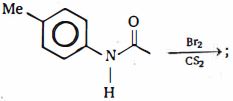
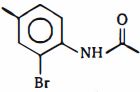
Product of the reaction is
- A
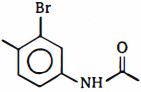
- B
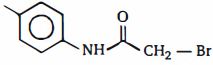
- C
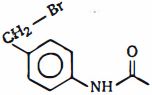
- ✓
Generate a complete, print-ready paper with questions like this in minutes — across 16+ boards, with answer keys.
$\begin{array}{|l|l|l|l|} \hline & Column\,I & & Column\,II \\ & (Reduction\,process) & & (Charge\,required) \\ \hline (a) & 1\,mol\,of\,MnO_4^-\,to\,Mn^{2+} & (p) & 193000\,\,C \\ \hline (b) & 1\,\,mole\,of\,Cr_2O_7^{2-}\,to\,Cr^{3+} & (q) & 289500\,\,C \\ \hline (c) & 1\,\,mole\,of\,Sn^{4+}\,to\,Sn^{2+} & (r) & 482500\,\,C \\ \hline (d) & 1\,mole\,of\,Al^{3+}\,to\,Al & (s) & 579000\,\,C \\ \hline \end{array}$
[Given, molar mass of $A =100 \,g\, mol ^{-1} ; B =200 \,g\, mol ^{-1}$$\left. C =10,000 \,g\, mol ^{-1}\right]$
$I.$ In gaseous phase, the vapour pressure of $CH_3COOH$ is less than expected.
$II.$ In benzene, acetic acid dimerises.
$III.\, CH_3OH$ is more viscous than $H_2O.$
$IV.\, CH_3OCH_3$ is non-polar but soluble in water.
Select the correct set of codes using $T$ for true and $F$ for false statements in given sequence.