MCQ
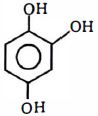
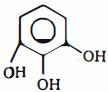
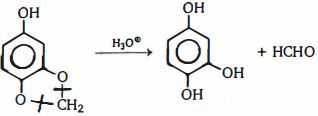
Product of the reaction is/are
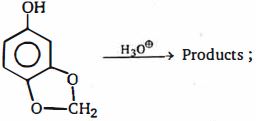
  • A

  • B

  • C
    $HCHO$
  • Both $(a)$ and $(c)$

Answer

Correct option: D.
Both $(a)$ and $(c)$
d

Need a full question paper?

Generate a complete, print-ready paper with questions like this in minutes — across 16+ boards, with answer keys.

Start Generating Free

Similar questions

The maximum sum of the number of neutrons and protons in an isotope of hydrogen is
Mercury is a liquid at $0\,^o C$ because of
Maximum number of oxidation states of transition metal is derived from the following configuration
Calculate the enthalpy change for the reaction

$H_2 + F_2 \longrightarrow 2HF$

given that
Bond energy of $H-H$ bond $= 434\, kJ/mol$
Bond energy of $F-F$ bond $= 158\, kJ/mol$
Bond energy of $H-F$ bond $= 565\, kJ/mol$

.....$ kJ$

In a catalytic conversion of ${N_2}$ to $N{H_3}$ by Haber's process, the rate of reaction was expressed as change in the concentration of ammonia per time is $40 \times {10^{ - 3}}\,mol\,litr{e^{ - 1}}{s^{ - 1}}$. If there are no side reaction, the rate of the reaction as expressed in terms of hydrogen is (in mol $litr{e^{ - 1}}{s^{ - 1}}$)
The number of $f$ electrons in the ground state electronic configuration of $\mathrm{Np}(\mathrm{Z}=93)$ is ....... .
How many $\sigma $ and $\pi $ bonds are there in the molecule of tetracyanoethylene

 $\begin{array}{*{20}{c}} {N \equiv C} \\  {N \equiv C}\end{array}\,\,\left. {} \right\rangle C = C\,\left\langle {} \right.\,\begin{array}{*{20}{c}} {C \equiv N} \\ {C \equiv N} \end{array}$

Which is correctly matched ?
Which of the followng hormones contains iodine
Consider the sulphides $\mathrm{HgS}, \mathrm{PbS}, \mathrm{CuS}, \mathrm{Sb}_{2} \mathrm{~S}_{3}$, $\mathrm{As}_{2} \mathrm{~S}_{3}$ and $\mathrm{CdS}$. Number of these sulphides soluble in $50\, \% \,\mathrm{HNO}_{3}$ is .... .