Question
Prove the following identities:
$\frac{\tan\theta}{(\sec\theta-1)}+\frac{\tan\theta}{(\sec\theta+1)}=2\text{cosec}\theta$

Answer

$\text{LHS}=\frac{\tan\theta}{(\sec\theta-1)}+\frac{\tan\theta}{(\sec\theta+1)}$
$=\frac{\frac{\sin\theta}{\cos\theta}}{\big(\frac{1}{\cos\theta}-1\big)}+\frac{\frac{\sin\theta}{\cos\theta}}{\big(\frac{1+\cos\theta}{\cos\theta}\big)}$
$=\frac{\sin\theta}{1-\cos\theta}+\frac{\sin\theta}{1+\cos\theta}$
$=\frac{\sin\theta(1+\cos\theta)+\sin\theta(1-\cos\theta)}{1-\cos^2\theta}$
$=\frac{\sin\theta+\sin\theta\cos\theta+\sin\theta-\sin\theta\text{ cosec}\theta}{\sin^2\theta}$
$=\frac{2\sin\theta}{\sin^2\theta}=\frac{2}{\sin\theta}$
$=2\text{ cosec}\theta$
$=\text{R.H.S.}$
$\therefore\text{R.H.S.}=\text{L.H.S.}$

Need a full question paper?

Generate a complete, print-ready paper with questions like this in minutes — across 16+ boards, with answer keys.
Start Generating Free

Similar questions

Find the zeros of the following quadratic polynomial and verify the relationship between the zeros and their coefficients:
$\text{q(y)}=7\text{y}^2+\frac{11}{3}\text{y}-\frac{2}{3}$
If P(-5, -3), Q(-4, -6), R(2, -3) and S(1, 2) are the vertices of a quadrilateral PQRS, find its area.
Show that A(-3, 2), B(-5, -5), C(2, -3), and D(4, 4) are the vertices of a rhombus.
How many coins 1.75cm in diameter and $2mm$ thick must be melted to form a cuboid $11cm \times 10cm \times 7cm$?
Two pipes running together can fill a cistern in $3 \frac{1}{13}$ minutes. If one pipe takes 3 minutes more than the other to fill it, find the time in which each pipe would fill the cistern.
Sum of first 55 terms in an A.P. is 3300, find its 28th term.
There is an auditorium with 27 rows of seats. There are 20 seats in the first row, 22 seats in the second row, 24 seats in the third row and so on. Find the number of seats in the 15th row and also find how many total seats are there in the auditorium?
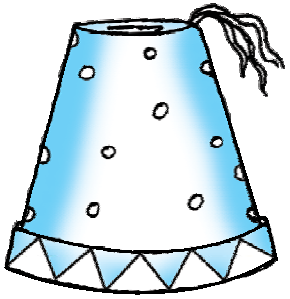
A fez, the cap used by the Turks, is shaped like the frustum of a cone. If its radius on the open side is $10\ cm,$ radius at the upper base is $4\ cm$ and its slant height is $15\ cm$, then find the area of material used for making it. $\Big[\text{Use}\ \pi=\frac{22}{7}.\Big]$
A solid metallic sphere of diameter 28cm is melted and recast into a number of smaller cones, each of diameter $4\frac{2}{3}\text{cm}$ and height 3cm. Find the number of cones so formed.
Solve the following system of equations by the method of cross-multiplication:
$\frac{2}{\text{x}}+\frac{3}{\text{y}}=13,$
$\frac{5}{\text{x}}-\frac{4}{\text{y}}=-2,$ where $\text{x}\neq0$ and $\text{y}\neq0.$