MCQ
Pure water does not conduct electricity because it
- AHas a low boiling point
- ✓Is almost totally unionized
- CIs neutral
- DIs readily decomposed
Generate a complete, print-ready paper with questions like this in minutes — across 16+ boards, with answer keys.
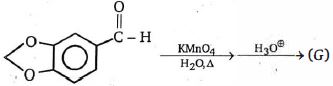
$(i)$ benzene $(ii)$ toluene
$(iii)$ chlorobenzene $(iv)$ phenol
[Given : $\mathrm{R}=0.083 \mathrm{~L} \mathrm{bar} \mathrm{mol}^{-1} \mathrm{~K}^{-1}$ ]
Assume complete dissociation of $\mathrm{NaCl}$
$(i)$ $Zn|Zn^{2+}\,(1\,M)||Cu^{2+}\,(1\,M)|Cu$
$(ii)$ $Zn|Zn^{2+}\,(0.1\,M)||Cu^{2+}\,(1\,M)|Cu$
$(iii)$ $Zn|Zn^{2+}\,(1\,M)||Cu^{2+}\,(0.1\,M)|Cu$
$(iv)$ $Zn|Zn^{2+}(0.1\,M)||Cu^{2+}\,(0.1\,M)|Cu$
$(A)$ The $M ^{3+} / M ^{2+}$ reduction potential for iron is greater than manganese
$(B)$ The higher oxidation states of first row $d$ block elements get stabilized by oxide ion.
$(C)$ Aqueous solution of $Cr ^{2+}$ can liberate hydrogen from dilute acid.
$(D)$ Magnetic moment of $V ^{2+}$ is observed between $4.4-5.2\,BM$
Choose the correct answer from the options given below: