Question
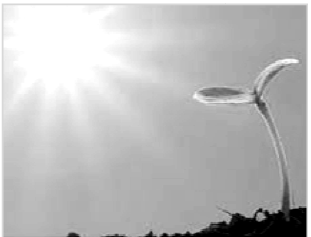
Read the following passage and answer the questions given below: elation between the height of the plant $\left(y^{\prime}\right.$ in cm $)$ with respect to its exposure to is governed by the following equation  $y=4 x-\frac{1}{2} x^2$, where ' $x$ ' is the number of days exposed to the sunlight, for $x \leq 3$
Image

(i) Find  the rate of growth of the plant with respect to the number of days exposed to the sunlight.

(ii) Does the rate of  growth of the plant increase or decrease in the first three days? 
What will be the height of the plant after 2 days?

Answer

$y=4 x-\frac{1}{2} x^2$ 

(i) The rate of growth of the plant with respect to the number of days exposed to sunlight is given by $\frac{d y}{d x}=4-x$

(ii) Let rate of growth be represented by the function $g(x)=\frac{d y}{d x}$

Now, $g^{\prime}(x)=\frac{d}{d x}\left(\frac{d y}{d x}\right)=-1<0$

$\Rightarrow g(x)$ decreases.

So the rate of growth of the plant decreases for the first three days.

Height of the plant after 2 days is $y=4 \times 2-\frac{1}{2}(2)^2=6 \mathrm{~cm}$.

Need a full question paper?

Generate a complete, print-ready paper with questions like this in minutes — across 16+ boards, with answer keys.

Start Generating Free

Similar questions

Suman was doing a project on a school survey, on the average number of hours spent on study by students selected at random. At the end of survey, Suman prepared the following report related to the data. Let X denotes the average number of hours spent on study by students. The probability that X can take the values x, has the following form, where k is some unknown constant.$\text{P(X}=\text{x})\begin{cases}0.2,\text{if x}= 0\\\text{kx},\text{if}\text{ x}=1\text{ or }2\\\text{k}(6-\text{x}),\text{if}\text{ x}=3\text{ or }4\\0,\text{odherwise}\end{cases}$
Based on the above information, answer the following questions.
  1. Find the value of k.
  1. 0.1
  2. 0.2
  3. 0.3
  4. 0.05
  1. What is the probability that the average study time of students is not more than 1 hour?
  1. 0.4
  2. 0.3
  3. 0.5
  4. 0.1
  1. What is the probability that the average study time of students is at least 3 hours?
  1. 0.5
  2. 0.9
  3. 0.8
  4. 0.1
  1. What is the probability that the average study time of students is exactly 2 hours?
  1. 0.4
  2. 0.5
  3. 0.7
  4. 0.2
  1. What is the probability that the average study time of students is at least 1 hour?
  1. 0.2
  2. 0.4
  3. 0.8
  4. 0.6 
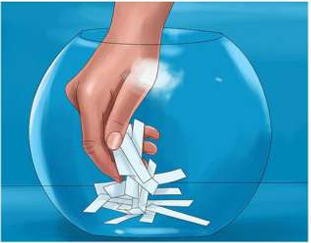
To teach the application of probability a maths teacher arranged a surprise game for 5 of his students namely Govind, Girish, Vinod, Abhishek and Ankit. He took a bowl containing tickets numbered 1 to 50 and told the students go one by one and draw two tickets simultaneously from the bowl and replace it after noting the numbers.

Image

(i) Teacher ask Govind, what is the probability that tickets are drawn by Abhishek, shows a prime number on one ticket and a multiple of 4 on other ticket?

(ii) Teacher ask Girish, what is the probability that tickets drawn by Ankit, shows an even number on first ticket and an odd number on second ticket?

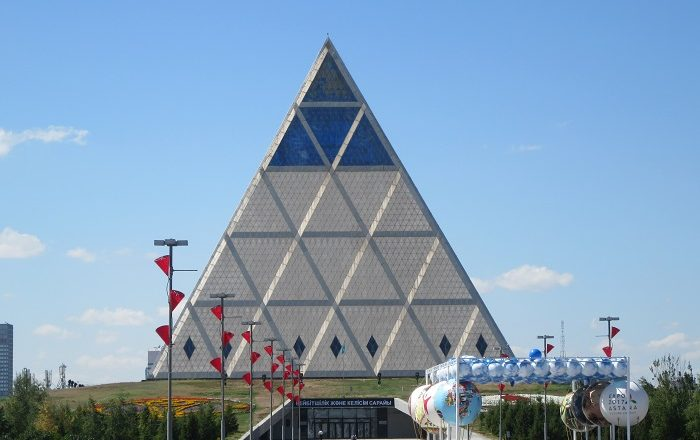
Each triangular face of the Pyramid of Peace in Kazakhstan is made up of $25$ smaller equilateral triangles as shown in the figure.

Using the above information and concept of determinants, answer the following questions.
  1. If the vertices ofoneof the smaller equilateral triangle are $(0, 0), (3,\sqrt{3})$ and $(3,-\sqrt{3}),$ then the area of such triangle is:
  1. $\sqrt{3}\text{ sq}.\text{units}$
  2. $2\sqrt{3}\text{ sq}.\text{units}$
  3. $3\sqrt{3}\text{ sq}.\text{units}$
  4. None of these.
  1. The area of a face of the Pyramid is:
  1. $25\sqrt{3}\text{ sq}.\text{units}$
  2. $50\sqrt{3}\text{ sq}.\text{units}$
  3. $75\sqrt{3}\text{ sq}.\text{units}$
  4. $35\sqrt{3}\text{ sq}.\text{units}$
  1. The length of a altitude of a smaller equilateral triangle is:
  1. $2\ \text{units}$
  2. $3\ \text{units}$
  3. $\sqrt{3}\text{ units}$
  4. $4\ \text{units}$
  1. If $(2, 4), (2, 6)$ are two vertices of a smaller equilateral triangle, then the third vertex will lie on the line represented by:
  1. $\text{x}+\text{y}=5$
  2. $\text{x}=1+\sqrt3$
  3. $\text{x}=2+\sqrt3$
  4. $2\text{x}+\text{y}=5$
  1. Let $A(a, 0), B(0, b)$ and $C(1, 1)$ be three points. If $\frac{1}{\text{a}}+\frac{1}{\text{b}}=1,$ then the three points are:
  1. Vertices of an equilateral triangle.
  2. Vertices of a right angled triangle.
  3. Collinear.
  4. Vertices of an isosceles triangle.
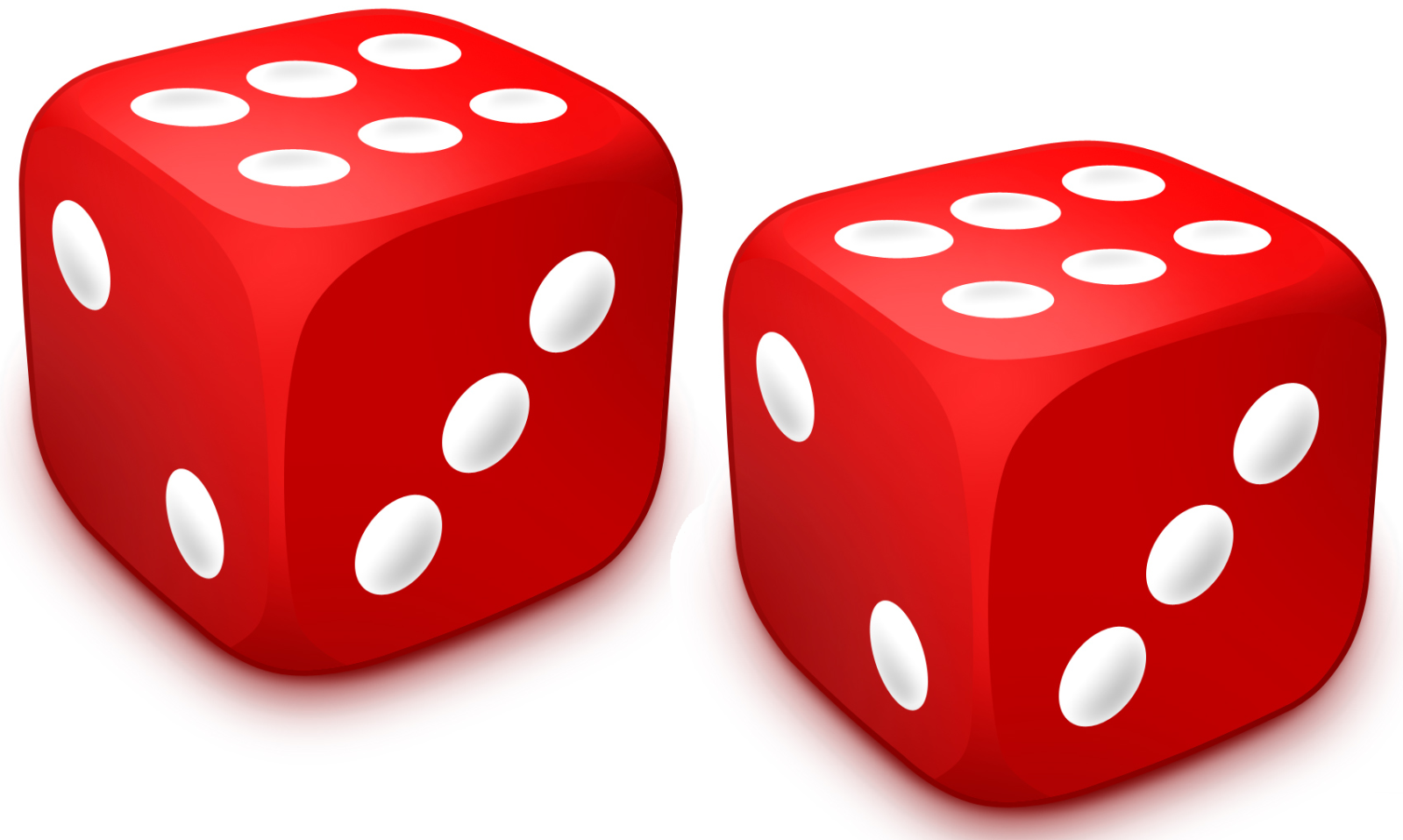
Varun and Jsha decided to play with dice to keep themselves busy at home as their schools are closed due to coronavirus pandemic. Varun throw a dice repeatedly until a six is obtained. He denote the number of throws required by X.
Based on the above information, answer the following questions.
  1. The probability that X = 2 equals.
  1. $\frac{1}{6}$
  2. $\frac{5}{6^2}$
  3. $\frac{5}{3^6}$
  4. $\frac{1}{6^3}$
  1. The probability that X = 4 equals.
  1. $\frac{1}{6^4}$
  2. $\frac{1}{6^6}$
  3. $\frac{5^3}{6^4}$
  4. $\frac{5}{6^4}$
  1. The probability that $\text{X}\geq2$ equals.
  1. $\frac{25}{216}$
  2. $\frac{1}{36}$
  3. $\frac{5}{6}$
  4. $\frac{25}{36}$
  1. The value of $\text{P}(\text{X}\geq6)$ is:
  1. $\frac{5^5}{6^5}$
  2. $1-\frac{5^3}{6^5}$
  3. $\frac{5^3\times61}{6^5}$
  4. $\frac{5^3}{6^4}$
  1. The probability that X > 3 equals.
  1. $\frac{36}{25}$
  2. $\frac{5^2}{6^2}$
  3. $\frac{5}{6}$
  4. $\frac{5^3}{6^3}$
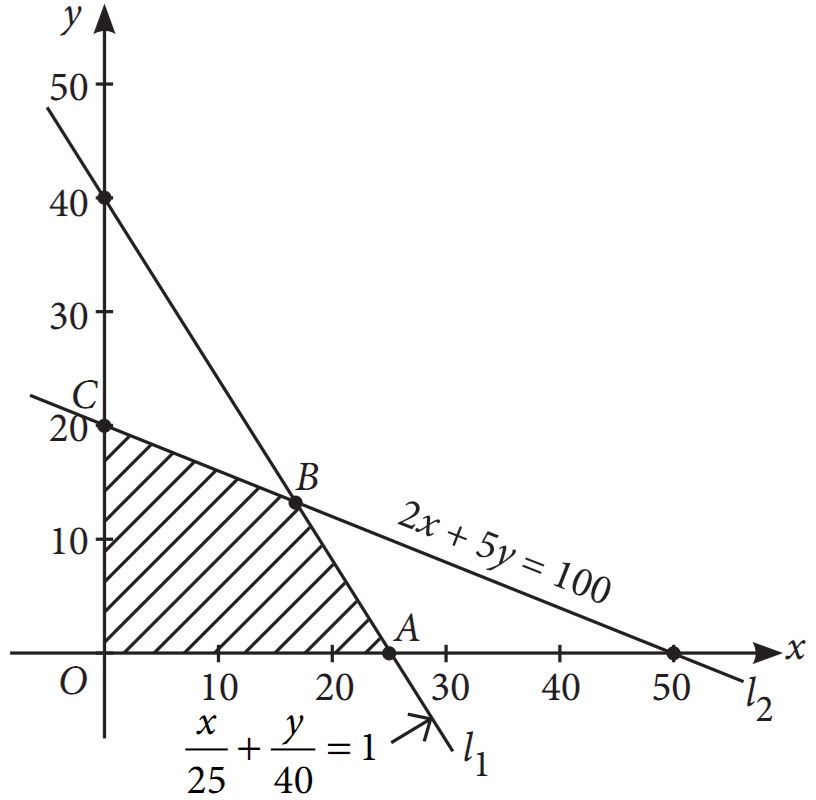
Deepa rides her car at $25 \ km/ hr.$ She has to spend $₹\ 2$ per $\ km$ on diesel and if she rides it at a faster speed of $40 \ km/ hr,$ the diesel cost increases to $₹\ 5$ per $\ km$. She has $₹\ 100$ to spend on diesel. Let she travels $x \ kms$ with speed $25 \ km/ hr$ and $y \ kms$ with speed $40 \ km/ hr.$ The feasible region for the $\text{LPP}$ is shown below:
Based on the above information, answer the following questions.
  1. What is the point of intersection of line $l_1$ and $l_2$?
  1. $\Big(\frac{40}{3},\frac{50}{3}\Big)$
  2. $\Big(\frac{50}{3},\frac{40}{3}\Big)$
  3. $\Big(\frac{-50}{3},\frac{40}{3}\Big)$
  4. $\Big(\frac{-50}{3},\frac{-40}{3}\Big)$
  1. The comer points of the feasible region shown in above graph are:
  1. $(0,25),(20,0),\Big(\frac{40}{3},\frac{50}{3}\Big)$
  2. $(0, 0), (25, 0), (0, 20) $
  3. $(0,0),\Big(\frac{40}{3},\frac{50}{3}\Big),(0,20)$
  4. $(0,0),(25,0),\Big(\frac{50}{3},\frac{40}{3}\Big),(0,20)$
  1. If $Z = x + y$ be the objective function and max $Z = 30.$ The maximum value occurs at point:
  1. $\Big(\frac{50}{3},\frac{40}{3}\Big)$
  2. $(0, 0)$
  3. $(25, 0)$
  4. $(0, 20)$
  1. If $Z = 6x - 9y$ be the objective function, then maximum value of $Z$ is:
  1. $-20$
  2. $150$
  3. $180$
  4. $20$
  1. If $Z = 6x + 3y$ be the objective function, then what is the minimum value of $Z$?
  1. $120$
  2. $130$
  3. $0$
  4. $150$
Megha wants to prepare a handmade gift box for her friend's birthday at home. For making lower part of box, she takes a square piece of cardboard of side $20\ cm.$

Based on the above information, answer the following questions.
  1. If $x \ cm$ be the length of each side of the square cardboard which is to be cut off from corners of the square piece of side $20\ cm,$ then possible value of $x$ will be given by the interval.
  1. $[0, 20]$
  2. $(0, 10)$
  3. $(0, 3)$
  4. None of these
  1. Volume of the open box formed by folding up the cutting corner can be expressed as.
  1. $\text{V}=\text{x}(20-2\text{x})(20-2\text{x)}$
  2. $\text{V}=\frac{\text{x}}{2}(20+\text{x})(20-\text{x})$
  3. $\text{V}=\frac{\text{x}}{3}(20-\text{x})(20+\text{x})$
  4. $\text{V}=\text{x}(20-2\text{x})(20-\text{x)}$
  1. The values of $x$ for which $\frac{\text{dV}}{\text{dX}}=0$, are.
  1. $3, 4$
  2. $0,\frac{10}{3}$
  3. $0, 10$
  4. $10,\frac{10}{3}$
  1. Megha is interested in maximizing the volume of the box. So, what should be the side of the square to be cut off so that the volume of the box is maximum?
  1. $12\ cm$
  2. $8\ cm$
  3. $\frac{10}{3}\text{cm}$
  4. $2\ cm$
  1. The maximum value of the volume is.
  1. $\frac{17000}{27}\text{cm}^3$
  2. $\frac{11000}{27}\text{cm}^3$
  3. $\frac{8000}{27}\text{cm}^3$
  4. $\frac{16000}{27}\text{cm}^3$
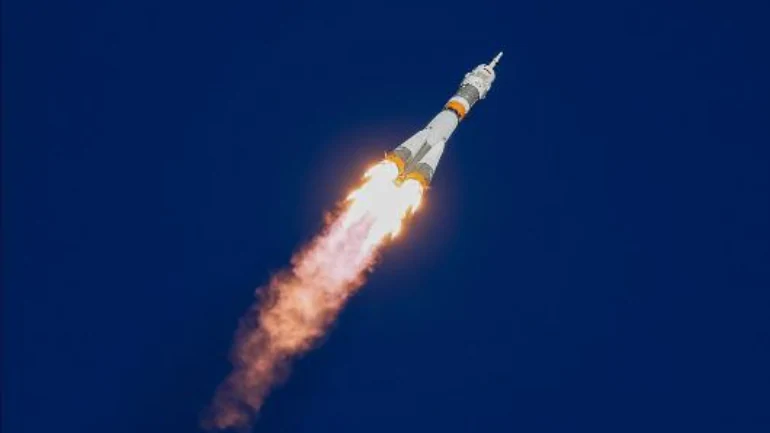
The equation of motion of a rocket are: x = 2t, y = -4t, z = 41, where the time 't' is given in seconds, and the distance measured is in kilometres. Based on the above information, answer the following questions.

  1. What is the path of the rocket?
  1. Straight line.
  2. Circle.
  3. Parabola.
  4. None of these.
  1. Which of the following points lie on the path of the rocket?
  1. (0, 1, 2)
  2. (1, -2, 2)
  3. (2, -2, 2)
  4. None of these
  1. At what distance will the rocket be from the starting point (0, 0, 0) in 10 seconds?
  1. 40km
  2. 60km
  3. 30km
  4. 80km
  1. If the position of rocket at certain instant of time is (3, -6, 6), then what will be the height of the rocket from the ground, which is along the xy-plane?
  1. 3km
  2. 2km
  3. 4km
  4. 6km
  1. At certain instant of time, if the rocket is above sea level, where equation of surface of sea is given by 3x - y + 4z = 2 and position of rocket at that instant of time is (1, -2, 2), then the image of position of rocket in the sea is:
  1. $\Big(\frac{20}{13},\frac{15}{13},\frac{18}{13}\Big)$
  2. $\Big(\frac{-20}{13},\frac{-15}{13},\frac{-18}{13}\Big)$
  3. $\Big(\frac{20}{13},\frac{-15}{13},\frac{18}{13}\Big)$
  4. None of these
Mr. Ajay is taking up subjects of mathematics, physics, and chemistry in the examination. His probabilities of getting a grade $\mathrm{A}$ in these subjects are $0.2,0.3$, and 0.5 respectively.

Image

(i) Find the probability that Ajay gets Grade A in all subjects.
(ii) Find the probability that he gets Grade A in no subjects.

Read the following text carefully and answer the questions that follow:
Shama is studying in class $XII$.
She wants do graduate in chemical engineering.
Her main subjects are mathematics, physics, and chemistry. In the examination, her probabilities of getting grade $A$ in these subjects are $0.2, 0.3,$ and $0.5$ respectively.
Image
$1.$ Find the probability that she gets grade $A$ in all subjects. $(1)$
$2.$ Find the probability that she gets grade $A$ in no subjects. $(1)$
$3.$ Find the probability that she gets grade $A$ in two subjects. $(2)$
$OR$
Find the probability that she gets grade $A$ in at least one subject. $(2)$
If a relation between $x$ and $y$ is such that $y$ cannot be expressed in terms of $x,$ then $y$ is called an implicit function of $x.$ When a given relation expresses $y$ as an implicit function of $x$ and we want to find $\frac{\text{dy}}{\text{dx}},$ then we differentiate every term of the given relation $w.r.t. x,$ remembering that a tenn in $y$ is first differentiated $w.r.t. y$ and then multiplied by $\frac{\text{dy}}{\text{dx}}.$
Based on the ab:ve information, find the value of $\frac{\text{dy}}{\text{dx}}$ in each of the following questions.
  1. $x^3 + x^2y + xy^2 + y^3 = 81$
  1. $\frac{(3\text{x}^2+2\text{xy}+\text{y}^2)}{\text{x}^2+2\text{xy}+3\text{y}^2}$
  2. $\frac{-(3\text{x}^2+2\text{xy}+\text{y}^2)}{\text{x}^2+2\text{xy}+3\text{y}^2}$
  3. $\frac{(3\text{x}^2+2\text{xy}-\text{y}^2)}{\text{x}^2-2\text{xy}+3\text{y}^2}$
  4. $\frac{3\text{x}^2+\text{xy}+\text{y}^2}{\text{x}^2+\text{xy}+3\text{y}^2}$
  1. $x^y = e^{x-y}$
  1. $\frac{\text{x}-\text{y}}{(1+\log\text{x})}$
  2. $\frac{\text{x}+\text{y}}{(1+\log\text{x})}$
  3. $\frac{\text{x}-\text{y}}{\text{x}(1+\log\text{x})}$
  4. $\frac{\text{x}+\text{y}}{\text{x}(1+\log\text{x})}$
  1. $\text{e}^{\sin\text{y}}=\text{xy}$
  1. $\frac{-\text{y}}{\text{x}(\text{y}\cos\text{y}-1)}$
  2. $\frac{\text{y}}{\text{y}\cos\text{y}-1}$
  3. $\frac{\text{y}}{\text{y}\cos\text{y}+1}$
  4. $\frac{\text{y}}{\text{x}(\text{y}\cos\text{y}-1)}$
  1. $\sin^2\text{x}+\cos^2\text{y}=1$
  1. $\frac{\sin2\text{y}}{\sin2\text{x}}$
  2. $-\frac{\sin2\text{x}}{\sin2\text{y}}$
  3. $-\frac{\sin2\text{y}}{\sin2\text{x}}$
  4. $\frac{\sin2\text{x}}{\sin2\text{y}}$
  1. $\text{y}=(\sqrt{\text{x}})^{\sqrt{\text{x}}^\sqrt{\text{x}}...\infty}$
  1. $\frac{-\text{y}^2}{\text{x}(2-\text{y}\log\text{x})}$
  2. $\frac{\text{y}^2}{2+\text{y}\log\text{x}}$
  3. $\frac{\text{y}^2}{\text{x}(2+\text{y}\log\text{x})}$
  4. $\frac{\text{y}^2}{\text{x}(2-\text{y}\log\text{x})}$