Question
Read the text given below and answer the following questions.
Manufacturing industries not only help in modernising agriculture, which forms the backbone of our economy, they also reduce the heavy dependence of people on agricultural income by providing them jobs in secondary and tertiary sectors. Industrial development is a precondition for eradication ofunemployment and poverty from our country. This was the main philosophy behind public sector industries and joint sector ventures in India. It was also aimed at bringing down regional disparities by establishing industries in tribal and backward areas. Export of manufactured goods expands trade and commerce, and brings in much needed foreign exchange. Countries that transform their raw materials into a wide variety of finished goods of higher value are prosperous. India's prosperity lies in increasing and diversifying its manufacturing industries as quickly as possible. Agriculture and industry are not exclusive of each other. They move hand in hand. For instance, the agro-Industries in India have given a major boost to agriculture by raising its productivity.
Answer the following MCQs by choosing the most appropriate option:
  1. Manufacturing industries fall in _________ and agriculture in __________.
  1. Primary, secondary sector.
  2. Secondary, tertiary sector.
  3. Primary, tertiary sector.
  4. Secondary, primary sector.
  1. Manufacturing provides job opportunities to reduce dependance on agriculture. Identify which sector the following jobs belong to?
Jobs created or promoted by manufacturing industries
Sector
(A)
Garment production
1.
Primary
(B)
Research and development
2.
Tertiary
(C)
Banking
3.
Secondary
(D)
Banking
4.
Quarternary
  1. A-1, B-2, C-3, D-4
  2. A-3, B-4, C-2, D-1
  3. A-2, B-3, C-1, D-2
  4. A-4, B-1, C-4, D-3
  1. Which of the following options does not help in modernising agriculture?
  1. Manufacturing farm equipment.
  2. Providing unskilled labour force.
  3. Supplying fertilizers and pesticides.
  4. Producing tube well pumps and sprinklers.
  1. ln order to attract foreign manufacturing firms, a country needs to develop.
  1. Agrarian facilities.
  2. Cultivable lands.
  3. Media facilities.
  4. Infrastructure facilities.

Answer

(i)
(d)
Secondary, primary sector.
(ii)
(b)
A-3, B-4, C-2, D-1
(iii)
(b)
Providing unskilled labour force.
(iv)
(d)
Infrastructure facilities.

Need a full question paper?

Generate a complete, print-ready paper with questions like this in minutes — across 16+ boards, with answer keys.

Start Generating Free

Similar questions

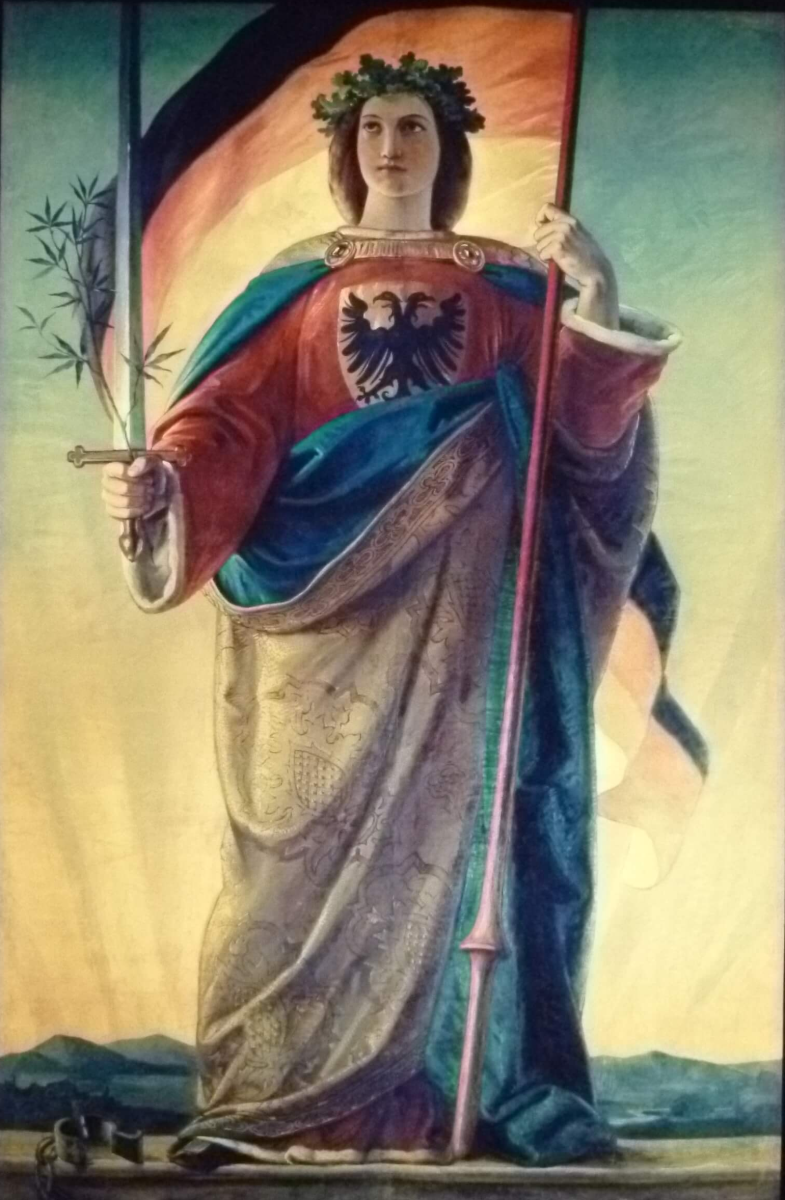
Recognise the picture below and answer the following questions:
  1. Whose painting is it? Who painted it and when?
  2. What does it signify
Maharashtra is a state located in western India, with a population of over 110 million people. The state is home to several large cities, including Mumbai, and has a significant agricultural sector. However, the state is facing a severe water crisis, with its water resources coming under increasing pressure due to climate change, industrialization, and urbanization. The main challenges faced by water resource management in Maharashtra are:
i.Overexploitation of groundwater: Maharashtra is one of the most groundwaterstressed states in India, with the demand for water exceeding the supply. Overexploitation of groundwater for agriculture and urban use has led to a declinein water levels, which has severe implications for the sustainability of water resources.
ii. Pollution of surface water: Industrialization and urbanization have led to the pollution of surface water bodies such as rivers and lakes. The pollution has led to water quality degradation, which poses risks to human health and the environment.
iii. Inefficient irrigation practices: The agricultural sector is the largest user of water in Maharashtra, accounting for around 80% of total water use. However, traditional irrigation practices such as flood irrigation are inefficient and lead to the wastage of water.

Q.1. Mention any two reasons for the water crisis faced by the state of Maharashtra.
Q.2. Despite being the second highest rainfall-receiving state of the country, Maharashtra still faces water crisis. Substantiate this statement in 40 words.
Q.3. Propose any one solution to mitigate the water crisis faced by Maharashtra state.
Read the given extract and answer the following questions.
Democracies are based on political equality. All individuals have equal weight in electing representatives. Parallel to the process of bringing individuals into the political arena on an equal footing, we find growing economic inequalities. A small number of ultra-rich enjoy a highly disproportionate share of wealth and incomes. Not only that, their share in the total income of the country has been increasing. Those at the bottom of the society have very little to depend upon. Their incomes have been declining. Sometimes they find it difficult to meet their basic needs of life, such as food, clothing, house, education and health.
Answer the following MCQs by choosing the most appropriate option:
  1. Democracies are based on which type of equality?
  1. Political equality.
  2. Social equality.
  3. Economic equality.
  4. Religious equality.
  1. Why all individuals have equal weight in electing representatives?
  1. There is political equality for all individuals.
  2. Equal opportunities.
  3. Equal protection of law.
  4. None of these.
  1. What are the basic needs of life?
  1. Wealth.
  2. Food, clothing, house, education and health.
  3. Property.
  4. Foreign Trip.
  1. Why those at the bottom of the society, have very little resources?
  1. Their income is very less.
  2. They are educated.
  3. They are extravagant.
  4. None of these.
Read the source given below and answer the questions that follow:
In 1848, Frédéric Sorrieu, a French artist, prepared a series of four prints visualising his dream of a world made up of ‘democratic and social Republics’, as he called them. As you would recall, artists of the time of the French Revolution personified Liberty as a female figure-here you can recognise the torch of Enlightenment she bears in one hand and the Charter of the Rights of Man in the other. On the earth in the foreground of the image lie the shattered remains of the symbols of absolutist institutions. In Sorrieu’s utopian vision, the peoples of the world are grouped as distinct nations, identified through their flags and national costume. Leading the procession, way past the statue of Liberty, are the United States and Switzerland, which by this time were already nation-states. France, identifiable by the revolutionary tricolour, has just reached the statue. The concept and practices of a modern state, in which a centralised power exercised sovereign control over a clearly defined territory, had been developing over a long period of time in Europe. But a nation-state was one in which the majority of its citizens, and not only its rulers, came to develop a sense of common identity and shared history or descent.
Answer the following MCQs by choosing the most appropriate options:
  1. What was the theme of painting made by French artist?
  1. Constitutional Monarchy.
  2. Absolute Monarchy.
  3. Democratic and Social Republic.
  4. True democracy.
  1. The utopian vision of French artist Frédéric Sorrieu was.
  1. The peoples of the world are grouped as distinct nations, identified through their flags and national costume.
  2. The concepts and practices of a modern state, in which a centralised power exercised sovereign control over a clearly defined territory.
  3. Leading the procession, way past the statue of Liberty, as the United States and Switzerland, which by this time were already nation-states.
  4. France, identifiable by the revolutionary tricolour, has just reached the statue.
  1. French Revolution personified Liberty as a female figure, she bears the torch of Enlighten- ment in one hand and ......... in the other.
  1. Constitution.
  2. Charter of Rights of Man.
  3. Charter of Rights of Woman.
  4. Bible.
  1. Which of the following pairs represent two nation states?
  1. Spain and Portugal.
  2. United States and Switzerland.
  3. Britain and Italy.
  4. Japan and Turkey.
Read the text given below and answer the following questions.
Automobiles provide vehicle for quick transport of goods services and passengers. Trucks, buses, cars, motor cycles, scooters, three-wheelers and multi-utility vehicles are manufactured in India at various centres. After the liberalisation, the coming in of new and contemporary models stimulated the demand for vehicles in the market, which led to the healthy growth of the industry including passenger cars, two and three-wheelers. The industry is located around Delhi, Gurugram, Mumbai, Pune, Chennai, Kolkata, Lucknow, Indore, Hyderabad, Jamshedpur and Bengaluru.
Answer the following MCQs by choosing the most appropriate option:
  1. The coming in of the new and contemporary models after liberalisation has led to:
  1. Quick transport of good services and passengers.
  2. Growth of industry.
  3. Adequate domestic demand of vehicles.
  4. Global development in industry.
  1. Automobile industry has experienced a quantum jump in:
  1. 10 years.
  2. Less than 5 years.
  3. Less than 15 years.
  4. Less than 2 years.
  1. Number of manufacturers of different vehicles are given. Identify the correct option:
Vehicles
 
Number of Manufacturers (at present)
A
Passenger cars
1
15
B
Commercial vehicles
2
14
C
Multi-utility vehicles
3
15
D
Two and three wheelers
4
9
  1. A - 1, B - 2, C - 3, D - 4
  2. A - 1, B- 4, C- 3, D - 2
  3. A - 2, B - 3, C - 4, D - 2
  4. A - 4, B - 2, C - 3, D - 1
  1. After liberalisation and opening of foreign direct investment, there is increase in demand for:
  1. Motor cycles.
  2. Passenger cars.
  3. Multi-utility vehicles.
  4. Commercial vehicles.
Read the given extract and answer the following questions.
The idea of power-sharing has emerged in opposition to the notions of undivided political power. For a long time it was believed that all power of government must reside in one person or group of persons located at one place. It was felt that if the power to decide is dispersed, it would not be possible to take quick decisions and to enforce them. But these notions have changed with the emergence of democracy. One basic principle of democracy is that people are source of all political power. ln a democracy, people rule themselves through institutions of self-government. ln a good democratic government, due respect is given to diverse groups and views that exist in a society. Everyone has a voice in the shaping of public policies. Therefore, it follows that in a democracy, political forms of power-sharing should be distributed amongst as many citizens as possible.
Answer the following MCQs by choosing the most appropriate option:
  1. The basic principle of democracy is:
  1. People are the source of political power.
  2. None can exercise unlimited power.
  3. Power of a government reside in one person.
  4. To reduce conflict between social groups.
  1. Which is a prudent reason for power-sharing?
  1. lt reduces the possibility of conflict between communities and ensures the stability of political order.
  2. Power-sharing is the very spirit of democracy.
  3. Both (a) and (b).
  4. None of these.
  1. Which of the following options describes a good democratic system?
  1. Everyone has a voice in the shaping of public policies.
  2. Power to take quick decision and to enforce them.
  3. All powers reside in the person.
  4. Power is shared among central and state governments.
  1. Which of the following is not one of the aspects of federal division of power?
  1. Sharing of powers among central provincial and local governments.
  2. Division of powers involving higher and lower levels of governments.
  3. The Constitution clearly lays down powers of different levels of government.
  4. There is no vertical division of powers.
Read the passage below and answer the questions that follow:
A second test for Indian federation is the language policy. Our Constitution did not give the status of national language to any one language. Hindi was identified as the official language. But Hindi is the mother tongue of only about 40 per cent of Indians. Therefore, there were many safeguards to protect other languages. Besides Hindi, there are 21 other languages recognised as Scheduled Languages by the Constitution. A candidate in an examination conducted for the Central Government positions may opt to take the examination in any of these languages. States too have their own official languages. Much of the government work takes place in the official language of the concerned State. Unlike Sri Lanka, the leaders of our country adopted a very cautious attitude in spreading the use of Hindi. According to the Constitution, the use of English for official purposes was to stop in 1965. However, many non Hindi speaking States demanded that the use of English continue. In Tamil Nadu, this movement took a violent form. The Central Government responded by agreeing to continue the use of English along with Hindi for official purposes. Many critics think that this solution favoured the English speaking elite. Promotion of Hindi continues to be the official policy of the Government of India. Promotion does not mean that the Central Government can impose Hindi on States where people speak a different language. The flexibility shown by Indian political leaders helped our country avoid the kind of situation that Sri Lanka finds itself in.
  1. How many languages are included in the Eight Schedule of the Indian Constitution?
  1. 15
  2. 22
  3. 20
  4. 21
  1. Which language is recognised as the official language by the Constitution of India?
  1. English
  2. Hindi
  3. Tamil
  4. Sanskrit
  1. According to the constitution, the use of English for official purpose was stop in Which year?
  1. 1955
  2. 1965
  3. 1975
  4. 1985
  1. Why Hindi was not given the status of national language?
  1. Because there were only 40% people speaking Hindi language.
  2. To protect other language.
  3. Both of these.
  4. None of these.
Read the source given below and answer the following questions:Getting a loan from bank is much more difficult than taking loan from informal sources. Absence of collateral security and documentation prevents the poors from getting bank loans. Self Help Group is a group of people usually belonging to one neighbourhood having same social and economic backgrounds. They meet and save money regularly as per their ability. Members of the group can take small loans from the group itself to meet their needs. The group charges interest less than moneylenders on these loans. After one or two years, if the group is regular in savings, it becomes eligible for availing loan from the bank. Loan is sanctioned in the name of group and is meant to create self employment opportunities.
Answer the following MCQs by choosing the most appropriate option:
  1. What is the most essential requirement for taking loan from information services?
  1. Collateral security.
  2. Bribe.
  3. Source from a top officer.
  4. None of these.
  1. SH G is a group of people usually belonging to:
  1. The same caste.
  2. Nearby villages.
  3. One neighbourhood having same social and economic backgrounds.
  4. Different villages.
  1. What facilities do the members have who are in the same group?
  1. They are not given any facility.
  2. They can take small loans from the group itself to meet their needs.
  3. They are debarred from the group.
  4. No facility is given to them.
  1. What benefits are there for a SHG that is regular in savings?
  1. The dispute arise after sometimes.
  2. They are rewarded by the government.
  3. They get jobs in government departments.
  4. They are entitled to raise loan from bank in the name of SHG.
Read the passage below and answer the questions that follow:
Power may also be shared among different social groups, such as the religious and linguistic groups. ‘Community government’ in Belgium is a good example of this arrangement. In some countries there are constitutional and legal arrangements whereby socially weaker sections and women are represented in the legislatures and administration. This type of arrangement is meant to give space in the government and administration to diverse social groups who otherwise would feel alienated from the government. This method is used to give minority communities a fair share in power.
  1. Power sharing means:
  1. System of political arrangement in which power is shared between ministers of the government.
  2. System of political arrangement in which power is shared between different organs of the government.
  3. System of political arrangement in which power is shared between different levels of the government.
  4. All of the above.
  1. Which one is not a benefit of Power sharing?
  1. Reduces the possibilities of conflicts between social groups.
  2. Ensures political stability in the long run.
  3. All the political parties get their expected share.
  4. It upholds the spirit of democracy.
  1. Apart from the Central and State Government, there is a third type of government in Belgium called the:
  1. Regional Government.
  2. State Government.
  3. Union Government.
  4. Community Government.
  1. Which is not a feature of Community government?
  1. Apart from the Central and the State Government, this is a third type of government.
  2. It is elected by the people belonging to one community that is Dutch, French, German speaking.
  3. It is mainly based on cooperation and tolerance.
  4. It does not have the power regarding cultural, educational and language related issues.
Read the case given below and answer the questions that follow:

Groundwater in India

Organised sector covers those enterprises or places of work where the terms of employment are regular and therefore, people have assured work. They are registered by the government and have to follow its rules and regulations which are given in various laws such as the Factories Act, Minimum Wages Act, Payment of Gratuity Act, Shops and Establishments Act, etc. It is called organised because it has some formal processes and procedures. Some of these people may not be employed by anyone but may work on their own but they too have to register themselves with the government and follow the rules and regulations.
Workers in the organised sector enjoy security of employment. They are expected to work only a fixed number of hours. If they work more, they have to be paid overtime by the employer. They also get several other benefits from the employers. What are these benefits? They get paid leave, payment during holidays, provident fund, gratuity, etc. They are supposed to get medical benefits and, under the laws, the factory manager has to ensure facilities like drinking water and a safe working environment. When they retire, these workers get pensions.
The unorganised sector is characterised by small and scattered units which are largely outside the control of the government. There are rules and regulations but these are not followed. Jobs here are low-paid and often not regular. There is no provision for overtime, paid leave, holidays, leave due to sickness etc. Employment is not secure. People can be asked to leave without any reason. When there is less work, such as during some seasons, some people may be asked to leave. A lot also depends on the whims of the employer. This sector includes a large number of people who are self employed and do small jobs such as selling on the street or doing repair work. Similarly, farmers work on their own and hire labourers as and when they require.
Q.1. Give one example of an activity of an unorganised sector.
Q.2. What is applicable for a worker, who works in an organised sector?
Q.3. Why do people prefer to work in an organised sector?