MCQ
Relation between current (i) and drift velocity $\left(v_d\right)$ is :
  • $i=n e A v_d$
  • B
    $i=\frac{n e A}{v_d}$
  • C
    $i=\frac{n e v_d}{A}$
  • D
    $i=\frac{n e}{A v_d}$

Answer

Correct option: A.
$i=n e A v_d$
(a)$i=n e A v_d$

Need a full question paper?

Generate a complete, print-ready paper with questions like this in minutes — across 16+ boards, with answer keys.
Start Generating Free

Similar questions

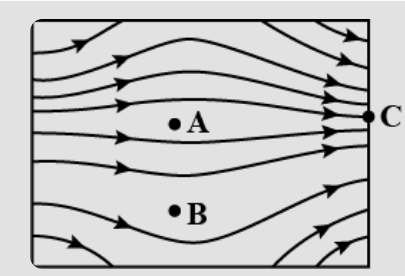
Figure shows the magnetic field lines in a magnetic field. $A, B.$ and $C$ are three points in this field. At what point is the magnetic field strong ?
The laptop PC’s modern electronic watches and calculators use the following for display
$CO_2$ gas is found in which of the following pairs of the planet
A current of $0.1\, A$ circulates around a coil of $100$ $turns$ and having a radius equal to $5\,cm$. The magnetic field set up at the centre of the coil is ($\mu_0 = 4\pi \times 10^{-7} weber/amp-metre$)
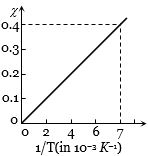
The $\chi - 1/T$ graph for an alloy of paramagnetic nature is shown in Fig. The curie constant is, then....$K$
Imagine rolling a sheet of paper into a cylinder and placing a bar magnet near its end as shown in figure. What can you say about the sign of $\vec B.d\vec A$ for every area $d\vec A$ on the surface ?
A bar magnet is held perpendicular to a uniform magnetic field. If the couple acting on the magnet is to be halved by rotating it, then the angle by which it is to be rotated is....$^o$
Which of the following is an example of a direct band gap intrinsic semiconductor?
No bias is applied to a $P-N$ junction, then the current
Which of the following statements are true regarding Bohr's model of hydrogen atom
(I) Orbiting speed of electron decreases as it shifts to discrete orbits away from the nucleus
(II) Radii of allowed orbits of electron are proportional to the principal quantum number
(III) Frequency with which electrons orbits around the nucleus in discrete orbits is inversely proportional to the principal quantum number
(IV) Binding force with which the electron is bound to the nucleus increases as it shifts to outer orbits Select correct answer using the codes given below
Codes :
