MCQ
Relation between rate constant and temperature by Arrhenius equation is
  • ${\log _e}A = {\log _e}K + \frac{{{E_a}}}{{RT}}$
  • B
    $\log \,K = A\,\frac{{{E_a}}}{{RT}}$
  • C
    ${\log _e}K = {\log _e}A - \frac{{{E_a}}}{{R{T^2}}}$
  • D
    $\log A = RT\,\ln \,{E_a} - \ln \,K$

Answer

Correct option: A.
${\log _e}A = {\log _e}K + \frac{{{E_a}}}{{RT}}$
a
(a)Arrhenius equation is $\log k = \log A - \frac{{{E_a}}}{{RT}}$

Need a full question paper?

Generate a complete, print-ready paper with questions like this in minutes — across 16+ boards, with answer keys.

Start Generating Free

Similar questions

Which of the following is solid in nature
$IUPAC$  name of $\left[ {Pt{{(N{H_3})}_3}(Br)(N{O_2})Cl} \right]Cl$ is
Two open beakers one containing a solvent and the other containing a mixture of that solvent with a non volatile solute are together sealed in a container. Over time
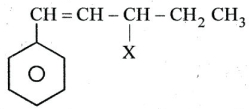
The given compound is an example of $..........$
The mass of non-volatile, non-elctrolyte solute (molar mass $= 50\,g\,mol^{- 1})$  needed to be dissolved in $114\,g$  octane to reduce its vapour pressure to $75\%,$  is .............. $\mathrm{g}$
A molal solution is one that contains one mole of a solute in
For a reaction, $AB_5 \to AB + 4B$ The rate can be expressed in following ways

$\frac{{ - d[A{B_5}]}}{{dt}} = K[A{B_5}]$ ;    $\frac{{d[B]}}{{dt}} = {K_1}[A{B_5}]$

So the correct relation between $K$ and $K_1$ is

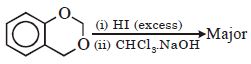
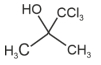
product:-
Reaction of iso-propylbenzene with $O _2$ followed by the treatment with $H _3 O ^{+}$forms phenol and a by-product $P$. Reaction of $P$ with $3$ equivalents of $Cl _2$ gives compound $Q$. Treatment of $Q$ with $Ca ( OH )_2$ produces compound $R$ and calcium salt $S$.

The correct statement($s$) regarding $P , Q , R$ and $S$ is(are)

$(A)$ Reaction of $P$ with $R$ in the presence of $KOH$ followed by acidification gives

$(B)$ Reaction of $R$ with $O _2$ in the presence of light gives phosgene gas

$(C)$ $Q$ reacts with aqueous $NaOH$ to produce $Cl _3 CCH _2 OH$ and $Cl _3 CCOONa$

$(D)$ $S$ on heating gives $P$

The secondary structure of protein is stabilised by: