Question
Scutellum is the single cotyledon found in the monocot embryo only. Explain.

Answer

Embryo of monocors possesses only one coryledon at one end (lateral) of the embryonal axis and this coryledon is called scutellum.
At the lower end, the embryonal axis has radical and root cap enclosed in an undifferentiated sheath called coleorhiza. The portion of the embryonal axis above the level of artachment of scurellum is the epicotyl.

Need a full question paper?

Generate a complete, print-ready paper with questions like this in minutes — across 16+ boards, with answer keys.
Start Generating Free

Similar questions

Describe Miller's experiment with diagram.
In our society a woman is often blamed for not bearing male child. Do you think it is right? Justify.
Many microbial pathogens enter the gut of humans along with food. What are the preventive barriers to protect the body from such pathogens? What type of immunity do you observe in this case?
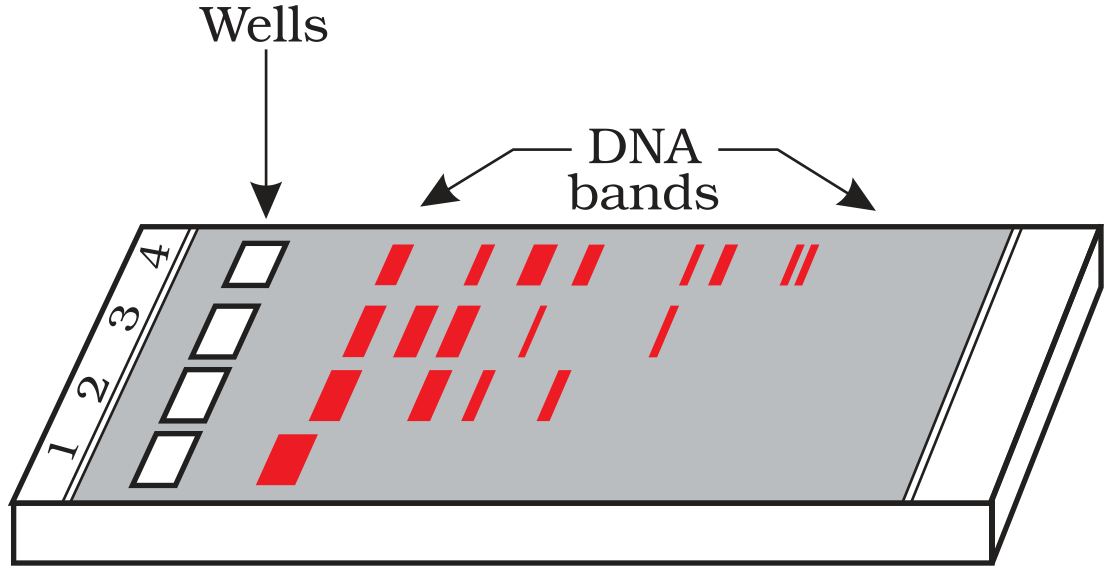
Rajesh was doing gel electrophoresis to purify DNA fragments. Given below is the sketch of the observations of the experiment performed by him.

  1. At which end he would have loaded the samples and where?
  2. Analyse the reason for different positions taken up by the DNA bands.
  3. Elaborate the step he would have followed to visualise DNA bands.
Answer the following questions:
How do flowers reward their insect pollinators? Explain.
To maintain the continuity of its life, Plasmodium protozoa requires both mosquito and human hosts.” Explain.
State the views of Oparin and Haldane on evolution. How does S.L. Miller's experiment support their views?

OR

  1. Explain the theory of abiogenesis.
  2. How did Miller demonstrate experimentally the chemical evolution that happened three billion years ago?
During a medical investigation, an infant was found to possess an extra chromosome 21. Describe the symptoms the child is likely to develop later in the life.
What is the significance of the slope of regression in a species-area relationship?
A couple with normal vision bear a colour blind child. Work out a cross to show how it is possible and mention the sex of the affected child.