Question
Select leaves showing reticulate venation and those showing parallel venation from the list given below and write them in the tabular form:
Peepal, neem, grass, mustard, methi, dhania (coriander), rose, tulsi, mango, sugarcane, maize, mint, wheat, rice.
Answer

S.No.
Reticulate Venation
Parallel Venation
$1.$
Peepal
Grass
$2.$
Xeem
Sugarcane
$3.$
Mustard
Maize
$4.$
Methi
Wheat
$5.$
Dhania (coriander)
  • Rose
  • Tulsi
  • Mango
  • Mint
Rice

Need a full question paper?

Generate a complete, print-ready paper with questions like this in minutes — across 16+ boards, with answer keys.

Start Generating Free

Similar questions


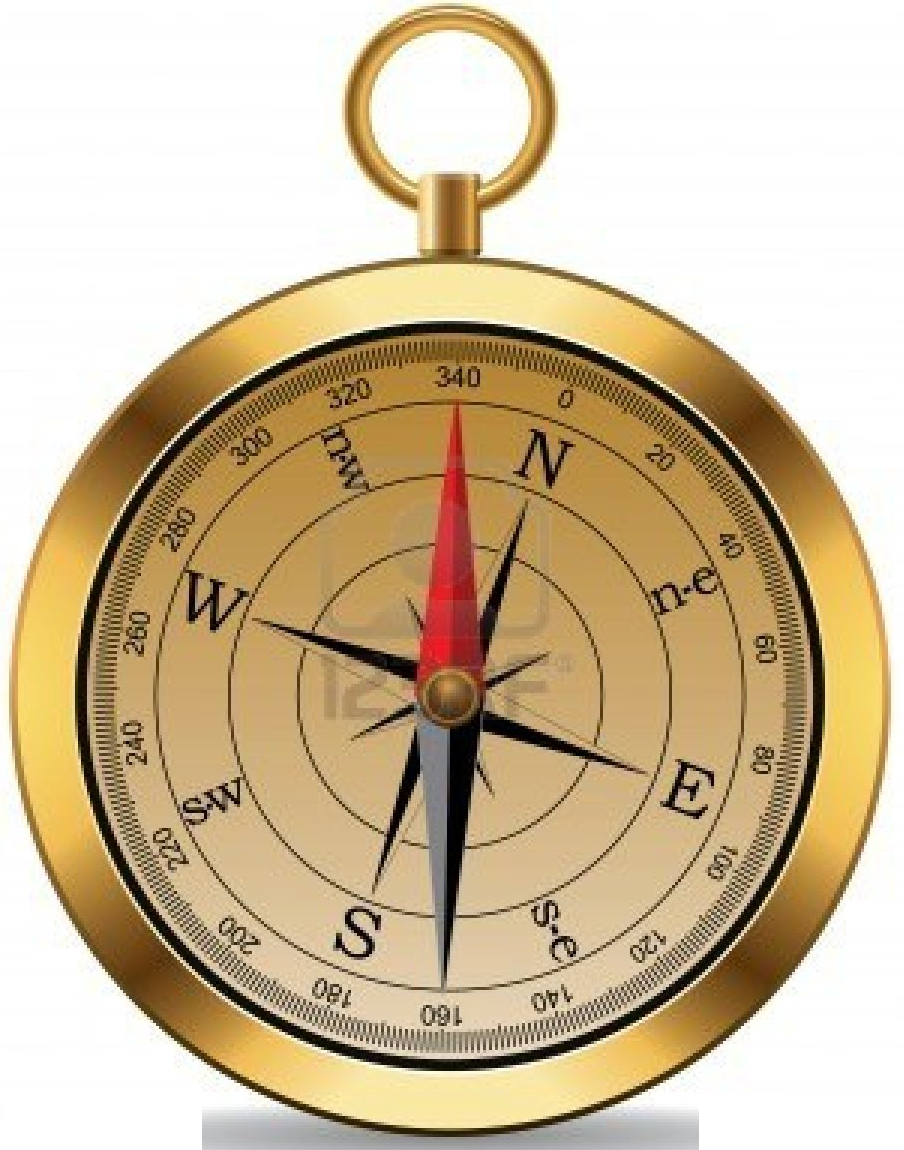
Fig. shows a magnetic campass. What will happen to the position of its needle if you bring a bar magnet near it? Draw a diagram to show the effect on the needle on bringing the bar magnet near it. Also draw the diagram to show the effect when the other end of the bar magnet is brought near it.
In which season is cotton planted? What is its course of growth?
Match the mixtures in Column $I$ with their method of separation in Column $II$.
 
$COLUMN\ I$
 
$COLUMN\ II$
$a$
Oil mixed in water
$i$
Sieving
$b$
Iron powder mixed with flour
$ii$
Hand picking
$c$
Salt mixed with water
$iii$
Decantation
$d$
Lady's finger mixed with french beans
$iii$
Magnet
$e$
Rice flour mixed with kidney beans
$iv$
Evaporation
Read the story titled $\text{“WISE FARMER”}$ and tick the correct option to complete the story.
A farmer was,
  1. Sad/ happy to see his healthy wheat crop ready for harvest. He harvested the crops and left it under the.
  2. Sun/ rain to dry the stalks. To separate the seeds from the bundles of the stalk he.
  3. Handpicked/ threshed them. After gathering the seed grains, he wanted to separate the stones and husk from it. His wife.
  4. Winnowed/ threshed them to separate the husk and later.
  5. Sieved/ handpicked to remove stones from it. She ground the wheat grains and.
  6. Sieved/ filtered the flour. The wise farmer and his wife got a good price for the flour.
Activity.
Collect samples of some solid substances such as sugar, salt, chalk powder, sand and ; sawdust. Take five glasses or beakers. Fill each one of them about two-thirds with water. Add a small amount (spoonful) of sugar to the first glass, salt to the second and similarly, add small amounts of the other susbtances into the other glasses. Stir the contents of each of them with a spoon. Wait for a few minutes. Observe what happens to the substances added to water. Note your observations as shown in Table.
What is meant by a standard unit of measurement? Why is it necessary to have standard units of measurement? Name the SI unit of length. Write its symbol.
Name the food needed:
  1. For strong bones and teeth.
  2. To prevent scurvy.
  3. To avoid constipation.
  4. For warmth.
  5. For growth.
Why should we not burn plastic items?
Read the following paragraph and fill in the blanks using the words you unscrambled.
______$(a)$______ and ______$(b)$______ form the skeleton of the human body. They provide the framework, give ______$(c)$______ to the body and help in ______$(d)$______ They protect the ______$(e)$______ The bones are moved by alternate ______$(f)$______ and ______$(g)$______ of two sets of ______$(h)$______ attached to them.
Differentiate between herbivore, carnivore and omnivores.