Question
Shobhit's father wants to construct a rectangular garden using a brick wall on one side of the garden and wire fencing for the other three sides as shown in figure. He has $200\  ft$ of wire fencing.
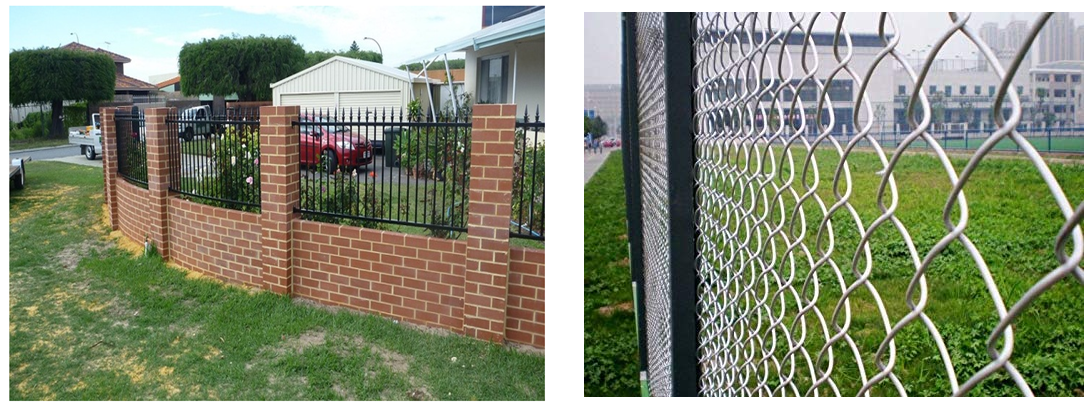
Based on the above information, answer the following questions.
  1. To construct a garden using $200 \ ft$ of fencing, we need to maximise its.
  1. Volume
  2. Area
  3. Perimeter
  4. Length of the side
  1. If $x$ denote the length of side of garden perpendicular to brick wall and $y$ denote the length of side parallel to brick wall, then find the relation representing total amount of fencing wire.
  1. $x + 2y = 150$
  2. $x + 2y = 50$
  3. $y + 2x = 200$
  4. $y + 2x = 100$
  1. Area of the garden as a function of $x,$ say $A(x),$ can be represented as.
  1. $200 + 2x^2$
  2. $x - 2x^2$
  3. $200x - 2x^2$
  4. $200 - x^2$
  1. Maximum value of $A(x)$ occurs at $x$ equals.
  1. $50 \ ft$
  2. $30 \ ft$
  3. $26 \ ft$
  4. $31 \ ft$
  1. Maxi mum area of garden will be.
  1. $2500 \ sq. ft$
  2. $4000 \ sq. ft$
  3. $5000 \ sq. ft$
  4. $6000 \ sq. ft$

Answer

  1. $(b)$ Area
To create a garden using $200 \ ft$ fencing, we need to maximise its area.
  1. $(c) y + 2x = 200$
Required relation is given by $2x + y = 200.$
  1. $(c) 200x - 2x^2$
Area of garden as a function of $x$ can be rep resented as 
$A(x) = x·y $
$= x(200 - 2x) $
$= 200x - 2x^2$​​​​​​​
  1. $(a) 50 \ ft$
$A(x) = 200x - 2x^2 $
$\Rightarrow (x) = 200 - 4x$
For the area to be maximum $A\ '(x) = 0$
$\Rightarrow 200 - 4x =0$
$\Rightarrow x = 50 \ ft​​​​​​​$
  1. $(c) 5000 \ sq. ft$
Maximum area of the garden $= 200(50) - 2(50)^2 $
$= 10000 - 5000 $
$= 5000 \ sq. ft$

Need a full question paper?

Generate a complete, print-ready paper with questions like this in minutes — across 16+ boards, with answer keys.

Start Generating Free

Similar questions

In an office three employees Govind, Priyanka and Tahseen process incoming copies of a certain form. Govind process $50 \%$ of the forms, Priyanka processes $20 \%$ and Tahseen the remaining $30 \%$ of the forms. Govind has an error rate of 0.06 , Priyanka has an error rate of 0.04 and Tahseen has an error rate of 0.03 . 

Image

(i) The manager of the company wants to do a quality check. During inspection he selects a form at random from the days output of processed forms. If the form selected at random has an error, find the probability that the form is NOT processed by Govind.

(ii) Find the probability that Priyanka processed the form and committed an error.

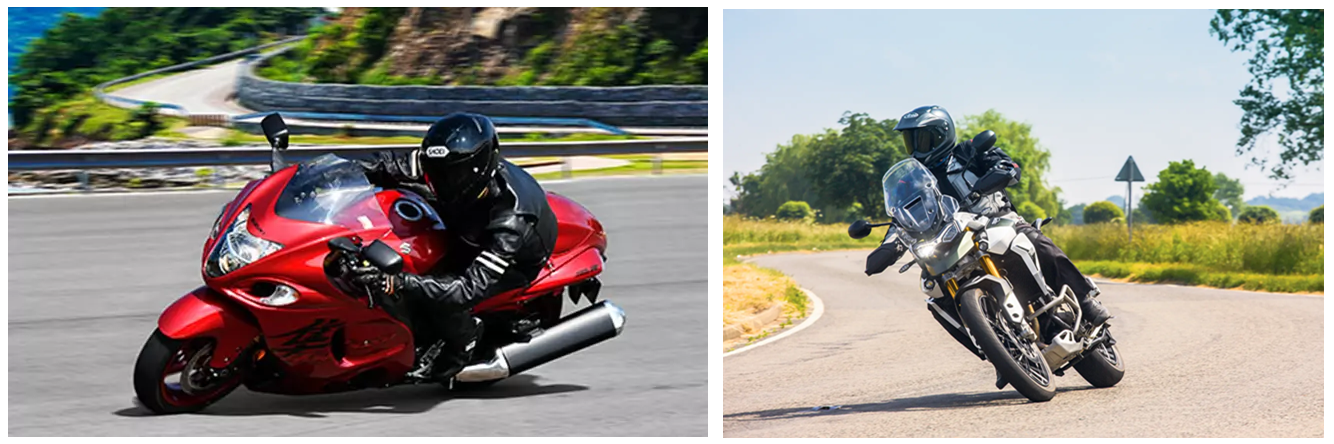
Two motorcycles A and Bare running at the speed more than allowed speed on the road along the lines $\vec{\text{r}}=\lambda(\hat{\text{i}}+2\hat{\text{j}}-\hat{\text{k}})$ and $\vec{\text{r}}=3\hat{\text{i}}+3\hat{\text{j}}+\mu(2\hat{\text{i}+\hat{\text{j}}+\hat{\text{k}}}),$ respectively. Based on the above information, answer the following questions.

  1. The cartesian equation of the line along which motorcycle A is running is:
  1. $\frac{\text{x}+1}{1}=\frac{\text{y}+1}{2}=\frac{\text{z}-1}{-1}$
  2. $\frac{\text{x}}{1}=\frac{\text{y}}{2}=\frac{\text{z}}{-1}$
  3. $\frac{\text{x}}{1}=\frac{\text{y}}{2}=\frac{\text{z}}{1}$
  4. None of these
  1. The direction cosines of line along which motorcycle A is running, are:
  1. < 1, -2, 1 >
  2. < I, 2, -1 >
  3. $<\frac{1}{\sqrt{6}},\frac{-2}{\sqrt{6}},\frac{1}{\sqrt{6}}>$
  4. $<\frac{1}{\sqrt{6}},\frac{2}{\sqrt{6}},\frac{-1}{\sqrt{6}}>$
  1. The direction ratios of line along which motorcycle Bis running, are:
  1. < 1, 0, 2 >
  2. < 2, 1, 0 >
  3. < 1, 1, 2 >
  4. < 2, 1, 1 >
  1. The shortest distance between the gives lines is:
  1. 4 units
  2. $2\sqrt{3}\text{ units}$
  3. $3\sqrt{2}\text{ units}$
  4. 0 units
  1. The motorcycles will meet with an accident at the point:
  1. (-1, 1, 2)
  2. (2, 1, -1)
  3. (1, 2, -1)
  4. Does not exist
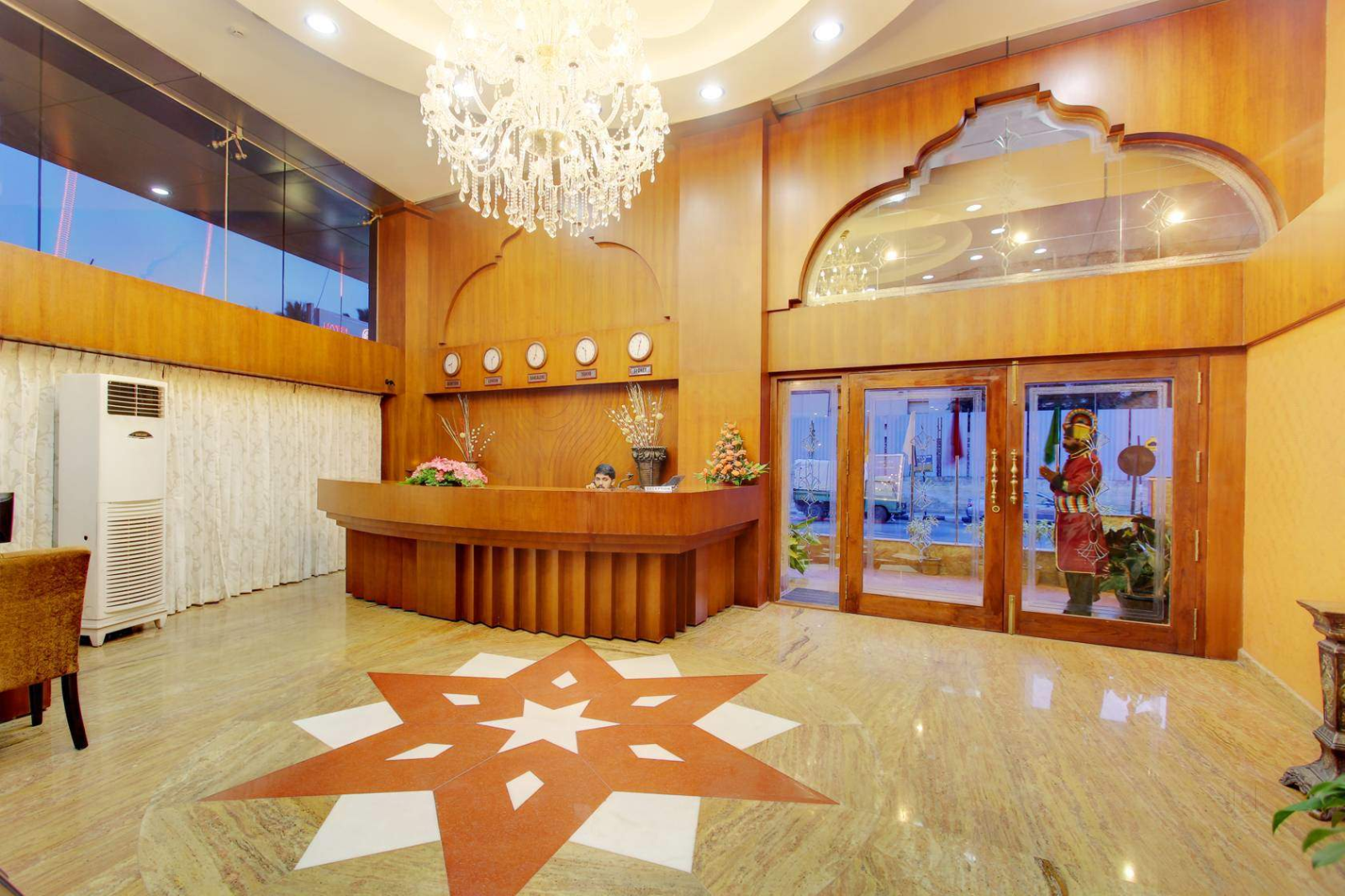
Suppose the floor of a hotel is made up of mirror polished Kota stone. Also, there is a large crystal chandelier attached at the ceiling of the hotel. Consider the floor of the hotel as a plane having equation $x - 2y + 2z = 3$ and crystal chandelier at the point $(3, -2, 1)$. Based on the above information, answer the following questions.

  1. The $d.r\ '$. of the perpendicular from the point $(3, -2, 1)$ to the plane $x - 2y + 2z = 3,$ is:
  1. $ < 1, 2, 2 > $
  2. $ < 1, -2, 2 > $
  3. $ < 2, 1, 2 > $
  4. $ < 2, -1, 2 > $
  1. The length of the perpendicular from the point $(3, -2, 1)$ to the plane $x - 2y + 2z = 3,$ is:
  1. $\frac{2}{3}$ units
  2. $3$ units
  3. $2$ units
  4. None of these
  1. The equation of the perpendicular from the point $(3, -2, 1)$ to the plane $x - 2y + 2z = 3,$ is:
  1. $\frac{\text{x}-3}{1}=\frac{\text{y}-2}{-2}=\frac{\text{z}-1}{2}$
  2. $\frac{\text{x}-3}{1}=\frac{\text{y}+2}{-2}=\frac{\text{z}-1}{2}$
  3. $\frac{\text{x}+3}{1}=\frac{\text{y}+2}{-2}=\frac{\text{z}-1}{2}$
  4. None of these
  1. The equation of plane parallel to the plane $x - 2y + 2z = 3,$ which is at a unit distance from the point $(3, -2, 1)$ is:
  1. $x - 2y + 2z = 0$
  2. $x - 2y + 2z = 6$
  3. $x - 2y + 2z = 12$
  4. Both $(b)$ and $(c)$
  1. The image of the point $(3, -2, 1)$ in the given plane is:
  1. $\Big(\frac{5}{3},\frac{2}{3},\frac{-5}{3}\Big)$
  2. $\Big(\frac{-5}{3},\frac{-2}{3},\frac{5}{3}\Big)$
  3. $\Big(\frac{-5}{3},\frac{2}{3},\frac{5}{3}\Big)$
  4. None of these
To teach the application of probability a maths teacher arranged a surprise game for 5 of his students namely Archit, Aadya, Mivaan, Deepak and Vrinda. He took a bowl containing tickets numbered 1 to 50 and told the students go one by one and draw two tickets simultaneously from the bowl and replace it after noting the numbers. Based on the above information, answer the following questions.
  1. Teacher ask Vrinda, what is the probability that both tickets drawn by Arch it shows even number?
  1. $\frac{1}{50}$
  2. $\frac{12}{49}$
  3. $\frac{13}{49}$
  4. $\frac{15}{49}$
  1. Teacher ask Mivaan, what is the probability that both tickets drawn by Aadya shows odd number?
  1. $\frac{1}{50}$
  2. $\frac{2}{49}$
  3. $\frac{12}{49}$
  4. $\frac{5}{49}$
  1. Teacher ask Deepak, what is the probability that tickets drawn by Mivaan, shows a multiple of 4 on one ticket and a multiple 5 on other ticket?
  1. $\frac{14}{245}$
  2. $\frac{16}{245}$
  3. $\frac{24}{245}$
  4. None of these.
  1. Teacher ask Arch it, what is the probability that tickets are drawn by Deepak, shows a prime number on one ticket and a multiple of 4 on other ticket?
  1. $\frac{3}{245}$
  2. $\frac{17}{245}$
  3. $\frac{18}{245}$
  4. $\frac{36}{245}$
  1. Teacher ask Aadya, what is the probability that tickets drawn by Vrinda, shows an even number on first ticket and an odd number on second ticket?
  1. $\frac{15}{98}$
  2. $\frac{25}{98}$
  3. $\frac{35}{98}$
  4. None of these.
If the area of a circle increases at a uniform rate, then prove that perimeter varies inversely as the radius.
If a real valued function $f(x)$ is finitely derivable at any point of its domain, it is necessarily continuous at that point. But its converse need not be true.
For example, every polynomial, constant function are both continuous as well as differentiable and inverse trigonometric functions are continuous and differentiable in its domains etc.
Based on the above information, answer the following questions.
  1. If $\text{f}(\text{x})=\begin{cases}\text{x},\text{for x}\leq0\\0,\text{for x}>0\end{cases},$ then at $x = 0$
  1. $f(x)$ is differentiable and continuous.
  2. $f(x)$ is neither continuous nor differentiable.
  3. $f(x)$ is continuous but not differentiable.
  4. None of these.
  1. If $\text{f}(\text{x})=|\text{x}-1|,\text{x }\epsilon\text{ R},$ then at $x = 1$
  1. $f(x)$ is not continuous.
  2. $f(x)$ is continuous but not differentiable.
  3. $f(x)$ is continuous and differentiable.
  4. None of these.
  1. $f(x) = x^3$ is:
  1. Continuous but not differentiable at $x = 3$
  2. Continuous but not differentiable at $x = 3$
  3. Neither continuous nor differentiable at $x = 3$
  4. None of these.
  1. If $\text{f}(\text{x})=[\sin\text{x}],$ then which of the following is true?
  1. $f(x)$ is continuous and differentiable at $x = 0.$
  2. $f(x)$ is discontinuous at $x = 0.$
  3. $f(x)$ is continuous at $x = 0$ but not differentiable.
  4. $f(x)$ is differentiable but not continuous at $\text{x}=\frac{\pi}{2}.$
  1. If $\text{f}(\text{x})=\sin^{-1}\text{x},-1\leq\text{x}\leq1,$ then:
  1. $f(x)$ is both continuous and differentiable.
  2. $f(x)$ is neither continuous nor differentiable.
  3. $f(x)$ is continuous but not differentiable.
  4. None of these.
An organization conducted bike race under $2$ different categories$-$boys and girls. In all, there were $250$ participants. Among all of them finally three from Category $1$ and two from Category $2$ were selected for the final race. Ravi forms two sets $B$ and $G$ with these participants for his college project.
Let $B =\left\{b_1, b_2, b_3\right\}, G =\left\{g_1, g_2\right\}$ where $B$ represents the set of boys selected and $G$ the set of girls who were selected for the final race.
Ravi decides to explore these sets for various types of relations and functions.
On the basis of the above information, answer the following questions:
$(i)$ Ravi wishes to form all the relations possible from $B$ to $G$. How many such relations are possible?
$(ii)$ Among these relations, how many are functions from $B$ to $G$ ?
$OR$
$(iii) (b)$ If the track of the final race $($for the biker $b_1)$ follows the curve
$x^2=4 y ;($ where $0 \leq x \leq 20 \sqrt{2} \ 0 \leq y \leq 200)$,then state whether the track represents a one$-$one and onto function or not. $($Justify$).$
Nisha and Ayushi appeared for first round of an interview for two vacancies. The probability of Nisha's selection is $\frac{1}{3}$ and that of Ayushi's selection is $\frac{1}{2}.$

Based on the above information, answer the following questions.
  1. The probability that both of them are selected, is:
  1. $\frac{1}{12}$
  2. $\frac{1}{24}$
  3. $\frac{1}{6}$
  4. $\frac{1}{2}$
  1. The probability that none of them is selected, is:
  1. $\frac{2}{7}$
  2. $\frac{3}{8}$
  3. $\frac{5}{8}$
  4. $\frac{1}{3}$
  1. The probability that only one of them is selected, is:
  1. $\frac{5}{8}$
  2. $\frac{2}{3}$
  3. $\frac{2}{5}$
  4. $\frac{1}{2}$
  1. The probability that atleast one of them is selected, is:
  1. $\frac{2}{3}$
  2. $\frac{1}{8}$
  3. $\frac{3}{5}$
  4. $\frac{2}{5}$
  1. Suppose Nisha is selected by the manager and told her about two posts $I$ and $II$ for which selection is independent. If the probability of selection for post $I$ $\frac{1}{6}$ is and for post $II$ is $\frac{1}{5},$ then the probability that Nisha is selected for at least one post, is
  1. $\frac{1}{3}$
  2. $\frac{2}{3}$
  3. $\frac{3}{8}$
  4. $\frac{1}{2}$
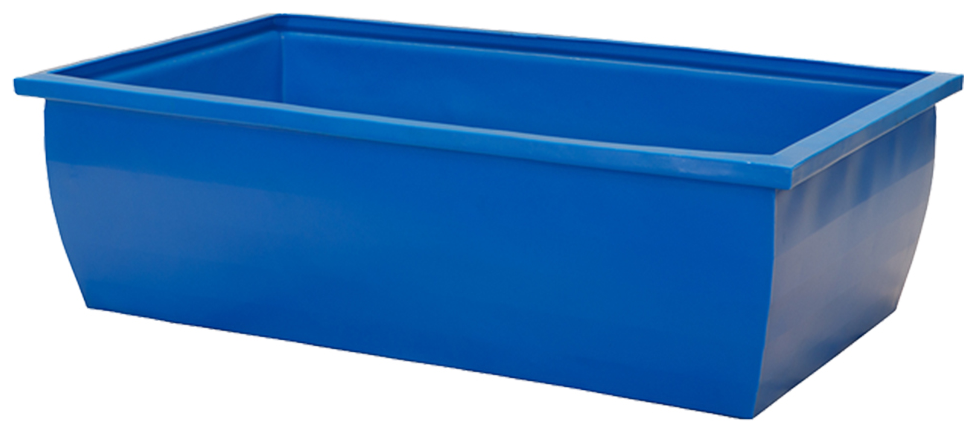
Nitin wants to construct a rectangular plastic tank for his house that can hold $80\ ft^3$ of water. The top of the tank is open. The width of tank will be $5\ ft$ but the length and heights are variables. Building the tank cost? $₹\ 20$ per sq. foot for the base and $₹\ 10$ per sq. foot for the side.

Based on the above information, answer the following questions.
  1. In order to make a least expensive water tank, Nitin need to minimize its.
  1. Volume
  2. Base
  3. Curved surface area
  4. Cost
  1. Total cost of tank as a function of $h$ can be represented as.
  1. $\ce{c(h) = 100h - 320 - 1600/ h}$
  2. $\ce{c(h) = 100h - 320h - 720h^2}$
  3. $\ce{c(h) = 100 + 320h + 1600h^2}$
  4. $\text{c}\big(\text{h}\big)=100\text{h}+320+\frac{1600}{\text{h}}$
  1. Range of $h$ is.
  1. $(3, 5)$
  2. $\big(0,\infty\big)$
  3. $(0, 8)$
  4. $(0, 3)$
  1. Value of hat which $c(h)$ is minimum, is.
  1. $4$
  2. $5$
  3. $6$
  4. $6, 7$
  1. The cost of least expensive tank is.
  1. $₹\ 1020$
  2. $₹\ 1100$
  3. $₹\ 1120$
  4. $₹\ 1220$