Question
Shweta was teaching "method to solve a linear inequality in one variable" to her daughter.
Step I Collect all terms involving the variable (x) on one side and constant terms on other side with the help of above rules and then reduce it in the form $\mathbf{a x}<\mathbf{b}$ or $\mathbf{a x} \leq \mathbf{b}$ or $\mathbf{a x}>\mathbf{b}$ or $\mathbf{a x} \geq \mathbf{b}$.
Step II Divide this inequality by the coefficient of variable (x). This gives the solution set of given inequality.
Step III Write the solution set.

Based on above information, answer the following questions.

(i) The solution set of $\mathbf{2 4 x}<\mathbf{1 0 0}$, when $\mathrm{x}$ is a natural number is
    (a) $\{1,2,3,4\}$     (b) $(1,4)$     (c) $[1,4]$     (d) None of these

(ii) The solution set of $24100 \mathrm{x}<$, when $\mathrm{x}$ is an integer is
    (a) $\{\ldots \ldots-4,-3,-2,-1,0,1,2,3,4\}$     (b) $(-\infty, 4]$     (c) $[4, \infty]$     (d) None of the above

(iii) The solution set of $-\mathbf{5 x}+\mathbf{2 5}>0$ is
    (a) $[5, \infty)$     (b) $(-\infty, 5]$    (c) $(5, \infty)$     (d) $(-\infty, 5)$

(iv) The solution set of $\mathbf{3 x}-\mathbf{5}<\mathbf{x + 7}$ is
    (a) $(6, \infty)$     (b) $[6, \infty)$     (c) $(-\infty, 6)$     (d) $(-\infty, 6]$

(v) The solution set of $x+\frac{x}{2}+\frac{x}{3}<11$ is
    (a) $(-\infty, 6]$     (b) $(-\infty, 6)$     (c) $[6, \infty)$     (d) None of these
Answer

(i) (a) We have, $\mathbf{2 4 x}<\mathbf{1 0 0}$
On dividing both sides by 24 , we get
$
=\frac{24 x}{24}<\frac{100}{24} \Rightarrow x<\frac{25}{6}
$
When $\mathbf{x}$ is a natural number, then solutions of the inequality $x<\frac{25}{6}$, are all natural numbers, which are less than $\frac{25}{6}$. In this case, the following values of $x$ make the statement true.
$
\mathrm{x}=1,2,3,4
$
Hence, the solution set of inequality is $\{\mathbf{1 , 2 , 3 , 4}\}$.

(ii) (a) We have, $24 \mathrm{x}<\mathbf{1 0 0}$
On dividing both sides by 24 , we get
$
=\frac{24 x}{24}<\frac{100}{24} \Rightarrow x<\frac{25}{6}
$
When $\mathbf{x}$ is an integer.
In this case, solutions of given inequality are
$
\ldots,-4,-3,-2,-1,0,1,2,3,4
$
Hence, the solution set of inequality is
$
\{\ldots,-4,-3,-2,-1,0,1,2,3,4\}
$

(iii) (d) We have, $-5 x+25>0$
On adding $5 \mathbf{x}$ both sides, we get
$
-5 x+25+5 x>0+5 x \Rightarrow 25>5 x \Rightarrow 5 x<25
$
On dividing both sides by 5 , we get
$
\Rightarrow \frac{5 x}{5}<\frac{25}{5} \Rightarrow x<5
$
Hence, the required solution set is $(-\infty, 5)$.

(iv)
(c) We have, $3 \mathbf{x}-\mathbf{5} < \mathbf{x}+\mathbf{7}$
$\Rightarrow 3 x-5+5 < x+7+5$
$\Rightarrow 3 \mathrm{x}<\mathrm{x}+12$
$\Rightarrow 3 \mathrm{x}-\mathrm{x}<\mathrm{x}+12-\mathrm{x}$
[adding 5 both sides]
[subtracting $\mathbf{x}$ from both sides]
$
\begin{aligned}
& \Rightarrow \quad 2 x<12 \\
& \Rightarrow \quad \frac{2 x}{2}<\frac{12}{2} \\
& \Rightarrow \quad x<6
\end{aligned}
$
[dividing both sides by 2]
The solution set is $\{\mathbf{x}: \mathbf{x} \in \mathbf{R}$ and $\mathbf{x}<6\}$ i.e., any real number less than 6 . This can also be written as $(-\infty, 6)$.

(v) (b) We have, $x+\frac{x}{2}+\frac{x}{3}<11$
$
\Rightarrow \frac{6 x+3 x+2 x}{6}<11 \Rightarrow \frac{11 x}{6}<11
$

On multiplying both sides by $\frac{6}{11}$, we get
$
\begin{aligned}
& \frac{11 x}{6} \times \frac{6}{11}<11 \times \frac{6}{11} \Rightarrow x<6 \\
& \therefore \quad x \in(-\infty, 6) \\
&
\end{aligned}
$

Need a full question paper?

Generate a complete, print-ready paper with questions like this in minutes — across 16+ boards, with answer keys.

Start Generating Free

Similar questions

Read the following text carefully and answer the questions that follow: 
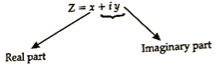
A number of the form $Z=x+i y$, where $x$ and $y$ are real and $i=\sqrt{-1}$ is called a complex number. Consider the complex number $Z_1=2+3 i$ and $Z_2=4-3 i$.
Image
i. Find the imaginary part of $Z_1 \overline{Z_1}$. (1)
ii. Find the real part of $\frac{z_1}{z_2}$. (1)
iii. Find the imaginary part of $Z_1-Z_2$. (2)
OR
Find the real part of $Z _1$. (2)
In an University, out of 100 students 15 students offered Mathematics only, 12 students offered Statistics only, 8 students offered only Physics, 40 students offered Physics and Mathematics, 20 students offered Physics and Statistics, 10 students offered Mathematics and Statistics, 65 students offered Physics.
Based on the above information answer the following questions.
  1. The number of students who offered all the three subjects is:
  1. 4
  2. 3
  3. 2
  4. 5
  1. The number of students who offered Mathematics is:
  1. 62
  2. 65
  3. 55
  4. 60
  1. The number of students who offered statistics is:
  1. 31
  2. 35
  3. 39
  4. 34
  1. The number of students who offered mathematics and statistics but not physics is:
  1. 7
  2. 6
  3. 5
  4. 4
  1. The number of students who did not offer any of the above three subjects is:
  1. 4
  2. 1
  3. 5
  4. 3
A function $f$ is said to be a rational function, if $f(x)=\frac{g(x)}{h(x)}$, where $g(x)$ and $h(x)$ are polynomial functions such that $h(x) \neq 0$.
Then, $\lim _{x \rightarrow a} f(x)=\lim _{x \rightarrow a} \frac{g(x)}{h(x)}$
$
=\frac{\lim _{x \rightarrow a} g(x)}{\lim _{x \rightarrow a} h(x)}=\frac{g(a)}{h(a)}
$
However, if $h(a)=0$, then there are two cases arise,
(i) $g(a) \neq 0$
(ii) $g(a)=0$. In the first case, we say that the limit does not exist.
In the second case, we can find limit.

Based on above information, answer the following questions.

(i) $\lim _{x \rightarrow-1}\left(\frac{x^{10}+x^5+1}{x-1}\right)$ is equal to
    (a) $\frac{1}{2}$     (b) $\frac{-1}{2}$     (c) 2     (d) $\frac{3}{2}$

(ii) $\lim _{x \rightarrow-1} \frac{(x-1)^2+3 x^2}{\left(x^4+1\right)^2}$ is equal to
    (a) $\frac{7}{4}$     (b) $\frac{6}{5}$     (c) $\frac{4}{7}$     (d) $\frac{3}{4}$

(iii) The value of $\lim _{x \rightarrow 2}\left[\frac{x^2-4}{x^3-4 x^2+4 x}\right]$ is
    (a) 0     (b) 1     (c) 2     (d) Does not exist

(iv) $\lim _{x \rightarrow 1} \frac{x^7-2 x^5+1}{x^3-3 x^2+2}$ is equal to
    (a) 0     (b) 1     (c) 2     (d) 3

(v) $\lim _{x \rightarrow 0} \frac{\sqrt{1+x^3}-\sqrt{1-x^3}}{x^2}$ is equal to
    (a) 1     (b) 0     (c) -1     (d) 2
We have, $i=\sqrt{-1}$. So, we can write the higher powers of $i$ as follows
(i) $i^2=-1$
(ii) $i^3=i^2 \cdot i=(-1) \cdot i=-i$
(iii) $i^4=\left(i^2\right)^2=(-1)^2=1$
(iv) $i^5=i^{4+1}=i^4 \cdot i=1 \cdot i=i$
(v) $i^6=i^{4+2}=i^4 \cdot i^2=1 \cdot i^2=-1$

In order to compute $i^n$ for $n>4$, write $i^n=i^{4 q+r}$ for some $q, r \in N$ and $0 \leq r \leq 3$. Then, $i^n=$ $i^{4 q} \cdot i^r=\left(i^4\right)^q \cdot i^r=(1)^q \cdot i^r=i^r$.
In general, for any integer $k, i^{4 k}=1, i^{4 k+1}=i, i^{4 k+2}=-1$ and $i^{4 k+3}=-i$.

On the basis of above information, answer the following questions.

(i) The value of $i^{37}$ is equal to
    (a) $i$     (b) $-i$     (c) 1     (d) -1

(ii) The value of $i^{-30}$ is equal to
    (a) $i$     (b) 1     (c) -1     (d) $-i$

(iii) If $z=i^9+i^{19}$, then $z$ is equal to
    (a) $0+0 i$     (b) $1+0 i$     (c) $0+i$     (d) $1+2 i$

(iv) The value of $\left[i^{19}+\left(\frac{1}{i}\right)^{25}\right]^2$ is equal to
    (a) -4     (b) 4     (c) $\mathrm{i}$     (d) 1

(v) If $z=i^{-39}$, then simplest form of $z$ is equal to
    (a) $1+0 i$     (b) $0+i$     (c) $0+0 i$     (d) $1+i$
Republic day is a national holiday of India. It honours the date on which the constitution of India came into effect on 26 January 1950 replacing the Government of India Act (1935) as the governing document of India and thus, turning the nation into a newly formed republic.

Answer the following question, which are based on the word "REPUBLIC".


(i) Find the number of arrangements of the letters of the word 'REPUBLIC'.
(a) 40300     (b) 30420    (c) 40320     (d) 40400

(ii) How many arrangements start with a vowel?
(a) 12015     (b) 15120     (c) 12018     (d) 15100

(iii) Which concept is used for finding the arrangements start with a vowel?
(a) Permutation     (b) FPM     (c) Combination     (d) FPA

(iv) If the number of arrangements of the letters of the word 'REPUBLIC' is abcde, the (a + b + $\mathbf{c}+\mathbf{d}+\mathbf{e})$ is
(a) 10     (b) 9     (c) 8     (d) 15

(v) If the number of arrangements start with a vowel is abcde, then $(\mathbf{a}+\mathbf{b})-(\mathbf{d}+\mathbf{e})$ is
(a) 2     (b) 3     (c) 4     (d) 5