MCQ
Silicon dissolves in excess of $HF$ due to formation of
- A$SiF_4$
- B$SiH_4$
- ✓$H_2SiF_6$
- D$H_2SiF_4$
$\mathrm{Si}+4 \mathrm{HF} \rightarrow \mathrm{SiF}_{4}+4 \mathrm{H}^{+}$
$\begin{array}{l}\downarrow \mathrm{HF} \\\mathrm{H}_{2} \mathrm{SiF}_{6}\end{array}$
Generate a complete, print-ready paper with questions like this in minutes — across 16+ boards, with answer keys.
$\begin{array}{*{20}{c}}
{\,\,\,\,\,\,\,\,\,\,\,\,\,\,\,\,\,\,\,\,\,\,\,\,\,\,\,\,\,\,\,\,\,\,\,\,\,\,\,\,\,\,\,\,\,\,\,\,\,\,\,\,\,\,\,\,\,\,\,\,\,\,\,\,\,\,\,\,\,\,\,\,\,\,\,\,\,\,\,\,\,\,\,\,\,\,\,\,\,\,\,\,\,\,\,\,\,\,\,\,\,\,\,\,\,\,OH} \\
{\,\,\,\,\,\,\,\,\,\,\,\,\,\,\,\,\,\,\,\,\,\,\,\,\,\,\,\,\,\,\,\,\,\,\,\,\,\,\,\,\,\,\,\,\,\,\,\,\,\,\,\,\,\,\,\,\,\,\,\,\,\,\,\,\,\,\,\,\,\,\,\,\,\,\,\,\,\,\,\,\,\,\,\,\,\,\,\,\,\,\,\,\,\,\,\,\,\,\,\,\,\,|} \\
{C{H_3}{\text{ }} - {\text{ }}CH{\text{ }} = {\text{ }}CH{\text{ }} - {\text{ }}C{H_3}\xrightarrow{{{H_3}{O^ + }}}\,C{H_3} - C{H_2} - CH - C{H_3}}
\end{array}$
Propene $\xrightarrow{{C{l_2}/500\,{}^oC}}A\xrightarrow[{{\text{dryether}}}]{{Na}}B$
$B$ is
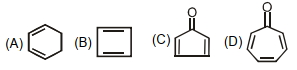
|
Column $I$ |
Column $II$ |
| $A$. Inert-gas elements | $1.\left( {n - 1} \right){d^{1 - 10}}\,n{s^{1 - 2}}$ |
| $B$. Transition elements | $2\,. ns^2\,np^6$ |
| $C$. Inner-transition elements | $3.\left( {n - 2} \right){f^{1 - 14}}\,\left( {n - 1} \right){s^2}{p^6}{d^{0 - 1}}\,n{s^2}$ |