- A$A{g^ + }$
- ✓${\left[ {Ag{{\left( {N{H_3}} \right)}_2}} \right]^ + }$
- C${\left[ {Ag{{\left( {N{H_3}} \right)}_4}} \right]^ + }$
- D${\left[ {Ag{{\left( {N{H_3}} \right)}_6}} \right]^ + }$
Generate a complete, print-ready paper with questions like this in minutes — across 16+ boards, with answer keys.
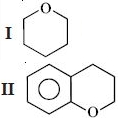
Which forms di-iodide on reaction with $HI $ (excess) ?

(Image)
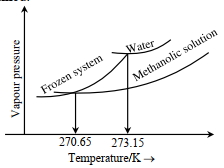
$x=$.. . . . . .(nearest integer)
[Given: Molal freezing point depression constant of water at $273.15 \mathrm{~K}^2$ is $1.86 \mathrm{~K} \mathrm{~kg} \mathrm{~mol}^{-1}$ ]

True statement about sequence on the basis of assumption that $R$ contains $3$ different groups is
$\mathop R\limits^{\delta \oplus } \,\mathop {Br}\limits^{\delta \,\Theta } \, \rightleftharpoons $ $\mathop {\boxed{{R^ \oplus }B{r^\Theta }}}\limits_{(a)} \,\,\, \rightleftharpoons \,$$\,\mathop {\boxed{{R^ \oplus }}\,\boxed{B{r^\Theta }}\,}\limits_{(b)} \,\, \rightleftharpoons $ ${\boxed{{R^ \oplus }}}$ $ \rightleftharpoons $ $\mathop {\,\boxed{B{r^\Theta }}\,}\limits_{(c)} \,$