Question
Simplify : $2 \sqrt{48}-\sqrt{75}-\frac{1}{\sqrt{3}}$

Answer

$\begin{aligned} & 2 \sqrt{48}-\sqrt{75}-\frac{1}{\sqrt{3}} \\ = & 2 \sqrt{16 \times 3}-\sqrt{25 \times 3}-\frac{1}{\sqrt{3}} \times \frac{\sqrt{3}}{\sqrt{3}} \\ = & 2 \times 4 \sqrt{3}-5 \sqrt{3}-\frac{1}{3} \sqrt{3} \\ = & 8 \sqrt{3}-5 \sqrt{3}-\frac{1}{3} \sqrt{3} \\ = & \left(8-5-\frac{1}{3}\right) \sqrt{3} \\ = & \left(3-\frac{1}{3}\right) \sqrt{3} \\ = & \left(\frac{9-1}{3}\right) \sqrt{3} \\ = & \frac{8}{3} \sqrt{3} \\ \therefore \quad & 2 \sqrt{48}-\sqrt{75}-\frac{1}{\sqrt{3}}=\frac{8}{3} \sqrt{3}\end{aligned}$

Need a full question paper?

Generate a complete, print-ready paper with questions like this in minutes — across 16+ boards, with answer keys.
Start Generating Free

Similar questions

Show that:$\Bigg\{\Big(\text{x}^{\text{a}-\text{a}^{-1}}\Big)^{\frac{1}{\text{a}+\text{1}}}\Bigg\}^{\frac{\text{a}}{\text{a}+\text{1}}}=\text{x}$
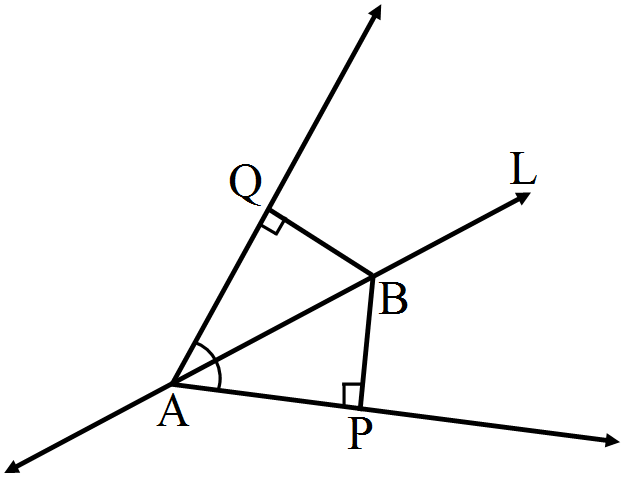
In the given figure, line l is the bisector of an angle $\angle\text{A}$ and B is any point on l. If BP and BQ are perpendiculars from B to the arms of $\angle\text{A},$ Show that:
  1. $\triangle\text{APB}\cong\triangle\text{AQB}$
  2. BP = BQ, i.e., B is equidistant from the arms of $\angle\text{A}.$
Express each one of the following with rational denominator:$\frac{6-4\sqrt2}{6+4\sqrt{2}}$
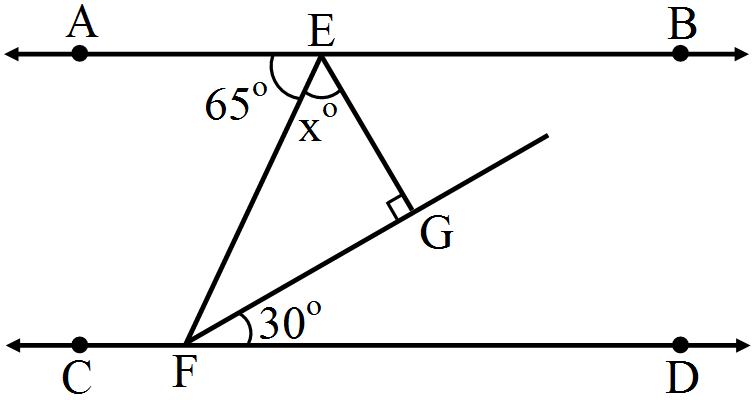
In the given figure, AB || CD and EF is a transversal. If $\angle\text{AEF}=65^\circ,\angle\text{DFG}=30^\circ,\angle\text{EFG}=90^\circ$
and $\angle\text{GEF}=\text{x}^\circ,$ find the value of x.
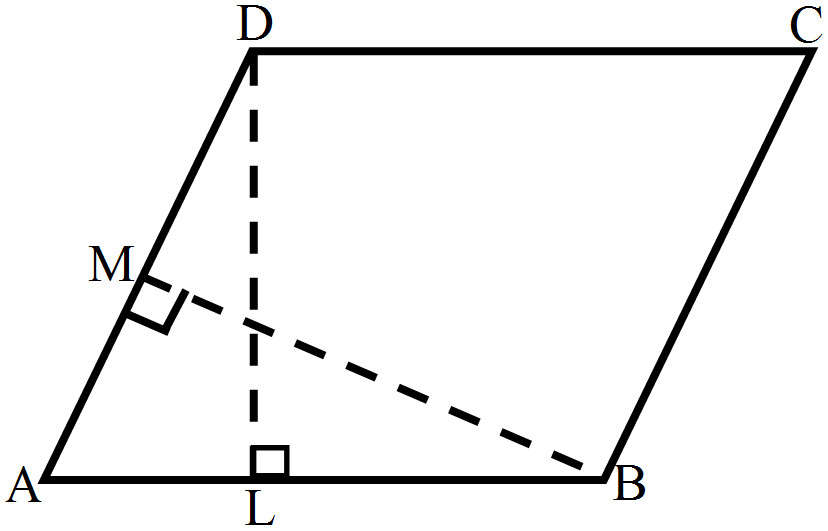
In a parallelogram ABCD, it is being given that AB = 10cm and the altitudes corresponding to the sides AB and AD are DL = 6cm and BM = 8cm, respectively. Find AD.

Factorize:
$x^3 - 2x^2y + 3xy^2 - 6y^3$
ABCD is a cyclic qudrilateral in which:$ \angle\text{DBC}=80^\circ$ and $\angle\text{BAC}=40^\circ.$ Find $\angle\text{BCD}.$
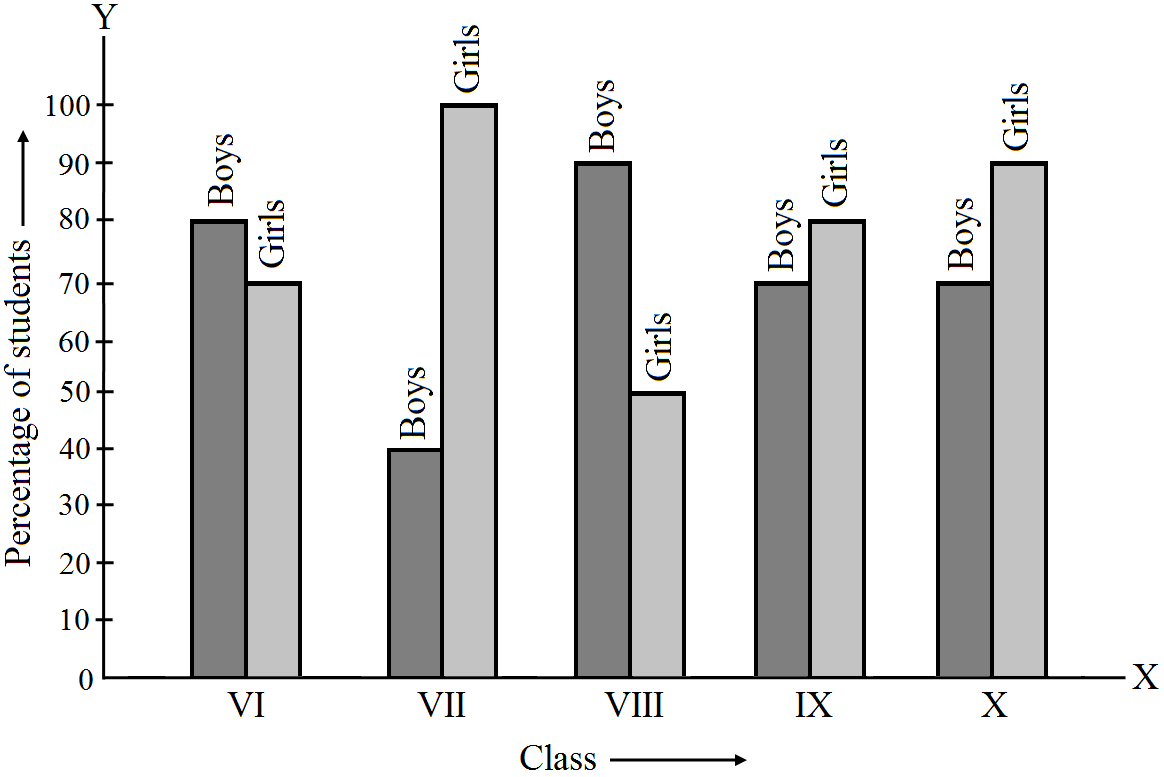
The following bar graph shows the results of an annual examination in a secondary school.
Read the bar graph and choose the correct alternative in each of the following:
  1. The pair of classes in which the results of boys and girls are inversely proportional are:
  1. VI, VIII
  2. VI, IX
  3. VII, IX
  4. VIII, X
  1. The class having the lowest failure rate of girls is:
  1. VI
  2. X
  3. IX
  4. VIII
  1. The class having the lowest pass rate of students is:
  1. VI
  2. VII
  3. VIII
  4. IX
Given three distinct points in a plane, how many lines can be drawn by joining them?
Find the median of the following observations: 46, 64, 87, 41, 58, 77, 35, 90, 55, 92, 33. If 92 is replaced by 99 and 41 by 43 in the above data, find the new median?