Question
Simplify:
$ (2 x-1)(2 x+1)\left(4 x^2+1\right)\left(16 x^4+1\right) $

Answer

To simplify, we will proceed as follows:
$ (2 x-1)(2 x+1)\left(4 x^2+1\right)\left(16 x^4+1\right) $
$ =\left((2 x)^2-1^2\right)\left(4 x^2+1\right)\left(16 x^4+1\right)\left[\because(a+b)(a-b)=a^2-b^2\right] $
$ =\left(4 x^2-1\right)\left(4 x^2+1\right)\left(16 x^4+1\right) $
$ =\left\{\left(4 x^2\right)^2-\left(1^2\right)^2\right\}\left(16 x^4+1\right)\left[\because(a+b)(a-b)=a^2-b^2\right] $
$ =\left(16 x^4-1\right)\left(16 x^4+1\right)$
$ =\left(16 x^4\right)^2-1^2\left[\because(a+b)(a-b)=a^2-b^2\right] $
$ =256 x^8-1 $

Need a full question paper?

Generate a complete, print-ready paper with questions like this in minutes — across 16+ boards, with answer keys.
Start Generating Free

Similar questions

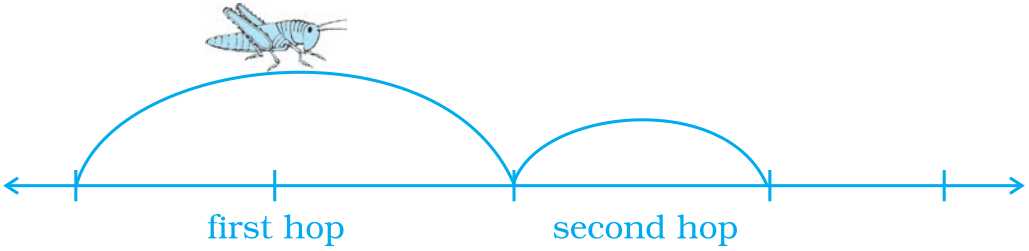
An insect is on the $0$ point of a number line, hopping towards $1$. She covers half the distance from her current location to $1$ with each hop. So, she will be at $\frac{1}{2}$ after one hop, $\frac{3}{4}$ after two hops, and so on.
$a.$ Make a table showing the insect’s location for the first $10$ hops.
$b.$ Where will the insect be after $n$ hops?
$c.$ Will the insect ever get to $1$? Explain.
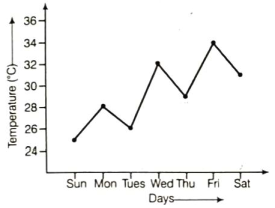
Study the graph and answer the questions that follow
(i) What information does the graph give?
(ii) On which day was the temperature least?
(iii) On which day was the temperature $31^{\circ} C$ ?
(iv) Which was the hottest day?
Image
Find the area of a rhombus, side of which measures $20\ cm$ and one of whose diagonals is $24cm.$
Solve:
$(z - 6)(z + 2)$
Two cubes, each of volume $512cm^3$ are joined end to end, find the surface area of the resulting cuboid.
Find the least number which must be subtracted from $402$ so as to get a perfect square. Also find the square root of the perfect square so obtained.
Resolve each of the following quadratic trinomial into factor:
$7 x-6 x^2+20$
In one day the sales (in rupees) of different items of a baker's shop are given below:
Items
Ordinary bread Fruit bread Cakes and Pastries Biscuits Others Total
Sales (in Rs.)
$260$
$40$
$100$
$60$
$20$
$480$
Draw a pie-chart representing the above sales.
Construct a quadrilateral $ABCD$ in which $AB = 3.6\ cm, BC = 3.3\ cm, AD = 2.7\ cm,$ diagonal $AC = 4.6\ cm$ and diagonal $BD = 4\ cm.$
Raghu has enough money to buy $75$ machines worth $Rs\ 200$ each. How many machines can he buy if he gets a discount of $Rs\ 50$ on each machine?