Question
Simplify:
$(3 x+1)^2-(3 x+2)(3 x-1)$

Answer

3(x + 1)

Need a full question paper?

Generate a complete, print-ready paper with questions like this in minutes — across 16+ boards, with answer keys.

Start Generating Free

Similar questions

Image
In the given figure, the area enclosed between two concentric circles is 808.5 $cm ^2$. The circumference of the outer circle is 242 cm.
Calculate : (i) the radius of the inner circle,
(ii) the width of the ring.
[Hint. $2 \times \frac{22}{7} \times R=242 \Rightarrow R=\frac{77}{2} cm$.$
\left.\frac{22}{7} \times\left(R^2-r^2\right)=\frac{8085}{10} \Rightarrow\left(R^2-r^2\right)=\frac{1029}{4} .\right]
$
If $\log 2 = 0.3010$ and $\log 3 = 0.4771;$ find the value of $: \log 3.6$
Evaluate the following:$\frac{5 \cot 5^{\circ} \cot 15^{\circ} \cot 25^{\circ} \cot 35^{\circ} \cot 45^{\circ}}{7 \tan 45^{\circ} \tan 55^{\circ} \tan 65^{\circ} \tan 75^{\circ} \tan 85^{\circ}}+\frac{2 \operatorname{cosec} 12^{\circ} \operatorname{cosec} 24^{\circ} \cos 78^{\circ} \cos 66^{\circ}}{7 \sin 14^{\circ} \sin 23^{\circ} \sec 76^{\circ} \sec 67^{\circ}}$
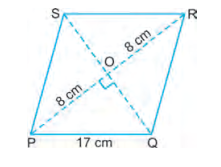
In a rhombus PQRS , side $PQ =17 cm$ and diagonal $PR =16 cm$.
Calculate the area of the rhombus.
Image
Solve the following systems of equations by using the method of cross multiplication:
$\frac{5}{x}-\frac{4}{y}+2=0, \frac{2}{x}+\frac{3}{y}=13(x \neq 0, y \neq 0)$
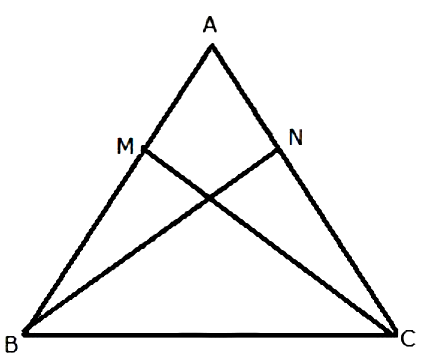
The following figure has shown a $\triangle A B C$ in which $A B=A C$. $M$ is a point on $A B$ and $N$ is a point on $A C$ such that $B M=C N$.Prove that: $(i) \mathrm{BN}=\mathrm{CM}, (ii) \triangle \mathrm{BMC} \cong \triangle C N B$
Two adjacent sides of a parallelogram are 36 cm and 25 cm. If the distance between longer sides is 15cm, find the distance between the shorter sides.
In a parallelogram $\text{ABCD, E}$ and $F$ are the midpoints of the sides $AB$ and $CD$ respectively. The line segments $AF$ and $BF$ meet the line segments $DE$ and $CE$ at points $G$ and $H$ respectively Prove that:$\text{EGFH}$ is a parallelogram.
Evaluate the following: $\frac{3 \sin ^2 40^{\circ}}{4 \cos ^2 50^{\circ}}-\frac{\operatorname{cosec}^2 28^{\circ}}{4 \sec ^2 62^{\circ}}+\frac{\cos 10^{\circ} \cos 25^{\circ} \cos 45^{\circ} \operatorname{cosec} 80^{\circ}}{2 \sin 15^{\circ} \sin 25^{\circ} \sin 45^{\circ} \sin 65^{\circ} \sec 75^{\circ}}$
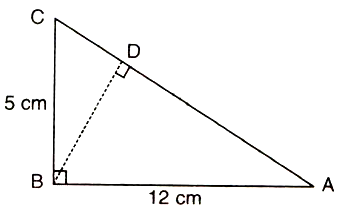
In the diagram, given below, triangle $\text{ABC}$ is right$-$angled at $B$ and $BD$ is perpendicular to $AC$.Find:$(i)\cos \angle \text{DBC};(ii)\cot \angle \text{DBA}$