MCQ
Sky wave propagation is based on :
  • reflection from ionosphere
  • B
    absorption by ionosphere
  • C
    transmission through ionosphere
  • D
    none of these

Answer

Correct option: A.
reflection from ionosphere
A

Need a full question paper?

Generate a complete, print-ready paper with questions like this in minutes — across 16+ boards, with answer keys.
Start Generating Free

Similar questions

The waves used in telecommunication are (a) IR(b) UV(c) Microwave(d) Cosmic rays
       
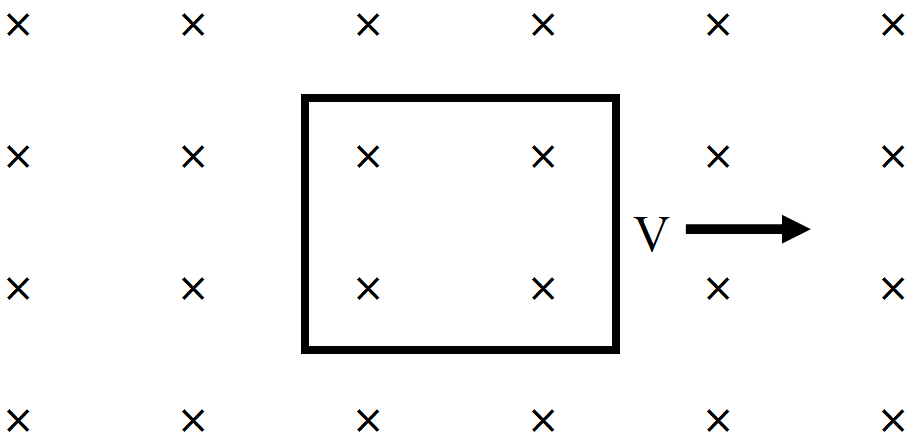
A conducting square loop of side l and resistance R moves in its plane with a uniform velocity u perpendicular to one of its sides. A uniform and constant magnetic field B exists along the perpendicular to the plane of the loop as shown in figure. The current induced in the loop is:
  1. $\frac{\text{Blv}}{\text{R}}$ clockwise.
  2. $\frac{\text{Blv}}{\text{R}}$ anticlockwise.
  3. $\frac{2\text{Blv}}{\text{R}}$ anticlockwise.
  4. $\text{Zero.}$
An electron moving with the speed $5 \times 10^6$ per $\sec$ is shooted parallel to the electric field of intensity $1 \times 10^3\ N/C$. Field is responsible for the retardation of motion of electron. Now evaluate the distance travelled by the electron before coming to rest for an instant $($mass of $e = 9 \times 10^{-31}\ Kg$. charge $= 1.6 \times 10^{-19}\ C)$
If the refractive indices of crown glass for red, yellow and violet colours are 1.5140, 1.5170 and 1.5318 respectively and for flint glass these are 1.6434, 1.6499 and 1.6852 respectively, then the dispersive powers for crown and flint glass are respectively(a) 0.034 and 0.064(b) 0.064 and 0.034(c) 1.00 and 0.064(d) 0.034 and 1.0
       
In an electric circuit containing a battery, the charge (assumed positive) inside the battery:
$16\ gm$ sample of a radioactive element is taken from Bombay to Delhi in $2$ hour and it was found that $1\ gm$ of the element remained $($undisintegrated$)$. Half life of the element is
Work of moderator is(a) To control the velocity of neutrons(b) Cooling(c) As fuel(d) It is used for safety
   
   
A concave mirror of focal length 15 cm forms an image having twice the linear dimensions of the object. The position of the object when the image is virtual will be(a) 22.5 cm(b) 7.5 cm(c) 30 cm(d) 45 cm
       
The bending of beam of light around corners of obstacles is called (a) Reflection(b) Diffraction(c) Refraction(d) Interference
       
If the operating potential of an $X-$ray tube is $50 \ kV ,$ the velocity of $X-$rays coming out of it is