MCQ
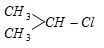
$S{N^1}$ reaction is faster in
  • A
    $C{{H}_{3}}C{{H}_{2}}Cl$
  • B

  • $\begin{array}{*{20}{c}}
      {\,\,\,\,\,\,\,\,\,\,C{H_3}} \\ 
      {\,\,\,\,|} \\ 
      {C{H_3} - C - Cl} \\ 
      {\,\,\,\,|} \\ 
      {\,\,\,\,\,\,\,\,\,\,C{H_3}} 
    \end{array}$
  • D
    $C{{H}_{3}}-\underset{C{{H}_{3}}}{\mathop{\underset{\underset{|}{\mathop{C}}\,{{H}_{2}}}{\mathop{\underset{|}{\mathop{C}}\,H\ }}\,}}\,-Cl$

Answer

Correct option: C.
$\begin{array}{*{20}{c}}
  {\,\,\,\,\,\,\,\,\,\,C{H_3}} \\ 
  {\,\,\,\,|} \\ 
  {C{H_3} - C - Cl} \\ 
  {\,\,\,\,|} \\ 
  {\,\,\,\,\,\,\,\,\,\,C{H_3}} 
\end{array}$
c
(c) $S{N^1}$ mechanism proceeds through carbocation intermediate.

$\begin{array}{*{20}{c}}
  {\,\,\,\,\,\,\,\,\,\,C{H_3}} \\ 
  {\,\,\,\,|} \\ 
  {C{H_3} - C - Cl} \\ 
  {\,\,\,\,|} \\ 
  {\,\,\,\,\,\,\,\,\,\,C{H_3}} 
\end{array}$

provides stable carbocation intermediate because it has tertiary carbon.

Need a full question paper?

Generate a complete, print-ready paper with questions like this in minutes — across 16+ boards, with answer keys.

Start Generating Free

Similar questions

The wave number of the first Lyman transition in $H$ atom spectrum is equal to the wave number of second balmer transition in the spectrum of
The unit of equilibrium constant $K$ for the reaction $A + B$ $\rightleftharpoons$ $C$ would be
Arrange the bonds in order of increasing ionic character in the molecules. $\mathrm{LiF}, \mathrm{K}_2 \mathrm{O}, \mathrm{N}_2, \mathrm{SO}_2$ and $\mathrm{CIF}_3$.
Which of the following compounds is chiral?
The equivalent weight of $KI{O_3}$ in the reaction $2Cr{(OH)_3} + 4OH + KI{O_3} \to 2\,CrO_4^{2 - } + 5{H_2}O + KI$ is
In which of the following ionization processes the bond energy increases and the magnetic behaviour changes from paramagnetic to diamagnetic.
Aqueous solutions of $\mathrm{Na}_2 \mathrm{~S}_2 \mathrm{O}_3$ on reaction with $\mathrm{Cl}_2$ gives
The following two reactions are known

$Fe_2O_{3(s)} + 3CO_{(g)} \rightarrow 2Fe_{(s)} + 3CO_{2(g)};$ $\Delta H = - 26.8\, kJ$

$FeO_{(s)} + CO_{(g)} \rightarrow Fe_{(s)} + CO_{2(g)} \, ;$ $\Delta H = - 16.5\, kJ$

The value of $\Delta H$ for the following reaction

$Fe_2O_{3(s)} + CO_{(g)} \rightarrow 2FeO_{(s)} + CO_{2(g)}$ is ............. $\mathrm{kJ}$

The hypothetical complex triamminediaquachloro cobalt $(III)$ chloride can be represented as
On electrolysis of aqueous solution of $KI$ in presence of platinum electrodes

$(a)$ Hydrogen gas is released at cathode

$(b)$ Oxygen gas is released at anode.

$(c)$ $pOH$ of solution decreases

$(d)$ There is deposition of potassium at cathode

Choose the correct option from following