MCQ
$SnCl_2$ acts as a reducing agent
- A$SnCl_2$ can accept electrons readily
- B$Sn^{2+}$ is more stable than $Sn^{4+}$
- ✓$Sn^{4+}$ is more stable than $Sn^{2+}$
- D$Sn^{2+}$ can be easily converted to metallic tin
Hence, option $\mathrm{C}$ is the correct answer.
Generate a complete, print-ready paper with questions like this in minutes — across 16+ boards, with answer keys.
$\begin{array}{*{20}{c}}
{C{H_3} - C = CH - C{H_2}C{H_3}} \\
{|\,\,\,\,\,\,\,\,\,\,\,\,\,\,\,\,\,\,\,\,\,\,\,\,\,\,\,\,\,\,\,\,} \\
{CH{{(C{H_3})}_2}\,\,\,\,\,\,\,\,\,\,}
\end{array}\xrightarrow[{(ii)\,{H_2}{O_2},O{H^ - }}]{{(i)\,{B_2}{H_6}}}[A]$$\xrightarrow[\Delta ]{{dil.\,{H_2}S{O_4}}}[B]$
Product $(C)$ is :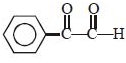
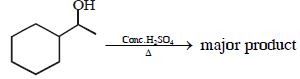
$A_{(g)} \longrightarrow B_{(g)} + C_{(g)}$
The initial pressure of the system before deomposition of $A$ was $P_i$. After time $'t'$ total pressure of the system increased by $x\, units$ and become $'P_t'$. The rate constant $k$ for reaction is given as
$(A)$ $n =3,1=0, m =0$
$(B)$ $n =4, l =0, m =0$
$(C)$ $n =3, l =1, m =0$
$(D)$ $n =3, l =2, m =1$
The correct option for the order is :