MCQ
Sodium, water and phosphate reabsorption is maximum in
  • A
    Loop of Henle
  • Proximal tubule
  • C
    Distal tubule
  • D
    Collecting tubule

Answer

Correct option: B.
Proximal tubule
b
(b) About $65$ percent of the glomerular filtrate is normally reabsorbed in the proximal convoluted tubule before reaching the loop of Henle.

Glucose, amino acids, vitamins, hormone, sodium, potassium, chlorides, phasphates, bicarbonates, much of water and some urea from the filtrate are absorbed.

Need a full question paper?

Generate a complete, print-ready paper with questions like this in minutes — across 16+ boards, with answer keys.

Start Generating Free

Similar questions

$A$ : Tyrannosaurus rex had fearsome dagger like teeth.
$R$ : Tyrannosaurus was largest dinosaur depending upon herbs and shrubs.
This is part not include in frog digestive system
Mollusca is
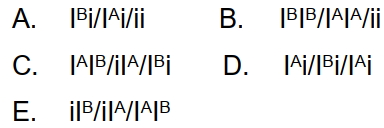
As per $\mathrm{ABO}$ blood grouping system, the blood group of father is $\mathrm{B}^{+}$, mother is $\mathrm{A}^{+}$and child is $\mathrm{O}^{+}$. Their respective genotype can be

Choose the most appropriate answer from the options given below :

Haemophilia, a $X$-linked recessive disease is caused due to deficiency of
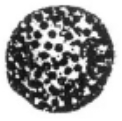
The figure shows a human blood cell. Identify it and give its characteristics.
$A$ person with blood group $O$ will have _____ antibody/antibodies in plasma.
Darwin fail to give explanation about
When a true breeding pea plant that has yellow seeds is pollinated by a plant that has green seeds, all the $F_1$ plants have yellow seeds. This means that the allele for yellow is
Fill in the blanks and choose the correct option given below.
(i) The sequence of periods in geological time sequence: Silurian Devonian Carboniferous A Triassic B Cretaceous C Quaternary.
(ii) Around 200 mya, some of land reptiles e.g. D went back into water to evolve into fish like reptiles.
(iii) The biggest dinosaur was E which was about 20 feet in height and had huge fearsome dagger like teeth.
(iv) Due to F pouched mammals of Australia survived because of lack of competition from any other mammals.
(v) About 15 mya, primates called G (which was more ape-like) and H (which was more man- like) were existing.
(vi) Around 2 mya, primates called I lived in East African grasslands, ate fruit and hunted with stone weapon.
(vii) The first human-like being the hominid was called J, whose brain capacity was K cc.
(viii) The L with brain size of 1400cc lived in near East and Central Asia between 1,00,000 - 40,000 years back. They used hides to protect their body and buried their dead.
(ix) Homo sapiens arose in M and moved across continents and developed into distinct races.
(x) Agriculture came around N years back and human settlements started.