Question
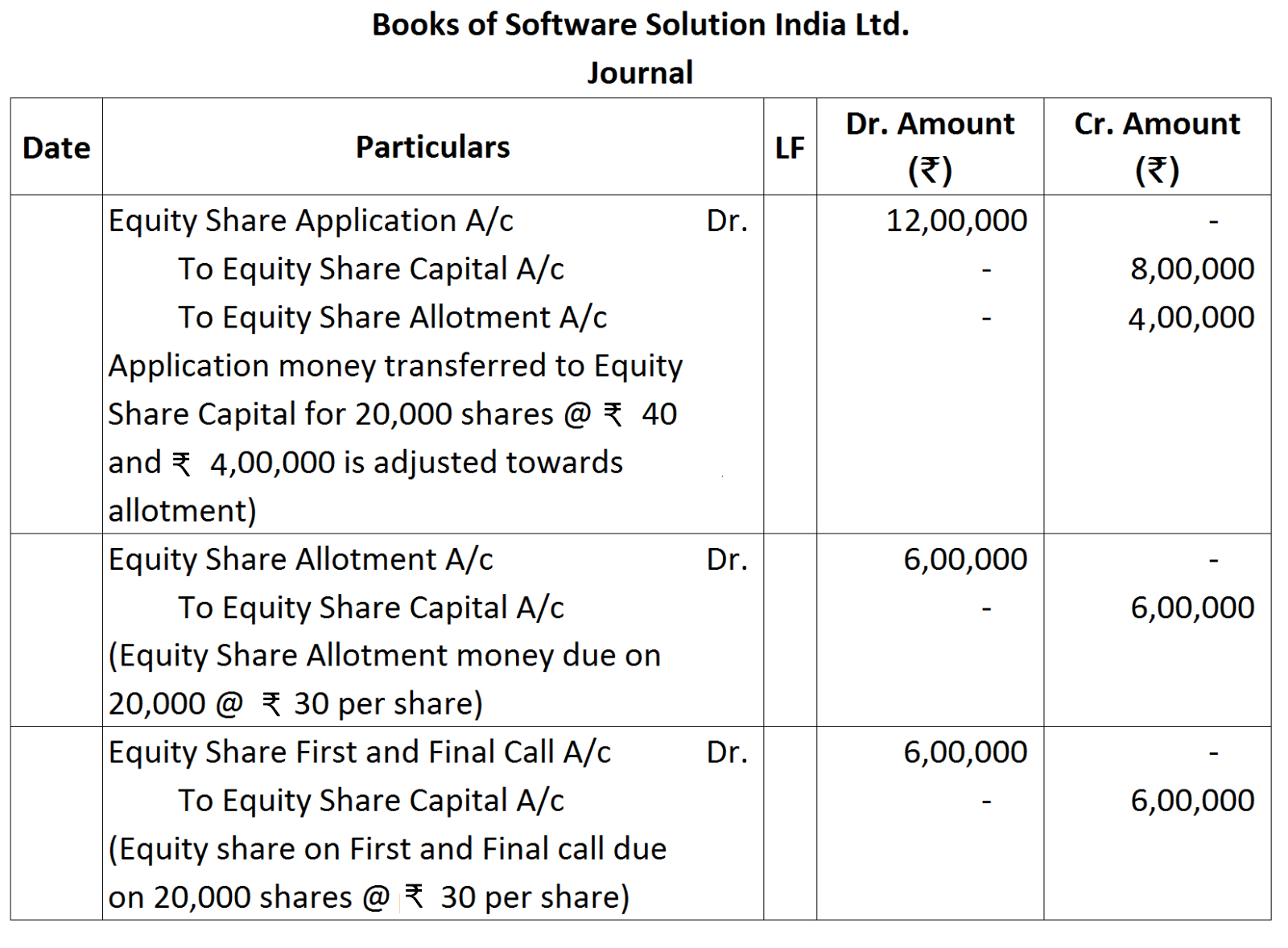
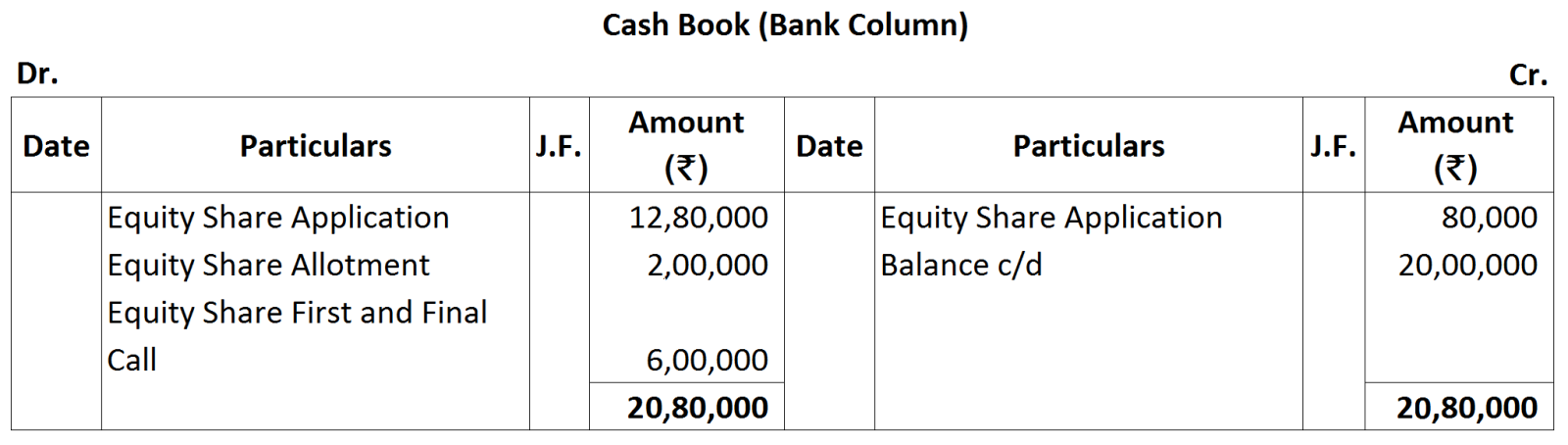
Software solution India Ltd inviting application for 20,000 equity share of ₹ 100 each, payable ₹ 40 on application, ₹ 30 on allotment and ₹ 30 on call. The company received applications for 32,000 shares. Application for 2,000 shares were rejected and money returned to Applicants. Applications for 10,000 shares were accepted in full and applicants for 20,000 share allotted half of the number of share applied and excess application money adjusted into allotment. All money received due on allotment and call. Prepare journal and cash book.
Answer


Amount due on Allotment for 20,000 shares @ ₹ 30 per share
Money adjusted on application 10,000 shares @ ₹ 40 each
Money to be received on Allotment
6,00,000
(4,00,000)
2,00,000

Need a full question paper?

Generate a complete, print-ready paper with questions like this in minutes — across 16+ boards, with answer keys.

Start Generating Free

Similar questions

Discuss the process for the allotment of shares of a company in case of over subscription.
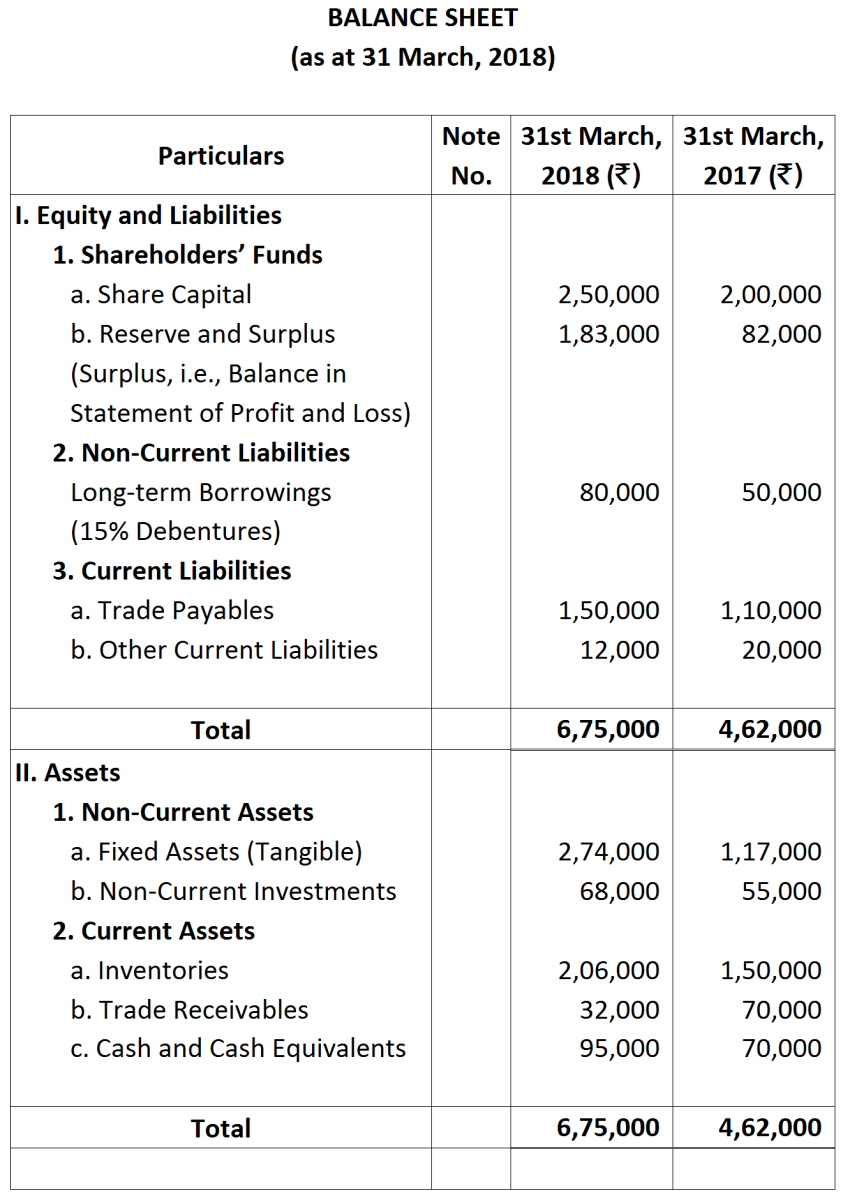
From the following information, perpare Cash Flow Statement:
A company issued 10,000 shares of ₹ 10 each at a premium of ₹ 1 per share, payment to be made as follows:
 
On Application
3
On Allotment
4 (including premium)
On First call
2
On Second and final call
2
Applications were received for 20,000 shares. Applications for 5,000 shares were rejected and allotment was made proportionately to the remaining applicants. The directors made both the calls and all the money were received, except the allotment, first call and final call on 400 shares, which were subsequently forfeited Later, 300 of the forfeited shares were re-issued as fully paid @ ₹ 15 per share. Give journal entries to record the above.
Following information is given to you:
Trade Receivables on 1st April, 2017
₹ 6,80,000
Trade Receivables on 31st March, 2018
₹ 8,20,000
Trade Receivables Turnover Ratio
6 times
Credit Revenue from Operations
80% of Revenue from Operations
Working Capital Turnover Ratio
9 times
Current Ratio
2.25
Calculate:
  1. Revenue from Operations.
  2. Working Capital.
  3. Current Assets.
Exe Ltd. purchased the assets of the book value ₹ 4,00,000 and took over the liabilities of ₹ 50,000 from Mohan Bros. It was agreed that the purchase consideration, settled at ₹ 3,80,000 be paid by issuing debentures of ₹ 100 each.
Pass journal entries if debenture are issued:
  1. at par
  2. at a discount of 10% and
  3. at a premium of 10%.
It was agreed that any fraction of debentures be paid in cash.
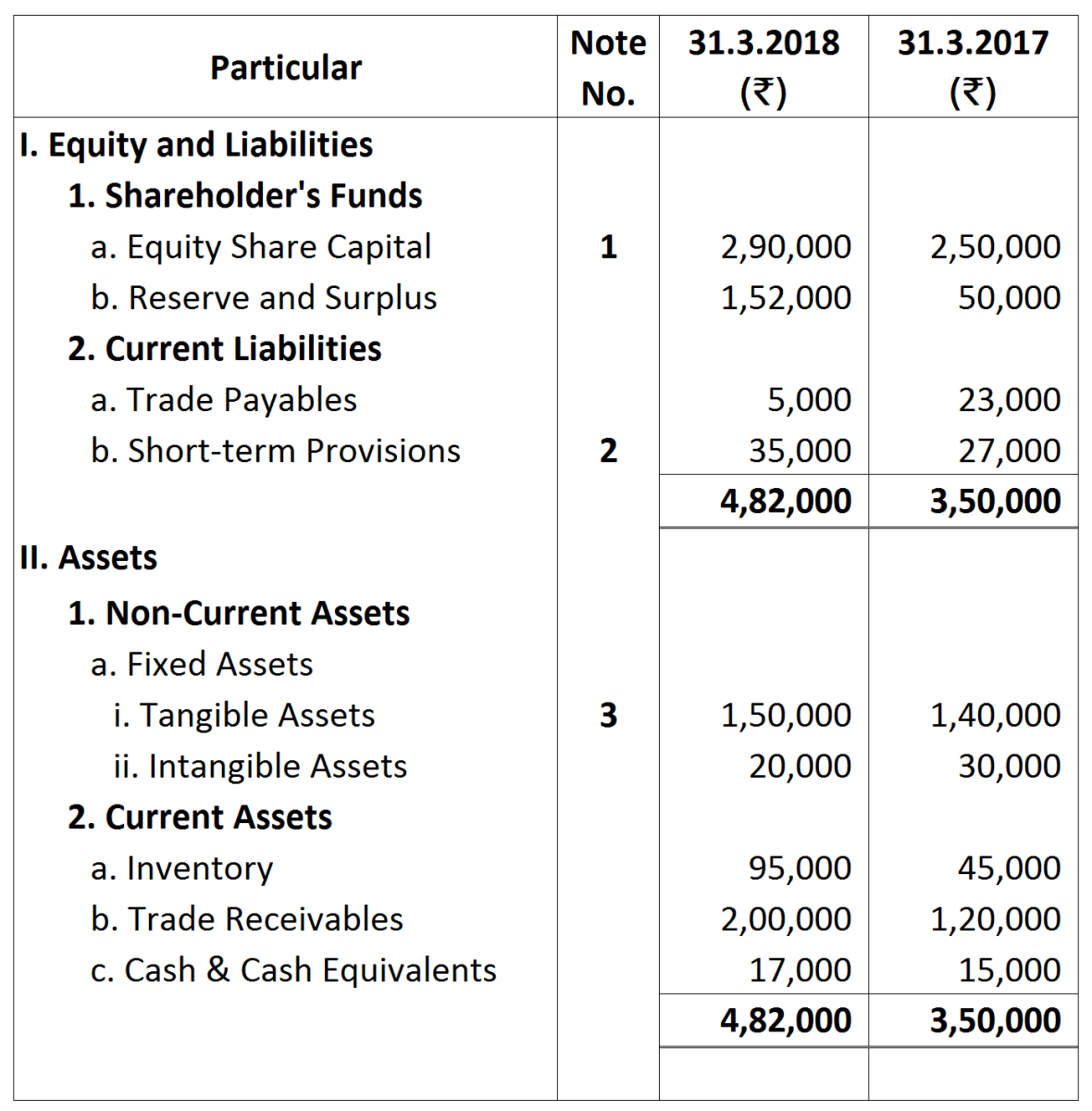
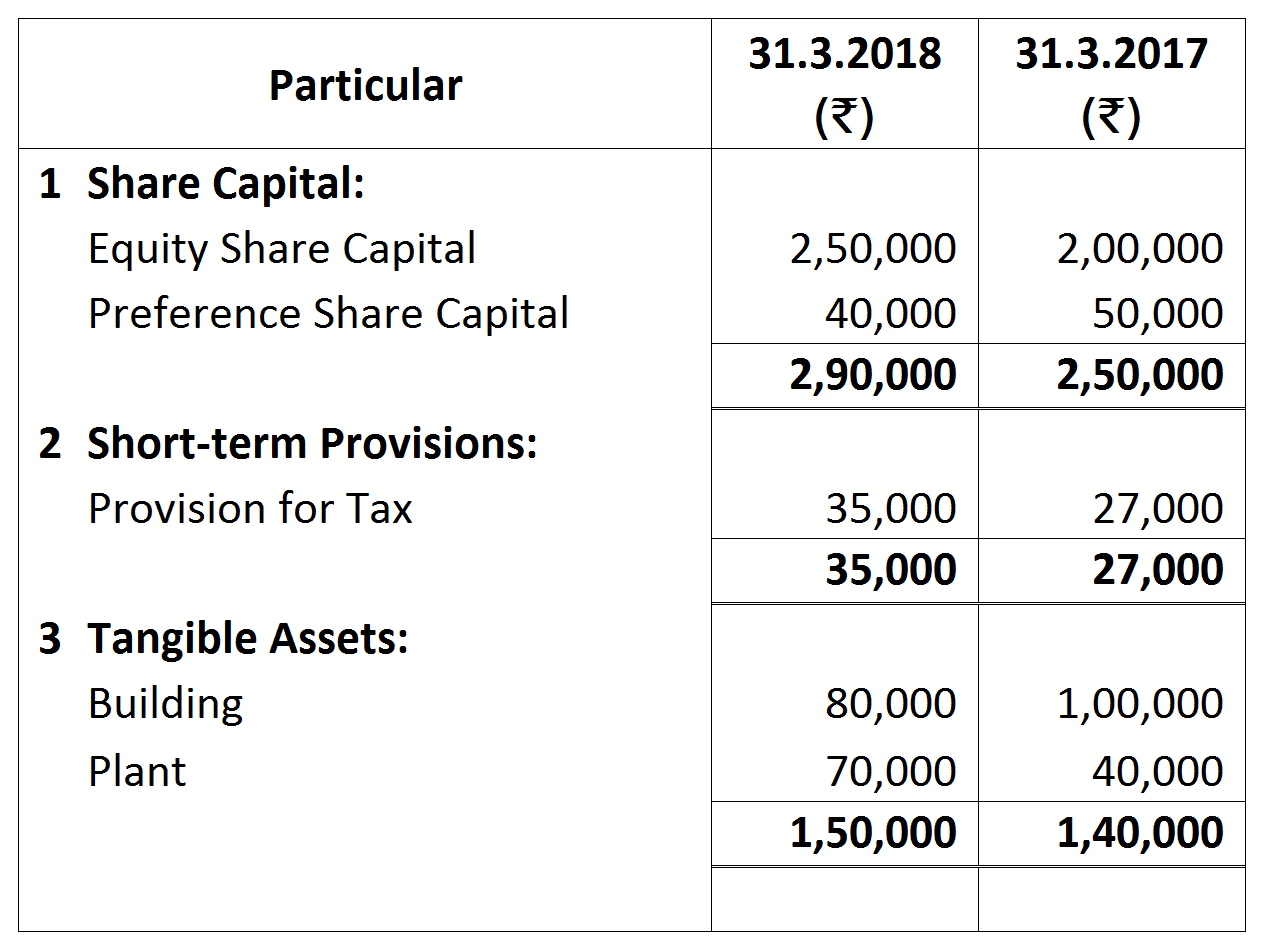
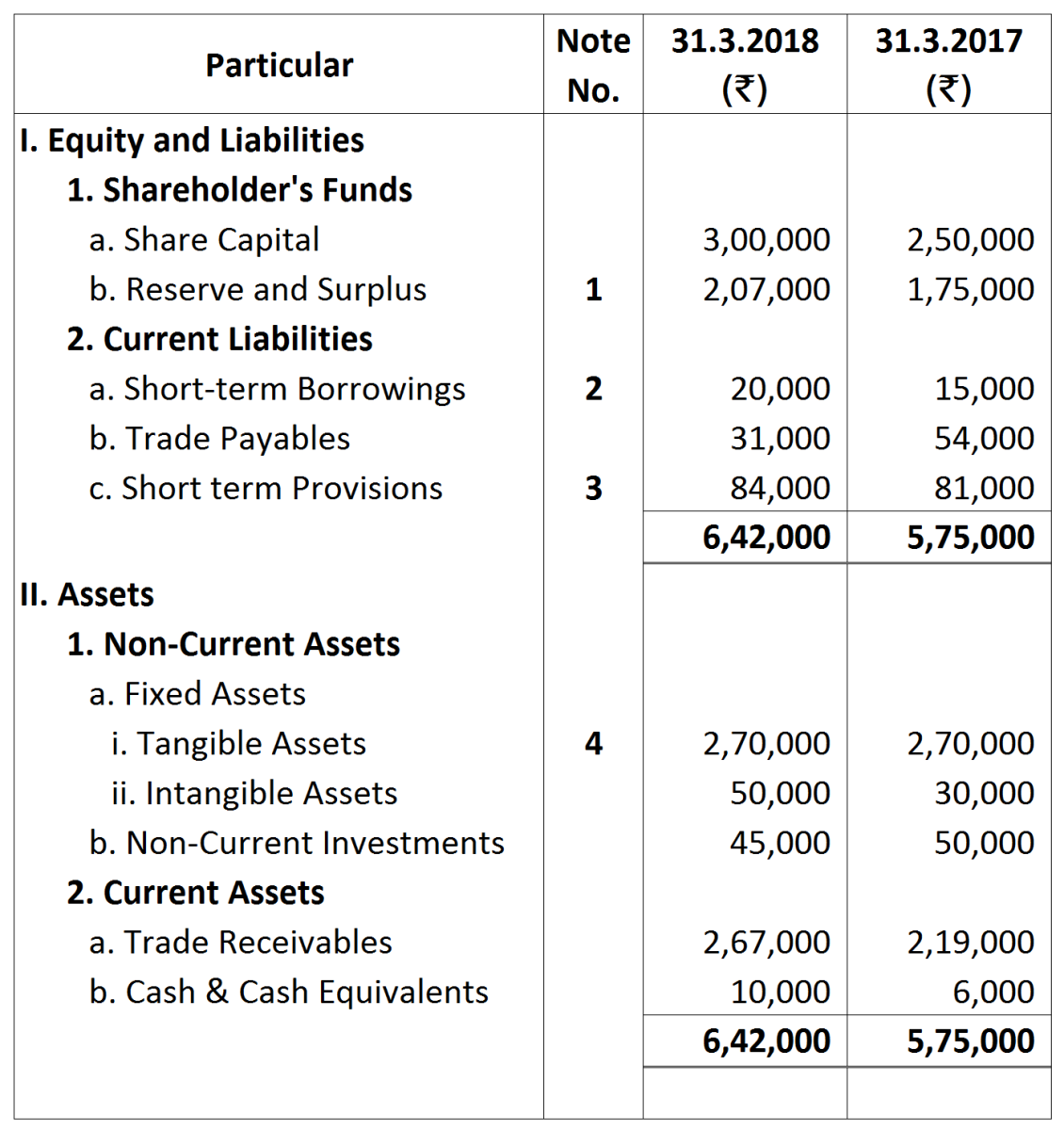
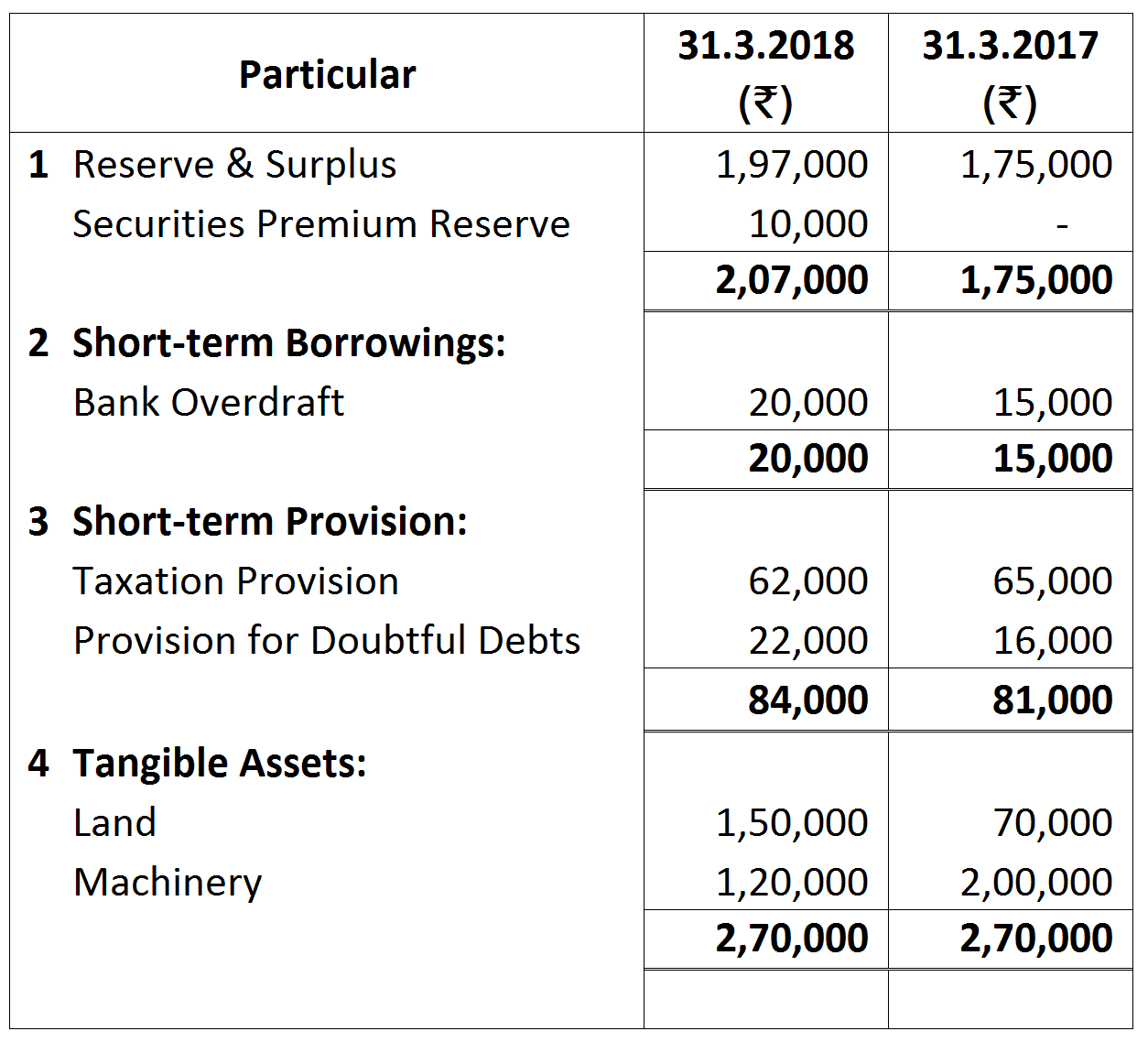
From the following Balance Sheets of Vivek Ltd., prepare Cash Flow Statement: Notes:

Additional Information:
Depreciation charged on Plant was ₹ 30,000 and on Building ₹ 50,000 Income Tax paid during the year amounted to ₹ 25,000.
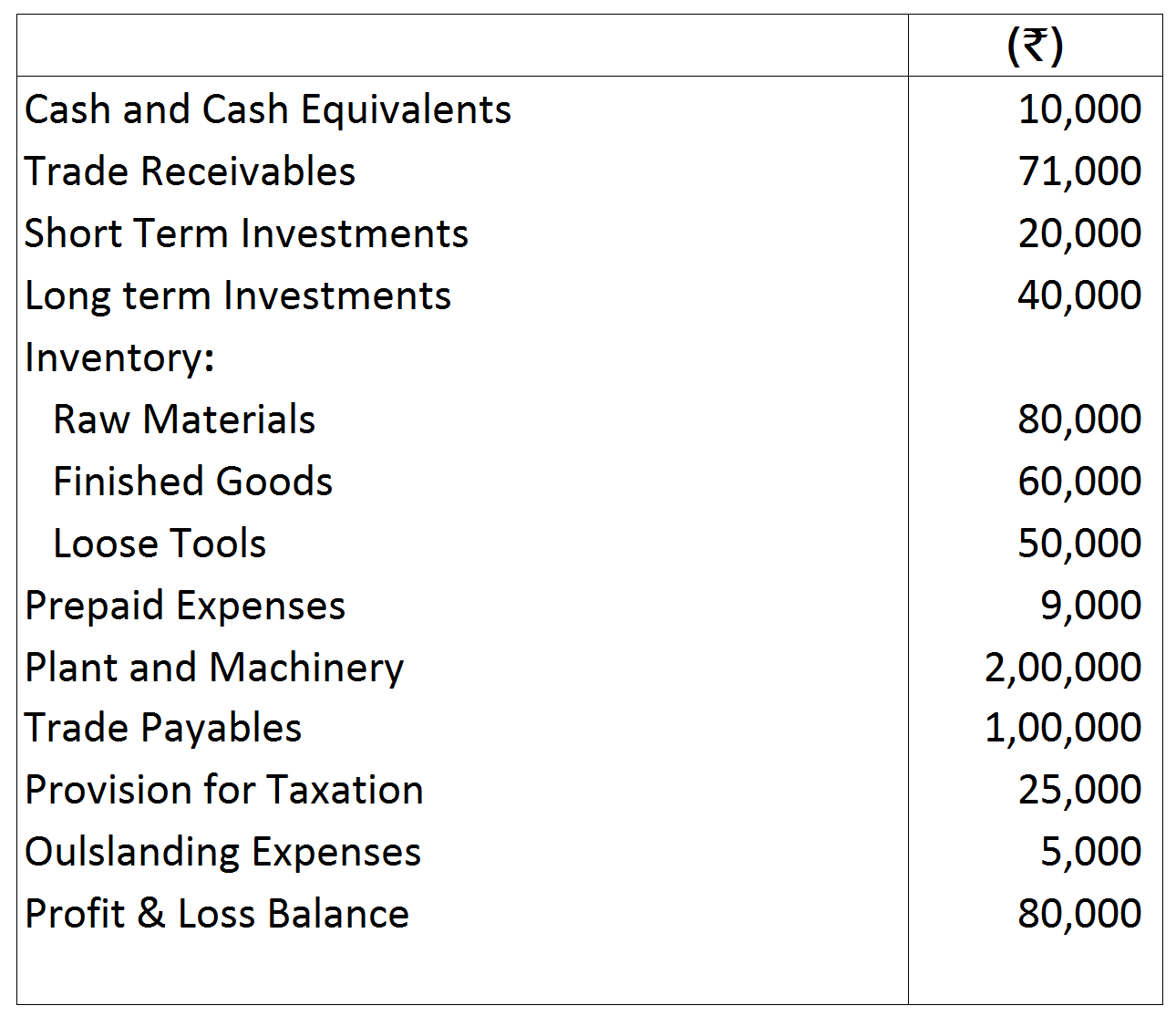
Calculate Current Ratio and Quick Ratio from the following. Also give your opinion about the short term financial position of the company:-
Following are the Balance Sheets of Pawan Ltd.

Notes:

Additional Information:
  1. Machinery Costing ₹ 60,000 was sold for ₹ 18,000 during the year.
  2. Interim Dividend paid during the year ₹ 25,000.
  3. During the year Company sold 40% of its original non-current investments at a loss of 20%.
You are required to prepare Cash-Flow Statement.
Under which heads will the following items be shown in the Balance Sheet of a company:
  1. Bank Balance.
  2. Investments (Long-term).
  3. Outstanding Salary.
  4. Authorised Capital.
  5. Bills Payable.
  6. Unclaimed Dividends.
  7. Shares Option Outstanding Account.
  8. General Reserve.
  9. Subsidy Reserve?
Suzuki Limited issued a prospectus inviting applications for 60,000 shares of ₹ 10 each at a premium of 30% payable as follows: On Application ₹ 3.50; On Allotment ₹ 5.50 (including premium): On First Call ₹ 2 and on Second Call ₹ 2.
Applications were received for 95,000 shares and allotment was made pro-rota to applicants of 80,000 shares. Money over-paid on applications was employed on account of sums due on allotment.
X, to whom 1,500 shares were allotted, failed to pay the allotment money and on his subsequent failure to pay the First Call his shares were forfeited. Y, the holder of 2,400 shares failed to pay the two calls and his shares were forfeited after the Second Call. Of the shares forfeited, 3,000 shares were sold to Z as fully paid, Z paying ₹ 8.50 per share, the whole of Y’s share being included.
Give journal entries prepare Bank Account.