Question
Soil particles size is an important factor to determine the property of soil. Explain?

Answer

Different particles of soil have different sizes which affect its properties like:
  • Sand particles are quite large and having large spaces between them. These spaces are filled with air. Water can drain quickly through these spaces. So, sandy soils tend to be light, well aerated and rather dry.
  • Clay particles, being much smaller, pack tightly together, leaving little space for air. So, clay soils have little air. But they are heavy as they hold more water than the sandy soils.
  • Loamy soil is a mixture of sand, clay and another type of soil particle known as silt. The size of the silt particles is between those of sand and clay. The loamy soil also has humus in it. It has the good water holding capacity for the growth of plants.

Need a full question paper?

Generate a complete, print-ready paper with questions like this in minutes — across 16+ boards, with answer keys.
Start Generating Free

Similar questions

Explain how the exchange of gases occurs in human beings.
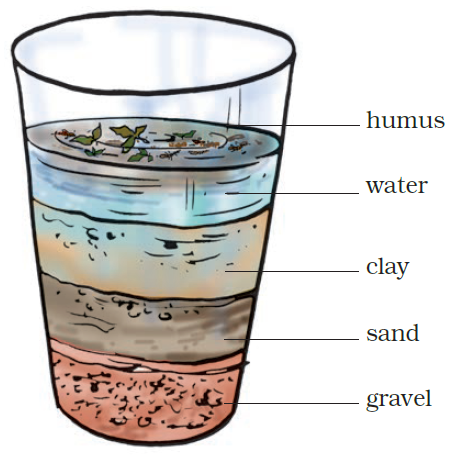
Observe the following figure and answer the following Questions.
  1. Which is the heaviest rock material?
  2. Which is the lightest soil component?
  3. Why different layers of soil component are formed?
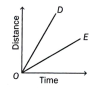
The following figure shows the distance-time graph for the motion of two objects D and E. Which one of them is moving slower?
Image
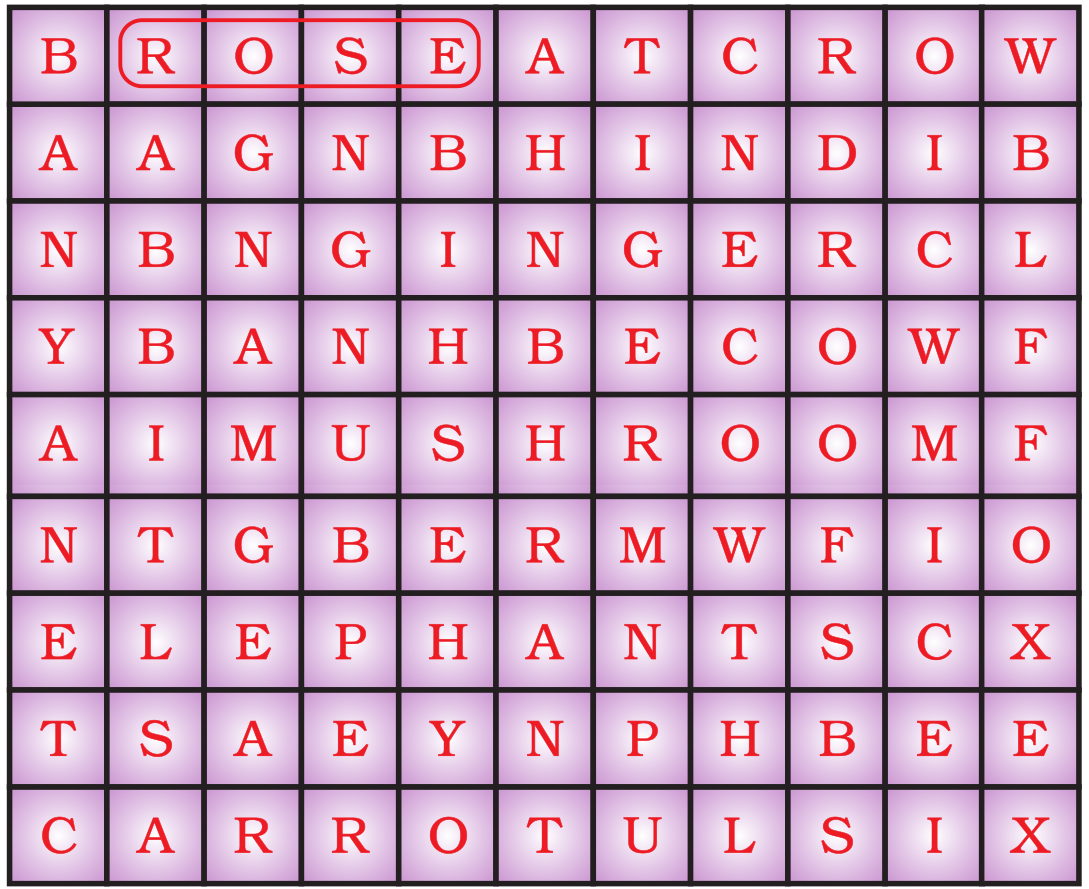
Spot as many organisms as possible in the puzzle given as Figure by encircling them as shown. Write the names on a sheet of paper and categorise them into autotrophs and heterotrophs. Classify the heterotrophs into herbivores, carnivores, omnivores and saprophytes.

What do you mean by instantaneous speed$?$
Is the distilled water acidic/ basic/ neutral? How would you verify it?
Explain the two types of fibres.
The tropical rainforest has a large population of animals. Explain why it is so.
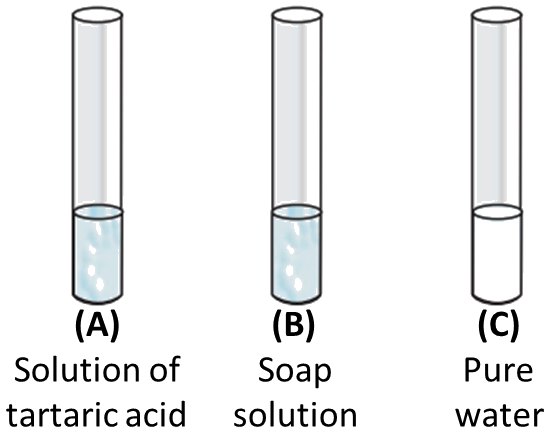
You are provided with three test tubes A, Sand Cas shown in figure with different liquids. What will you observe when you put,
  1. A piece of blue litmus paper in each test tube?
  2. A piece of red litmus paper in each test tube?
  3. A few drops of phenolphthalein solution to each test tube?
A student was given a flower. He was asked to pick the different whorls of flower by the forcep. He pulled each part of the flower and laid them on the chart paper in a sequence and named them W, X, Y, Z (from outer to inner whorl). He was unable to name them.
Help the student to name the different parts of a flower. Also help him to tell which part produces male gamete and female gametes.