Question
Solve:$\frac{a}{x}-\frac{b}{y}=0, \frac{a b^2}{x}+\frac{a^2 b}{y}=a^2+b^2$

Answer

Given equation are $\frac{a}{x}-\frac{b}{y}=0$ and $\frac{a b^2}{x}+\frac{a^2 b}{y}=a^2+b^2$
Taking $\frac{1}{x}=u$ and $\frac{1}{y}=v$, the above system of equations become
$a u-b v+0=0$
$ a b^2 u+a^2 b v-\left(a^2+b^2\right)=0$
By cross$-$multiplication, we have
$\frac{u}{-b \times\left[-\left(a^2+b^2\right)\right]-a^2 b \times 0}=\frac{-v}{a \times\left[-\left(a^2+b^2\right)\right]-a b^2 \times 0}=\frac{1}{a \times a^2 b-a b^2 \times(-b)}$
$ \Rightarrow \frac{u}{b\left(a^2+b^2\right)}=\frac{-v}{-a\left(a^2+b^2\right)}=\frac{1}{a^3 b+a b^3}$
$ \Rightarrow \frac{u}{b\left(a^2+b^2\right)}=\frac{v}{a\left(a^2+b^2\right)}=\frac{1}{a b\left(a^2+b^2\right)}$
$ \Rightarrow u=\frac{b\left(a^2+b^2\right)}{a b\left(a^2+b^2\right)}$ and $v=\frac{a\left(a^2+b^2\right)}{a b\left(a^2+b^2\right)}$
$ \Rightarrow \mathrm{u}=\frac{1}{a}$ and $\mathrm{v}=\frac{1}{b}$
$ \Rightarrow \frac{1}{x}=\frac{1}{a}$ and $\frac{1}{y}=\frac{1}{b}$
$ \Rightarrow \mathrm{x}=\mathrm{a}$ and $\mathrm{y}=\mathrm{b}$

Need a full question paper?

Generate a complete, print-ready paper with questions like this in minutes — across 16+ boards, with answer keys.
Start Generating Free

Similar questions

The length and breadth of a rectangular field are in the ratio $8: 5. A 2\ m$ wide path runs all around outside the field. The area of the path is $848\ m^2$. Find the length and breadth of the field.
Solve the following equation for the unknown: $\frac{x}{2}+\frac{x}{4}+\frac{x}{8}=7$
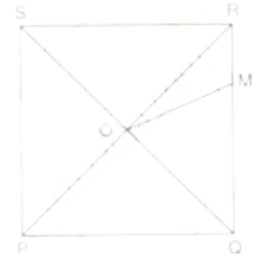
$\text{PQRS}$ is a square whose diagonals $PR$ and $QS$ intersect at $O.M$ is a point on $QR$ such that $OQ = MQ.$ Find the measures of $\angle MOR$ and $\angle QSR.$
Image
Solve :$\frac{9}{x}-\frac{4}{y}=8 ,\frac{13}{x}+\frac{7}{y}=101$
Prove that the straight lines joining the mid$-$points of the opposite sides of a quadrilateral bisect each other.
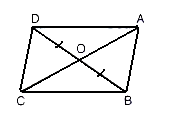
In the given figure, the diagonals $AC$ and $BD$ intersect at point $O.$ If $OB = OD$ and $AB\|DC,$show that:$(i)$Area $(\triangle DOC) =$ Area$ (\triangle AOB).(ii)$ Area $(\triangle DCB) =$ Area $(\triangle ACB).(iii)\text{ABCD}$ is a parallelogram.
Evaluate the following :$(3.29)^3 + (6.71)^3$
Draw the graph of the equation, 2x + y = 6.
Find the co-ordinates of the points, where the graph meets the co-ordinate axes.
[Hint. The graph meets x-axis at the point where y = 0 The graph meets y-axis at the point where x =0.]
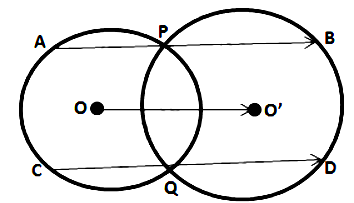
In the following figure;$ P$ and $Q$ are the points of intersection of two circles with centers $O$ and $O'$. If straight lines $\text{APB}$ and $\text{CQD}$ are parallel to $OO';$prove that: $(i) OO' = \frac{1}{2} AB ; (ii) AB = CD$
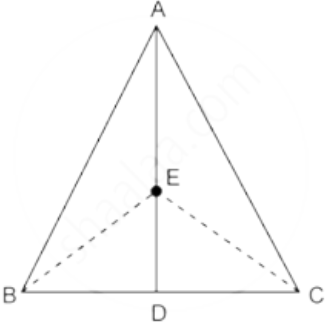
In the given figure, $\text{ABC}$ is a triangle and $AD$ is the median.
Image
If $E$ is the midpoint of the median $A D$, prove that: Area of $\triangle A B C=4 \times$ Area of $\triangle A B E$