Question
Solve the following quadratic equation:
$3\Big(\frac{\text{7x}+1}{\text{5x}-3}\Big)-4\Big(\frac{\text{5x}-3}{\text{7x}+1}\Big)=11$ $\text{x}\neq\frac{3}{5},\ \frac{-1}{7}$
Answer

$3\Big(\frac{\text{7x}+1}{\text{5x}-3}\Big)-4\Big(\frac{\text{5x}-3}{\text{7x}+1}\Big)=11$
Taking $\frac{\text{7x}+1}{\text{5x}-3}=\text{y},$ we have
$\text{3y}-\frac{4}{\text{y}}=11$
$\Rightarrow\frac{\text{3y}^2-4}{\text{y}}=11$
$\Rightarrow 3y^2 - 4 = 11y$
$\Rightarrow 3y^2 - 11y - 4 = 0$
$\Rightarrow 3y^2 - 12y + y - 4 = 0$
$\Rightarrow 3y(y - 4) + 1(y - 4) = 0$
$\Rightarrow (y - 4)(3y + 1) = 0$
$\Rightarrow y - 4 = 0 or 3y + 1 = 0$
⇒ y = 4 or $\text{y}=\frac{-1}{3}$
$\Rightarrow\frac{\text{7x}+1}{\text{5x}-3}=4$ or $\frac{\text{7x}+1}{\text{5x}-3}=\frac{-1}{3}$
$\Rightarrow 7x + 1 = 20x - 12 or 21x + 3 = -5x + 3$
$\Rightarrow 13x = 13 or 26x = 0$
$\Rightarrow x = 1 or x = 0$

Need a full question paper?

Generate a complete, print-ready paper with questions like this in minutes — across 16+ boards, with answer keys.

Start Generating Free

Similar questions

Show graphically that the following system of equation is in-consistent (i.e. has no solution):
3x - 5y = 20
6x - 10y = -40
The numerator of a fraction is 3 less than its denominator. If 1 is added to the denominator, the fraction is decreased by $\frac{1}{15}.$ Find the fraction.
If $\sec\theta+\tan\theta=\text{p},$ prove that:$\tan\theta=\frac12\Big(\text{p}+\frac{1}{\text{p}}\Big)$
If $\cos\theta+\sin\theta)=\sqrt{2}\sin\theta,$ show that $\sin\theta-\cos\theta=\sqrt{2}\cos\theta.$
Find the roots of the following equations, if they exist, by applying the quadratic formula:$\text{x}^2-(\sqrt3+1)\text{x}+\sqrt3=0$
From a solid cylinder of height 2.8cm and diameter 4.2cm, conical cavity of the same height and same diameter is hollowed out. Find the total surface area of the remaining solid.
Prove the following identities:
$\frac{\tan\theta}{(\sec\theta-1)}+\frac{\tan\theta}{(\sec\theta+1)}=2\text{cosec}\theta$
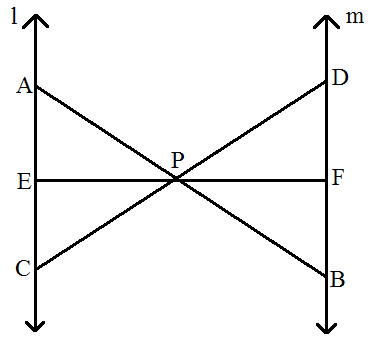
$\text{l}\parallel\text{m}$ and line segments AB, CD and EF are concurrent at point P. Proved that $\frac{\text{AE}}{\text{BF}}=\frac{\text{AC}}{\text{BD}}=\frac{\text{CE}}{\text{FD}}.$
The perimeter of the quadrant of a circle is 25cm. find its area. $\Big[\text{Use }\pi=\frac{22}{7}\Big]$
Compute the median for each of the following data:
(1)
Marks
No. of students
Less than 10
0
Less than 30
10
Less than 50
25
Less than 70
43
Less than 90
65
Less than 110
87
Less than 130
96
Less than 150
100
(2)
Marks
No. of students
More than 150
0
More than 140
12
More than 130
27
More than 120
60
More than 110
105
More than 100
124
More than 90
141
More than 80
150