Question
Solve the following quadratic equations by factorization:
$3\text{x}^2-2\sqrt{6}\text{x}+2=0$

Answer

We have been given
$3\text{x}^2-2\sqrt{6}\text{x}+2=0$
$3\text{x}^2-\sqrt{6}\text{x}-\sqrt{6}\text{x}+2=0$
$\sqrt{3}\text{x}\big(\sqrt{3}\text{x}-\sqrt{2}\big)-\sqrt{2}\big(\sqrt{3}\text{x}-\sqrt{2}\big)=0$
$\big(\sqrt{3}\text{x}-\sqrt{2}\big)(\sqrt{3}\text{x}-\sqrt{2})=0$
Therefore,
$\sqrt{3}\text{x}-\sqrt{2}=0$
$\sqrt{3}\text{x}=\sqrt{2}$
$\text{x}=\sqrt{\frac{2}{3}}$
Hence, $\text{x}=\sqrt{\frac{2}{3}}$

Need a full question paper?

Generate a complete, print-ready paper with questions like this in minutes — across 16+ boards, with answer keys.
Start Generating Free

Similar questions

Find the area of an isoscale triangle each of whose equal sides is $13\ cm$ and whose base is $24\ cm.$
Let there be an A.P. with first term ' $a$ ', common difference ' $d$ '. If $a_n$ denotes in $n^{\text {th }}$ term and $S_n$ the sum of first $n$ terms, find.
$n$ and $a_n$, if $a=2, d=8$ and $S_n=90$.
Show that $x = -2$ is a solution of $3x^2+ 13x + 14 = 0.$
$A(6, 1), B(8, 2)$ and $C(9, 4)$ are three vertices of a parallelogram $ABCD.$ If $E$ is the mid-point of $DC,$ find the area of $\triangle\text{ADE.}$
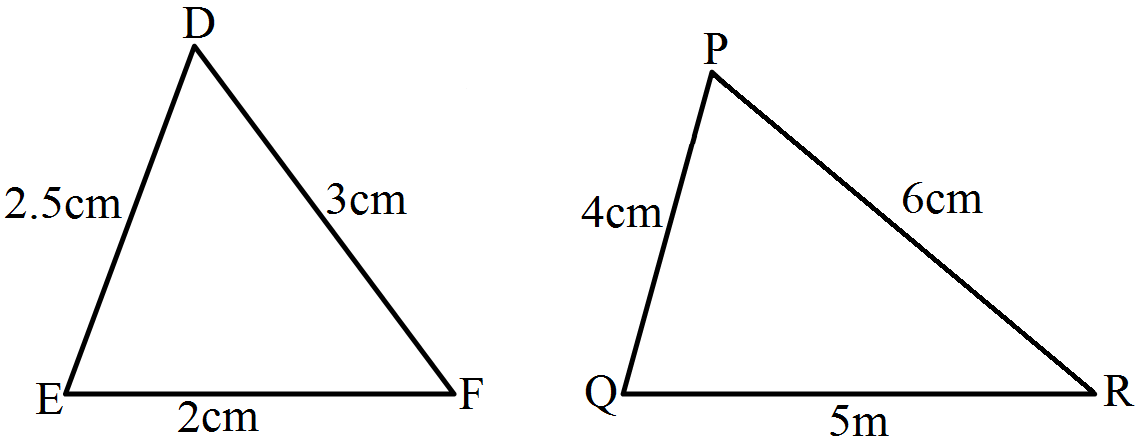
In the given pairs of triangles, find which pair of triangles are similar. State the similarity criterior and write the similarity relation in symbolic from.
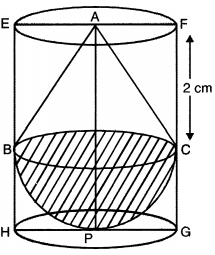
A solid toy is in the form of a hemisphere surmounted by a right circular cone. The height of the cone is $2 \ cm$ and the diameter of the base is $4 \ cm.$ Determine the volume of the toy. If a right circular cylinder circumscribes the toy, find the difference of the volume of the cylinder and toy. $($Take $\pi = 3.14)$
Solve the following pair of equations by substitution method:
$7x – 15y = 2 ...(1)$
$x + 2y = 3 ...(2)$
Two dice, one blue and one grey are thrown at the same time. Write down all the possible outcomes. What is the probability that the sum of the two numbers appearing on the top of the dice is
  1. $8?$
  2. $13?$
  3. less than or equal to $12?$
Prove that the square of any positive integer is of the form $5q, 5q + 1, 5q + 4$ for some integer $q.$
Ayush starts walking from his house to office. Instead of going to the office directly, he goes to a bank first, from there to his daughter’s school and then reaches the office. What is the extra distance travelled by Ayush in reaching the office$? ($Assume that all distance covered are in straight lines$).$ If the house is situated at $(2, 4),$ bank at $(5, 8),$ school at $(13, 14)$ and office at $(13, 26)$ and coordinates are in kilometers.