Question
Solve the following simultaneous equations :$3(2u + v) = 7uv;3(u + 3v) = 11uv$

Answer

$ 3(2 u+v)=7 u v$
$3(u+3 v)=11 u v $
Dividing by $uv,$ we get,
$ \frac{6}{v}+\frac{3}{u}=7 \ldots \ldots . . (1)$
$3(u+3 v)=11 u v$
$3 u+9 v=11 u v $
Dividing by $uv,$ we get
$ \frac{3}{v}+\frac{8}{u}=11 \dots...........(2) $
Multiplying $(1)$ by $3,$ we get,
$ \frac{18}{v}+\frac{9}{u}=21\dots ........(3) $
Subtracting $(2)$ from $(3),$ we get,
$ \frac{15}{v}=10$
$\Rightarrow v =\frac{15}{10}=\frac{3}{2}$
$\therefore \frac{3}{u} $
$ =7-6 \times \frac{2}{3}$
$=7-4$
$=3$
$\Rightarrow u=1 $
Thus, the solution set is $\left(1, \frac{3}{2}\right)$.

Need a full question paper?

Generate a complete, print-ready paper with questions like this in minutes — across 16+ boards, with answer keys.
Start Generating Free

Similar questions

Construct a rectangle $\text{ABCD}$ with one diagonal $AC = 5.8\ cm$ and the acute angle between the diagonals is equal to $45^\circ .$
Prove that the bisectors of opposite angles of a parallelogram are parallel.
If $A = 30^\circ ;$show that:$\frac{1+\sin 2 A+\cos 2 A}{\sin A+\cos A}=2 \cos A$
The marks obtained by 35 students in an examination are given below :
370, 290, 318, 175, 170, 410, 378, 405, 380, 375, 315, 305, 325, 275, 241, 288, 261, 355, 402, 380, 178, 253, 428, 240, 210,175,154, 405, 380, 370, 306, 460, 328, 440, 425
From a cumulative frequency table with class intervals of length 50.
If $a ^2+\frac{1}{ a ^2}=14$; find the value of $a +\frac{1}{ a }$
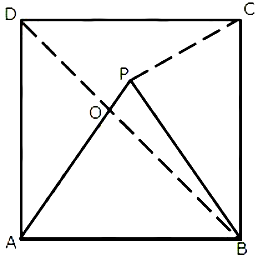
The given figure shows a square $ABCD$ and an equilateral $\triangle ABP.$


Calculate: $(i) \angle AOB;(ii) \angle BPC;(iii) \angle PCD;(iv)$ Reflex $\angle APC$
Find the value of:$\frac{\log \sqrt{8}}{8}$
$\text{ABCD}$ is a parallelogram. $P$ and $Q$ are the mid$-$points of sides $AB$ and $AD$ respectively.Prove that area of $\triangle APQ=\frac{1}{8}$ of the area of parallelogram $\text{ABCD}.$
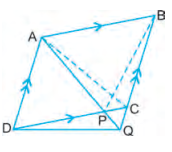
In the adjoining figure, ABCD is a parallelogram. Any line through A cuts DC at a point P and $B C$ produced at $Q$. Prove that :
$\operatorname{ar}(\triangle BPC )=\operatorname{ar}(\triangle DPQ )$.
Image
The weekly wages (in rupees) of 30 workers in a factory are given below :
630, 635, 690, 610, 635, 636, 639, 645, 698, 690, 620, 660, 632, 633, 655, 645, 604, 608, 612, 640, 685, 635, 636, 678, 640, 668, 690, 606, 640, 690
Represent the data in the form of a frequency distribution with class size 10.