Question
Solve the following systems of linear inequations graphically:
$\text{x}+\text{y}\geq1,7\text{x}+9\text{y}\leq63,\text{x}\leq6,\text{y}\leq5,\text{x}\geq0,\text{y}\geq0$
Answer

Get the step-by-step solution for this question inside the Vidyadip app.

Get the answer in the app

Need a full question paper?

Generate a complete, print-ready paper with questions like this in minutes — across 16+ boards, with answer keys.

Start Generating Free

Similar questions

Prove that the centres of the three circles $x^2 + y^2 - 4x - 6y - 12 = 0, x^2 + y^2 + 2x + 4y - 10 = 0$ and $x^2 + y^2 - 10x - 16y - 1 = 0$ are collinear.
Prove that the area of the parallelogram formed by the lines 3x - 4y + a = 0, 3x - 4y + 3a= 0, 4x - 3y - a = 0 and 4x - 3y - 2a = 0 is $\frac{2\text{a}^2}{7}$ sq.units.
Find the equation of the hyperbola whoseFocus is at $(5, 2),$ vertex at $(4, 2)$ and center at $(3, 2)$
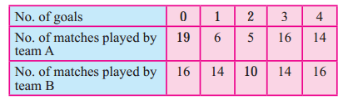
Compute the coefficient of variation for team A and team B.

Image

Which team is more consistent?

Find the distance between $P(x_1, y_1)$ and $Q(x_2, y_2)$ when,
  1. $PQ$ is parallel to the y-axis.
  2. $PQ$  is parallel to the x-axis.
If A = {1, 2, 3}, B = {4}, C = {5}, then verify that:
$\text{A}\times(\text{B}-\text{C})=(\text{A}\times\text{B})-(\text{A}\times\text{C})$
Find the equation of the circle which circumscribes the triangle formed by the lines
$x + y = 2, 3x - 4y = 6$ and $x - y = 0$.
Find the lengths of the intercepts made on the co-ordinate axes, by the circles.

$x^2+y^2-5 x+13 y-14=0$

Evaluate $\left|\begin{array}{ccc}2 & -3 & 5 \\ 6 & 0 & 4 \\ 1 & 5 & -7\end{array}\right|$ and cofactors of elements in the $2^{nd}$ determinant and verify:
$i. -a_{21} \cdot M_{21}+a_{22} \cdot M_{22}-a_{23} \cdot M_{23}=$ value of $A a_{21} \cdot C_{21}+a_{22} \cdot C_{22}+a_{23} \cdot C_{23}-$ value of $A$ where $M_{21}, M_{22}, M_{23}$ are minors of $a_{21}, a_{22}, a_{23}$ and $C_{21}, C_{22}, C_{23}$ are cofactors of $a_{21}, a_{22}, a_{23}$.
Prove the following by the principle of mathematical induction:
$\frac{1}{2}+\frac{1}{4}+\frac{1}{8}+...+\frac{1}{2^\text{n}}=1-\frac{1}{2^\text{n}}$