Question
State any two advantages between a bill of exchange and a draft.

Answer

The advantages of Bill of Exchange are:
  1. Facilitates Purchase and Sale of Goods on Credit: It facilitates credit purchase and sale of goods because Bill of Exchange is an unconditional promise to pay.
  2. Serves as a Source of Finance: Bills of Exchange can be discounted with a bank or NBFC so that the enterprise allowing credit can receive the amount immediately without the debtor having to pay before time.
  3. Easy to Recover the Amount: If a Bill of Exchange is dishonoured, it is easier to recover the amount legally than in the case of an ordinary debt.
  4. Endorsement: A Bill of Exchange can be endorsed to other parties; thus it serves almost the same purpose as cash.

Need a full question paper?

Generate a complete, print-ready paper with questions like this in minutes — across 16+ boards, with answer keys.
Start Generating Free

Similar questions

Prepare Accounting Equation on the basis of the following transactions:
  1. Started business with cash ₹ 70,000.
  2. Credit purchase of goods ₹ 18,000.
  3. Payment made to creditors in full settlement ₹ 17,500.
  4. Purchase of machinery for cash ₹ 20,000.
Why receipts are classified into capital and revenue?
Journalise the following in the books of Hari.
Sohan informs Hari that Mohan's acceptance for ₹ 13,000, endorsed in favour of Sohan by Hari, has been dishonoured. Sohan agrees to accept ₹ 3,000 in cash and an acceptance at 3 months together with interest @ 12% per annum.
Rectify the following errors assuming that there is no Suspense Account:
  1. Salary of ₹ 5,000 paid to Rahul was not posted to Salaries Account.
  2. Sales to Amrish of ₹ 1,430 posted to his account as ₹ 1,340.
  3. Sales to Vijay of ₹ 2,470 posted to his account as ₹ 2,740.
  4. Purchases from Pal of ₹ 1,430 posted to his account as ₹ 1,340.
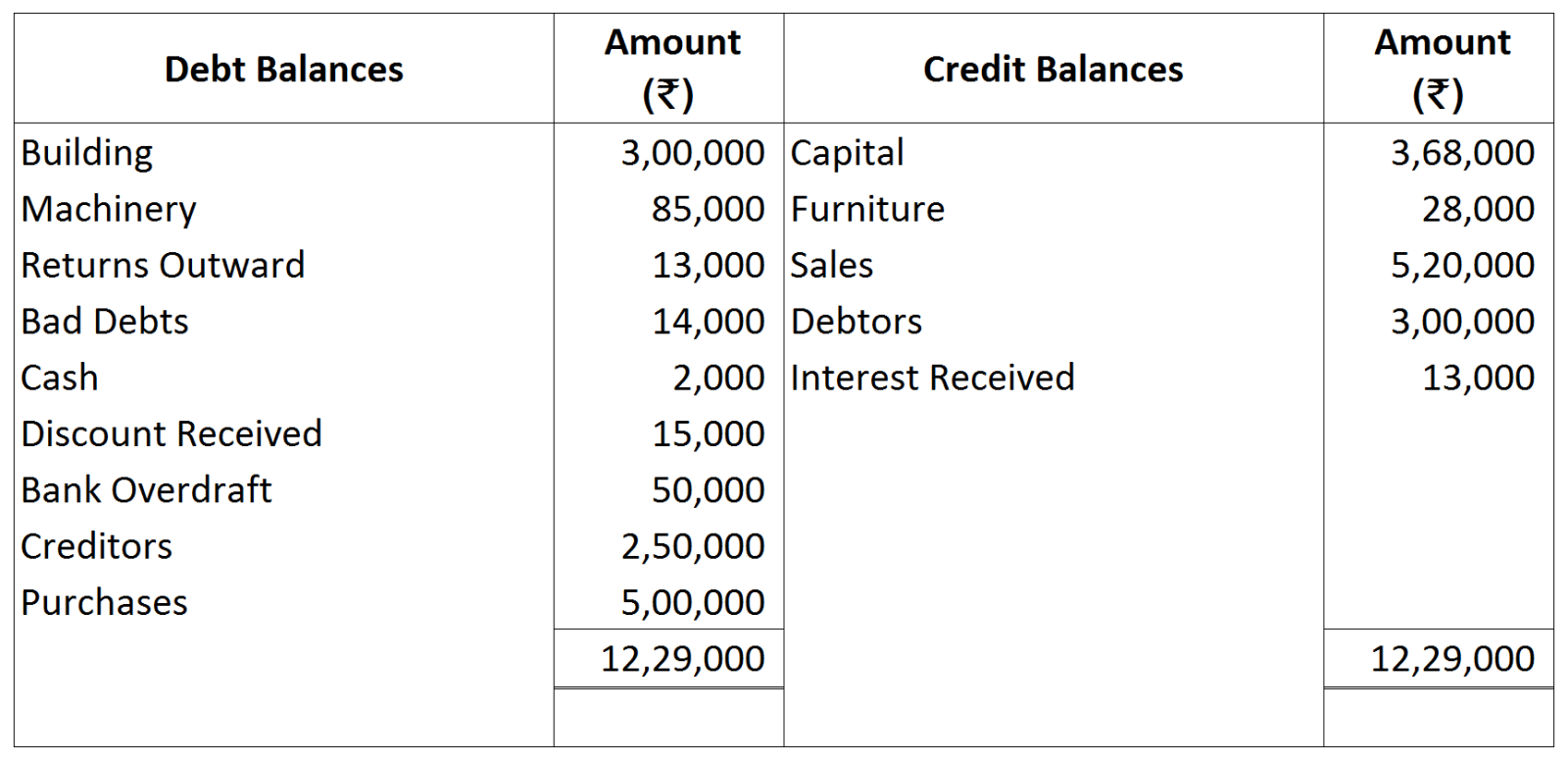
Following Trial Balance is given but it is not correct. Prepare correct Trial Balance.
Give any three examples of revenues.
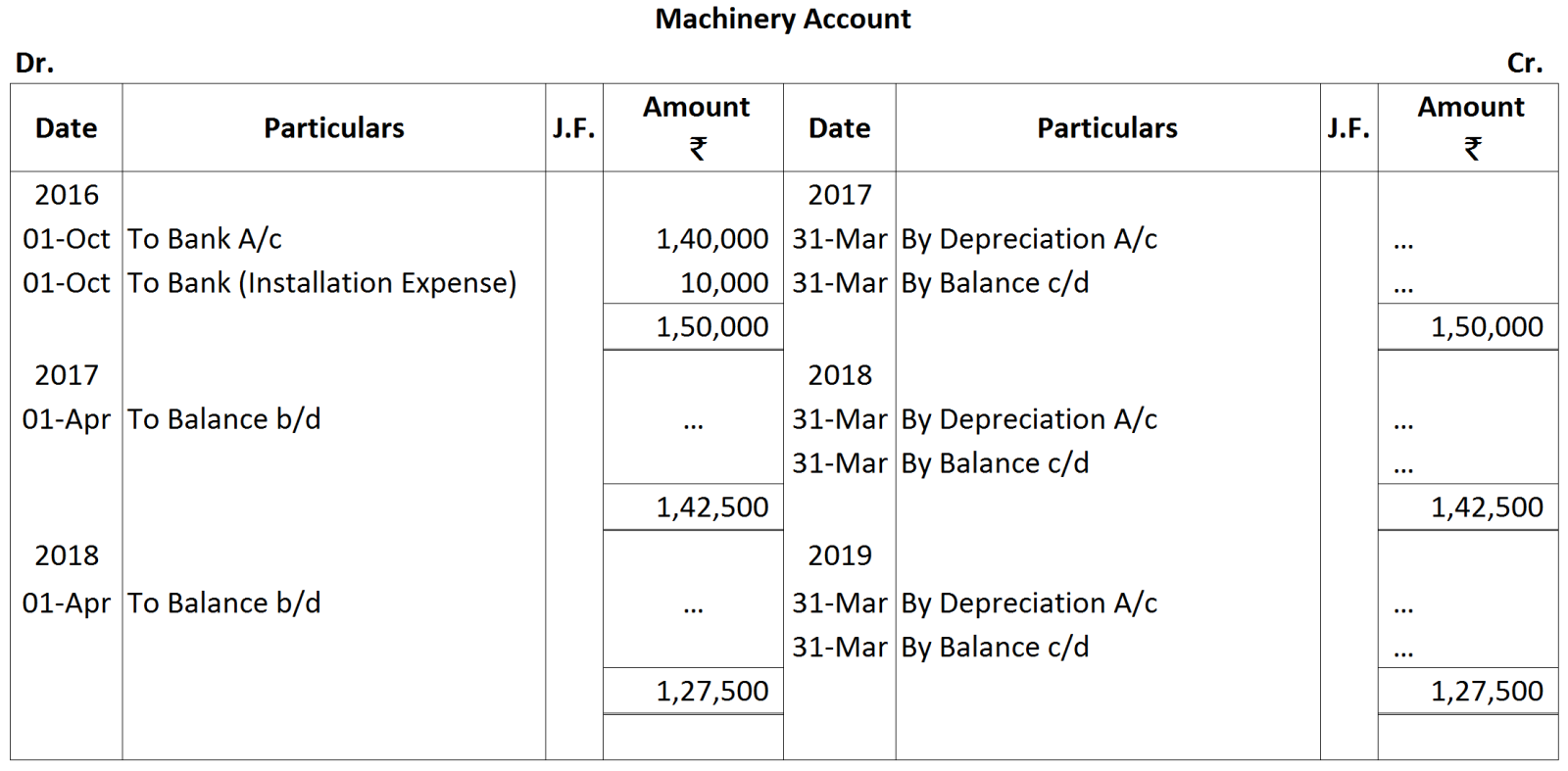
In the following Machinery Account, determine the missing values, if depreciation is to be charged @ 10% p.a. as per Straight Line Method:
Rectify the following errors found in the books of Mr. Suhail by passing entries:
  1. One item of purchase of ₹ 250 has been posted from the purchases book to the ledger as ₹ 350.
  2. Sales return of ₹ 2,000 from a party has not been posted to that account, through the party's account has been credited.
  3. A cheque of ₹ 600 issued to the suppliers account (shown under Sundry Creditors) toward his dues had been wrongly debited to the purchases account.
  4. Credit sale of ₹ 1,000 has been credited to the sales and also to the Sundry Debtor's Account.
Yogesh commenced business on $1st$ April,$ 2011 $with a Capital of ₹ $5,00,000 $and a loan of ₹ $1,00,000 $borrowed from Citi Bank. On $31st $March, $2012$, his assets were ₹ $8,00,000$. Calculate his closing capital and profits earned during the year.
Distinguish between Cash Book and Cash A/c.