Question
State the main points of difference between homogeneous and heterogeneous mixtures.

Answer

Those mixtures in which the substances are completely mixed together and are indistinguishable from one another, are called homogeneous mixtures. They have a uniform composition throughout its mass. All the homogeneous mixtures are called solutions.
Examples: Sugar solution, salt solution, copper sulphate solution, etc. Those mixtures in which the substances remain separate and one substance is spread throughout the other substance as small particles, droplets or bubbles, are called heterogeneous mixtures. Heterogeneous mixture does not have a uniform composition throughout its mass.
Example: Starch solution, soap solution.
Need a full question paper?

Generate a complete, print-ready paper with questions like this in minutes — across 16+ boards, with answer keys.

Start Generating Free

Similar questions

What are the various types of animal tissues? Mention briefly the location and one main function of each class of tissue.
The electronic configuration of an element $Z$ is $2, 8, 8.$
  1. What is the atomic number of the element$?$
  2. State whether element $Z$ is a metal or a non-metal.
  3. What type of ion (if any) will be formed by an atom of element $Z?$ Why$?$
  4. What is special about the outermost electron shell or the atom of this element$?$
  5. Give the name and symbol of element $Z.$
  6. Name the group of elements to which $Z$ belongs.
If $1$ gram of sulphur dioxide contains $x$ molecules, how many molecules will be present in $1$ gram of oxygen$? (S = 32u; O = 16u)$
Name the gases that cause air pollution other than carbon dioxide.
Enumerate the factors that influence movement of air.
What do you understand by the terms “balanced forces” and “unbalanced forces”? Explain with examples.
Compare among Pisces, Amphibia and Reptilia.
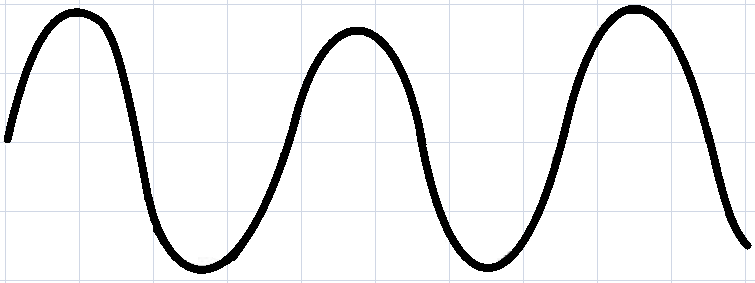
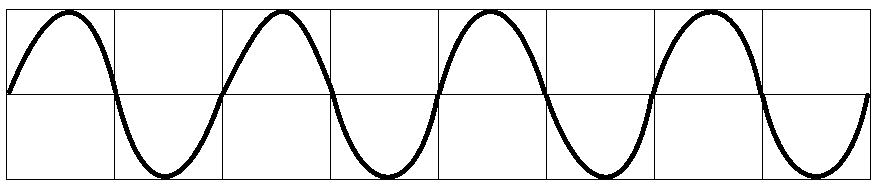
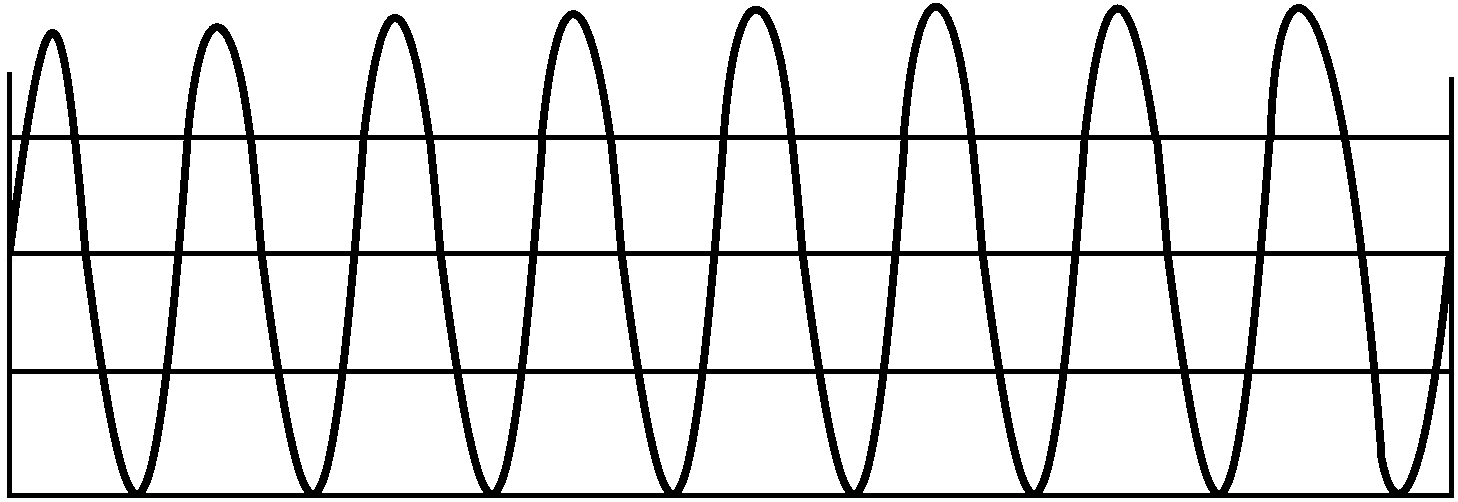
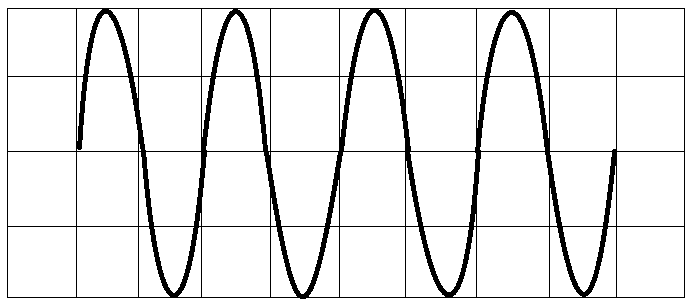
Consider the following sound waves marked $A, B, C$ and $D:$
  1. Which two waves represent sounds of the same loudness but different pitch$?$
  1. Which two waves represent sounds of the same frequency but different loudness?
  1. State whether all these sound waves have been produced by the same vibrating body or different vibrating bodies?
  1. Which vibrating body/bodies could have generated the sound waves shown here?
State the contribution of Biologists, such as Woese and Whittaker in formulating the basis of classification?
Write a short note on prevention of animal diseases.