Question
State the various uses of a periscope.

Answer

$-$A periscope is used to see over, through or around any object.
$-$It can be used to see over a wall, to see around a corner.
$-$Periscopes are also used in warfare to keep an eye on the enemy.

Need a full question paper?

Generate a complete, print-ready paper with questions like this in minutes — across 16+ boards, with answer keys.
Start Generating Free

Similar questions

Describe briefly, how soil is prepared for sowing the seeds.
What is the process of ‘transplantation’ in agriculture? Give examples of two crops which are usually grown by this process.
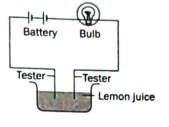
Dharma want to test whether lemon juice is a good conductor of electricity or poor conductor. For this purpose, she made following circuit She observed that bulb does not glow, then she reported to her teacher that lemon juice is an Insulator. Her teacher asked her to replace the bulb with any LED and repeat. 
(i) Will the LED glow?
(ii) What will happen, if she decreases the distance between the two rods of tester?
Image
Write the objectives of 'Project Tiger'.
What is an organ? Give two examples of organs.
What precautions should be taken in sowing the seeds?
Image
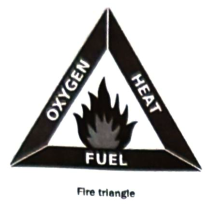
On the basis of fire triangle given above answer the following questions.
(i) Which part of the fire triangle is removed to control fire in the following cases ?
$\quad$(a) Putting a fire blanket on fire.
$\quad$(b) Removing dead leaves and dead grass in forest fire.
(ii) Ramya's mother kept a container with cooking oil on the gas stove to heat. Suddenly she found that cooking oil caught fire. Analyse the given situation and suggest measures that may be taken by Ramya's mother to prevent the spread of fire.
Explain the laws of reflection with the help of diagram.
Arrange the following sounds in the order of increasing frequencies $($keeping the sound of lowest frequency first$):$
$a.$ Baby's voice.
$b.$ Man's voice.
$c.$ Woman's voice.
Fill in the blanks with the terms given in the box below: Nucleus, chromosomes, cell wall, cell membrane, protoplasm, cytoplasm, ribosome, cell organelles. The outermost layer of plant cells is the ________$(a)$. Beneath which is the ________$(b)$. The term ________$(c)$. Refers to the jelly-like substance containing all the ________$(d)$. The ________$(e)$. Contains thread-like structures called ________$(f)$.