MCQ
Statement-1 (A): A cylinder and a right circular cone have the same base and same height. If the volume of the cone is 25 cubic units, then the volume of the cylinder is 75 cubic units.
Statement-2 (R) : A cylinder and a right circular cone have the same base and same height. The volume of the cylinder is three times the volume of the cone.
  • Statement-1 and Statement-2 are True; Statement-2 is a correct explanation for Statement-1.
  • B
    Statement-1 and Statement-2 are True; Statement-2 is not a correct explanation for Statement-1.
  • C
    Statement-1 is True, Statement-2 is False.
  • D
    Statement-1 is False, Statement-2 is True.
Answer

Correct option: A.
Statement-1 and Statement-2 are True; Statement-2 is a correct explanation for Statement-1.
(a)
Let r be the radius of the common base and h be the height of the cylinder as well as that of cone. Then,
$V_1=\text { Volume of the cylinder }=\pi r^2 h, V_2=\text { Volume of the cone }=\frac{1}{3} \pi r^2 h$
Clearly, $V_1=3 V_2$. So, statement- 2 is true.
Replacing $V_2=25$ in $V_1=3 V_2$, we obtain $V_1=75$ cubic units.
So, statement-1 is true. Clearly, statement-2 is a correct explanation for statement-1.

Need a full question paper?

Generate a complete, print-ready paper with questions like this in minutes — across 16+ boards, with answer keys.

Start Generating Free

Similar questions

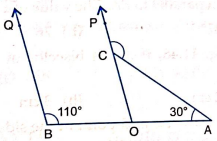
Statement-1 (A): In fig.  if $C P \| B Q$, then $\angle A C P=140^{\circ}$.
Image
Statement-2 (R): If two parallel lines are intersected by a transversal, then the corresponding angles are equal.
Statement-1 (A): The coordinates of a point whose ordinate is -2 and abscissa is 5 are $(-2,5)$.
Statement-2 $( R )$ : The coordinates of a point lying on positive $x$-axis at a distance of 9 units from the origin are $(9,0)$.
Statement-1 (A): A bar graph is a pictorial representation of the numerical data by a number of rectangles of uniform width erected horizontally or vertically with equal spacing between them.
Statement-2 (R): In order to draw the histogram when mid-points of class intervals are given, it is assumed that the frequency corresponding to the variate value a (say) is spread over the interval $a-\frac{h}{2}$ to $a+\frac{h}{2}$, where h is the jump from one value to other.
Statement-1 (A): If the polynomial $f(x)=3 x^4-11 x^2+6 x+k$ when divided by $(x-3)$ leaves remainder 7 , then $k=-155$.
Statement-2 $( R )$ : If a polynomial is divided by $(x-a)$, the remainder is $f(a)$.
Directions: In the following questions, the Assertions (A) and Reason(s) (R) have been put forward. Read both the statements carefully and choose the correct alternative from the following:
Assertion: In 56.49 the whole part is 56.00
Reason: In the number 3456 the place value of 4 is 400
  1. Both Assertion and Reason are correct and Reason is the correct explanation for Assertion
  2. Both Assertion and Reason are correct and Reason is not the correct explanation for Assertion.
  3. Assertion is true but the reason is false.
  4. Both assertion and reason are false.
Statement-1 (A): The graph of the linear equation $4 x+3 y=24$ mects $x$-axis at (-6,0).
Statement-2 (R): Points on $x$-axis are of the form (a, 0), where a is a variable.
Statement-1 (A): The area of a given triangle obtained by doubling its sides are in the ratio 1 : 2.
Statement-2 (R): If a, b, c are lens the of the sides of a triangle with semi-perimeter s, then its area A is given by $A =\sqrt{s(s-a)(s-b)(s-c)}$.
Statement-1 (A): If the polynomial $p(x)=x^3+a x^2-2 x+a+4$ has $(x+a)$ as one of its factors, then $a=-\frac{4}{3}$.
Statement-2 (R): If $f(x)=a x^2+b+c$ is exactly divisible by $2 x-3$ then $4 a+6 b+9 c=0$
Statement-1 (A): Self-evident true statements are called axioms.
Statement-2 (R): Statements whose truth can be logically established are called theorems.
Statement-1 (A): The product of any two irrational numbers is an irrational number.
Statement-2 (R): There are two irrational numbers whose product is not an irrational number.