MCQ
Statement A (Assertion) : All regular polygons such as equilateral triangle, squares etc. are similar.
Statement R (Reason): Two polygons of the same number of sides are said to be similar, if their corresponding angles are equal and lengths of corresponding sides are proportional.
  • Both assertion (A) and reason ( $R$ ) are true and reason $(R)$ is the correct explanation of assertion $(A)$.
  • B
    Both assertion $(A)$ and reason $(R)$ are true and reason $(R)$ is not the correct explanation of assertion (A).
  • C
    Assertion (A) is true but reason $(R)$ is false.
  • D
    Assertion (A) is false but reason (R) is true.
Answer

Correct option: A.
Both assertion (A) and reason ( $R$ ) are true and reason $(R)$ is the correct explanation of assertion $(A)$.
(a) : Two polygons of the same number of sides are similar if their corresponding angles are equal and corresponding sides are proportional.
$\because$ In equilateral triangles or squares, each angle are equal and sides are also proportional. Therefore, all regular polygons are similar.
$\therefore \quad$ Assertion and Reason both are true and Reason is the correct explanation of Assertion.

Need a full question paper?

Generate a complete, print-ready paper with questions like this in minutes — across 16+ boards, with answer keys.

Start Generating Free

Similar questions

Directions: In the following questions, the Assertions $(A)$ and Reason $(s)\ (R)$ have been put forward. Read both the statements carefully and choose the correct alternative from the following:
Assertion: The cofficent of $x$ in the expansion of $(x + 3)^3$ is $27$.
Reason: $(\text{a}+\text{b})^{3}=\text{a}^{3}+\text{b}^{3}+3\text{a}^{2}+3\text{ab}^{2}$
Statement-1 (A): For a moderately asymmetric distribution, Mode - Median = 2 (Median-Mean)
Statement-2 (R): For a symmetric distribution, Mean Median = Mode
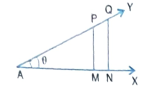
Statement-1 (A): In Fig.9.16, the trigonometric ratios of angle $\theta$ depend only on the value of $\theta$ and are independent of the position of the point $P$ on the terminal side $A Y$ of angle $\theta$.
Image
Statement-2 (R) : In a right triangle $A B C$ right angled at $B$, if $\angle B A C=\theta$, then $\sin \theta=\frac{B C}{A C} < 1$ and $\cos \theta=\frac{A B}{A C} < 1$ because the hypotenuse $A C_{\text {is }}$ the longest side.
Statement $A\ ($Assertion$)$ : If $-1$ is the zero of the polynomial $p(x)=x^2-3 a x+3 a-7,$ then value of $a$ is $3$ .
Statement $R\ ($Reason$)$ : The zeroes of polynomial $a x^2+b x+c, a \neq 0$ are the $x-$ coordinate of the points where the parabola representing $y$
$=a x^2+b x+c$ intersects the $x-$ axis.
Directions : In the following questions, a statement of assertion $(A)$ is followed by a statement of reason $(R).$ Mark the correct choice as:
Assertion : From a solid cylinder, whose height is $12\ cm$ and diameter $10\ cm$ a conical cavity of same height and same diameter is hollowed out. Then, volume of the cone is $\frac{2200}{7}\text{ cm}^3$
Reason : If a conical cavity of same height and same diameter is hollowed out from a cylinder of height $h$ and base radius $r,$ then volume of the cone will be half of the volume of the cylinder.
Directions : In the following questions, a statement of assertion $(A)$ is followed by a statement of reason $(R)$.Mark the correct choice as:
Assertion : A bicycle wheel makes $5000$ revolutions in covering $11\ km$. Then diameter of the wheel is $35\ cm.$
Reason : Area of segment of a circle is $\frac{\theta}{360}\times\pi\text{r}^2-\frac{1}{2}\text{r}^2\sin\theta$
Statement A (Assertion): $\cos ^2 A-\sin ^2 A=1$ is a trigonometric identity.
Statement R (Reason) : An equation involving trigonometric ratios of an angle is called a trigonometric identity, if it is true for all values of the angles involved.
Statement-1 (A): The sum of $n$ terms of the series $\sqrt{5}+\sqrt{20}+\sqrt{45}+\sqrt{80}+\ldots$ is $\frac{\sqrt{5}}{2} n(n+1)$.
Statement-2 (R): The sum of first $n$ natural numbers is $\frac{n(n+1)}{2}$.
Assertion (A) : If the graph of a polynomial intersects the x -axis at exactly two points, then the number of zeroes of that polynomial is 2 .
Reason $(R)$ : The number of zeroes of a polynomial is equal to the number of points where the graph of the polynomial intersects x -axis.
Directions : In the following questions, the Assertions $(A)$ and Reason $(s) \ (R)$ have been put forward. Read both the statements carefully and choose the correct alternative from the following:
Assertion : $\text{HCF}$ of consugative even no. is always $3.$
Reason : $\text{HCF}$ of $22$ and $24$ is $3.$