MCQ
Statement “Ozone in atmosphere is decreased by chloro-fluoro-carbon $(C{l_2}{F_2}C)$”
  • Is true
  • B
    Is false
  • C
    Only in presence of $C{O_2}$
  • D
    Only in absence of $C{O_2}$

Answer

Correct option: A.
Is true
a
It’s obvious.

Need a full question paper?

Generate a complete, print-ready paper with questions like this in minutes — across 16+ boards, with answer keys.

Start Generating Free

Similar questions

$0.05 \mathrm{~cm}$ thick coating of silver is deposited on a plate of $0.05 \mathrm{~m}^2$ area. The number of silver atoms deposited on plate are__________ $\times 10^{23}$. (At mass Ag $\left.=108, \mathrm{~d}=7.9 \mathrm{~g} \mathrm{~cm}^{-3}\right)$
A solution of a non electrolyte substance containing $1.05\,\, g$ per $100\,\, mL$, was found to be isotonic with $3\%$ glucose solution. The molecular mass of the substance is
The reaction of an ester $RCOOR'$ with an alcohol $R''OH$ in the presence of an acid gives
Which of the following reactions of glucose can be explained only by its cyclic structure?
Which of the following is not a correct statement for primary aliphatic amines?
If impurities can be oxidized more easily than the metal itself, which method is used?
Reaction of phenol with chloroform/sodium hydroxide to give $o$-hydroxy benzaldehyde involves the formation of
Melting point of  $FeCl_3$  and  $FeCl_2$  is
$2 NO +2 H _{2} \rightarrow N _{2}+2 H _{2} O$

The above reaction has been studied at $800^{\circ} C$. The related data are given in the table below.

Reaction serial number Initial pressure of $H _{2}$ / $kPa$ Initial Pressure of $NO /$ $kPa$ Initial rate $\left(\frac{- dp }{ dt }\right) /( kPa / s )$
$1$ $65.6$ $40.0$ $0.135$
$2$ $65.6$ $20.1$ $0.033$
$3$ $38.6$ $65.6$ $0.214$
$4$ $19.2$ $65.6$ $0.106$

 The order of the reaction with respect to $NO$ is $...........$ 

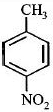
In a set of reactions $p-$ nitrotoluene yielded a product $E$. The product $E$ would be

(Figure) $\xrightarrow[FeB{{r}_{3}}]{B{{r}_{2}}}B\xrightarrow{Sn\,/\,HCl}C$ $\xrightarrow[HCl]{NaN{{O}_{2}}}D\xrightarrow[HBr]{CuBr}E$