MCQ
Stopping potential for photoelectrons
  • A
    Does not depend on the frequency of the incident light
  • B
    Does not depend upon the nature of the cathode material
  • Depends on both the frequency of the incident light and nature of the cathode material
  • D
    Depends upon the intensity of the incident light
Answer

Correct option: C.
Depends on both the frequency of the incident light and nature of the cathode material
c
(c)

Need a full question paper?

Generate a complete, print-ready paper with questions like this in minutes — across 16+ boards, with answer keys.

Start Generating Free

Similar questions

A lens is placed between a source of light and a wall. It forms images of area ${A_1}$ and ${A_2}$ on the wall for its two different positions. The area of the source of light is
The average distance between the earth and moon is $38.6 \times {10^4} km.$ The minimum separation between the two points on the surface of the moon that can be resolved by a telescope whose objective lens has a diameter of $5\ m$ with $\lambda = 6000\;{Å}$ is......$m$
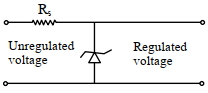
A zener diode of power rating $2\, {W}$ is to be used as a voltage regulator. If the zener diode has a breakdown of $10 \,{V}$ and it has to regulate voltage fluctuated between $6\, {V}$ and $14\, {V}$, the value of ${R}_{{s}}$ for safe operation should be $....\Omega$
The average number of prompt neutrons produced per fission of $U^{235}$ is
A disk of radius $a / 4$ having a uniformly distributed charge $6 C$ is placed in the $x-y$ plane with its centre at $(-a / 2,0,0)$. A rod of length $a$ carrying a uniformly distributed charge $8 C$ is placed on the $x$-axis from $x=a / 4$ to $x=5 a / 4$. Two point charges $-7 C$ and $3 C$ are placed at $(a / 4,-$ $a / 4,0)$ and $(-3 a / 4,3 a / 4,0)$, respectively. Consider a cubical surface formed by six surfaces $x=\pm a / 2, y=\pm a / 2, z=\pm a / 2$. The electric flux through this cubical surface is
A sine wave is travelling in a medium. The minimum distance between the two particles, always having same speed, is:
Hydrogen atom emits blue light when it changes from n = 4 energy level to the n = 2 level. Which colour of light would the atom emit when it changes from the n = 5 level to the n = 2 level
When the energy of the incident radiation is increased by $20\%$, the kinetic energy of the photoelectrons emitted from a metal surface increased from $0.5\,\, eV$ to $0.8\, eV.$ The work function of the metal is ............. $eV$
Which of the following statement is true
If in a photoelectric experiment, the wavelength of incident radiation is reduced from $6000 \,Å$ to $4000 \,Å$ then