MCQ
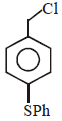
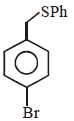
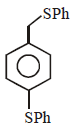
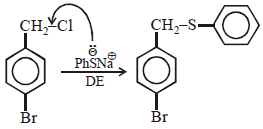
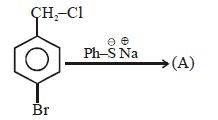
Structure of product $(A)$ is
  • A


  • C

  • D
    None

Answer

Correct option: B.

b

Need a full question paper?

Generate a complete, print-ready paper with questions like this in minutes — across 16+ boards, with answer keys.

Start Generating Free

Similar questions

Match List I with List II 
LIST-I (Cell)LIST-II (Use/Property/Reaction)
A.Leclanche cellI.Converts energy of combustion into electrical energy
B.Ni-Cd cellII.Does not involve any ion in solution and is used in hearing aids
C.Fuel cellIII.Rechargeable
D.Mercury cellIV.Reaction at anode  $Zn \rightarrow Zn ^{2+}+2 e ^{-}$
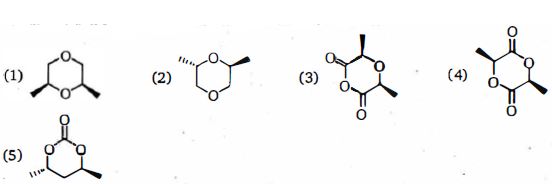
Identify which of the structures below are meso structures ?
In the compound $C{H_2} = CH - C{H_2} - C{H_2} - C \equiv CH,$ the ${C_2} - {C_3}$ bond is of the type
For the reaction at $25\,^oC,$ ${N_2}{O_4}_{(g)\,}\, \rightleftharpoons \,2N{O_2}_{(g)}$  if $\Delta G_f^o$ for $N_2O_4$ and $NO_2$ are $23. 49$ and $12.39\,KCal$ respectively then $K_p$ for the reaction is
The $IUPAC$ name for the formula

$\begin{array}{*{20}{c}}
  {\,\,\,\,H} \\ 
  {\,\,\,\,|} \\ 
  {C{H_3} - C = C - COOH} \\ 
  {|\,\,\,\,\,\,\,\,\,\,\,\,\,\,\,\,\,} \\ 
  {C{H_3}\,\,\,\,\,\,\,\,\,\,\,\,\,} 
\end{array}$

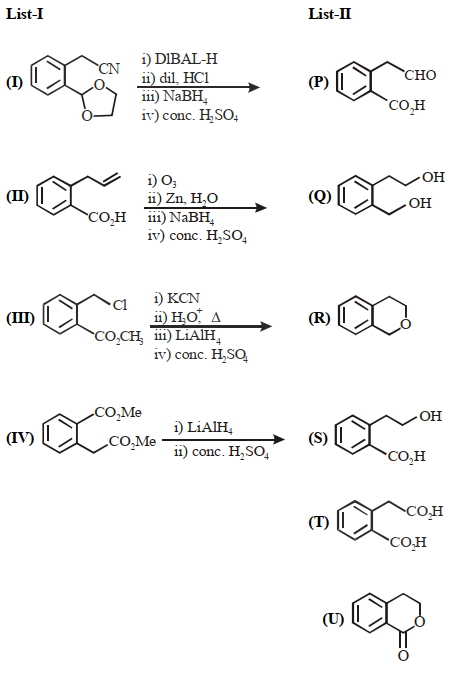
Answer the following by appropriately matching the lists based on the information given in the paragraph $List-I$ includess starting materials and reagents of selected chemical reactions. $List-II$ gives structures of compounds that may be formed as intermediate products and/or final products from the reactions of $List-I$

($1$) Which of the following options has correct combination considering $List-I$ and $List-II$?

$(1) (III), (S), (R)$ $(2) (IV), (Q), (R)$ $(3) (III), (T), (U)$ $(4) (IV), (Q), (U)$

($2$) Which of the following options has correct combination considering $List-I$ and $List-II$?

$(1) (I), (Q), (T), (U)$ $(2) (II), (P), (S), (U)$ $(3) (II), (P), (S), (T)$ $(4) (I), (S), (Q), (R)$

Give the answer quetion ($1$) and ($2$)
$C{{H}_{3}}-C\equiv C-C{{H}_{3}}\xrightarrow{Cold\,\,KMn{{O}_{4}}}(A)$

Product $(A)$ is

On the basis of the information available from the reaction $\frac{4}{3}Al + {O_2} \to \frac{2}{3}A{l_2}{O_3},\Delta G = - 827\,\,kJ\,mo{l^{ - 1}}$ of ${O_2}$, the minimum emf required to carry out an electrolysis of $A{l_2}{O_3}$ is $(F = 96500\,C \,mo{l^{ - 1}})$ ................ $\mathrm{V}$
A solution containing one mole per litre of each $Cu{(N{O_3})_2},\,\,AgN{O_3},\,\,H{g_2}{(N{O_3})_2}$ and $Mg{(N{O_3})_2},$ is being electrolysed by using inert electrodes. The values of standard electrode potentials in volts (reduction potentials) are $Ag/A{g^ + } = + 0.80,\,\,2Hg/Hg_2^{2 + } = + 0.79,\,\,Cu/C{u^{2 + }} = + 0.34,$$Mg/M{g^{2 + }} = - 2.37$with increasing voltage, the sequence of deposition of metals on the cathode will be
Normal aluminium electrode coupled with normal hydrogen electrode gives an $emf$ of $1.66\,volts$. So the standard electrode potential of aluminium is ............ $\mathrm{V}$