Question
Study the following diagram, and answer these questions:
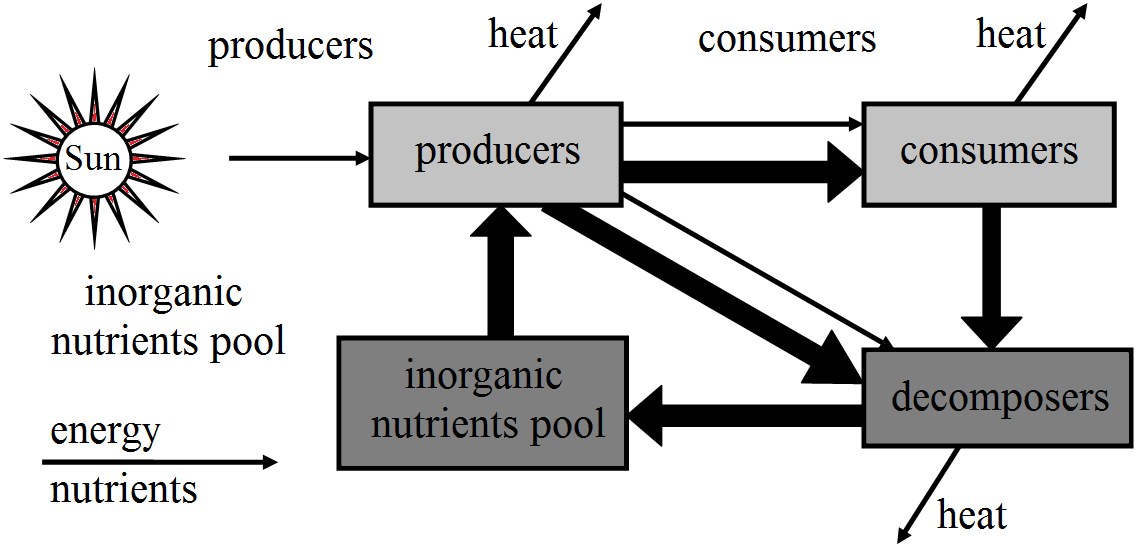
  1. Why does a wide arrow point from both producers and consumers to decomposers?
  2. Why does a wide arrow point only from inorganic nutrient pool to producers?
  3. Why don't the wavy arrows point from decomposers to producers?
Answer

  1. Both producers and consumers die and decompose.
  2. Only producers use inorganic nutrients to make organic molecules.
  3. Energy does not cycle.

Need a full question paper?

Generate a complete, print-ready paper with questions like this in minutes — across 16+ boards, with answer keys.

Start Generating Free

Similar questions

Give the information about that diseases. What is STIs ?
What is bagging technique? How is it useful in a plant breeding programme?
Explain the process of pollination in Vallisneria. How is it different in water-lily, which is also an aquatic plant?
  1. Can a plant flowering in Mumbai be pollinated by pollen grains of the same species growing in New Delhi? Provide explanation to your answer.
  2. Draw the diagram of a pistil where pollination has successfully occurred. Label the parts involved in reaching the male gametes to its desired destination.
Draw the diagram of a microsporangium and label its wall layers. Write briefly on the role of the endothecium.
Transgenic animals are the animals in which a foreign gene is expressed. Such animals can be used to study the fundamental biological process, phenomenon as well as for producing products useful for mankind. Give one example for each type.
Fertilisation is essential for production of seed, but in some angiosperms, seeds develop without fertilisation.
Explain the two ways by which seeds develop without fertilisation.
  1. What is a vaccine? Give an example of a vaccine produced by recombinant DNA technology?
  2. Name the diseases against which DTP vaccination develops immunity.
Answer the following questions:
Still it is observed that it does not form a continuous layer around the pollen grain. Give reason.
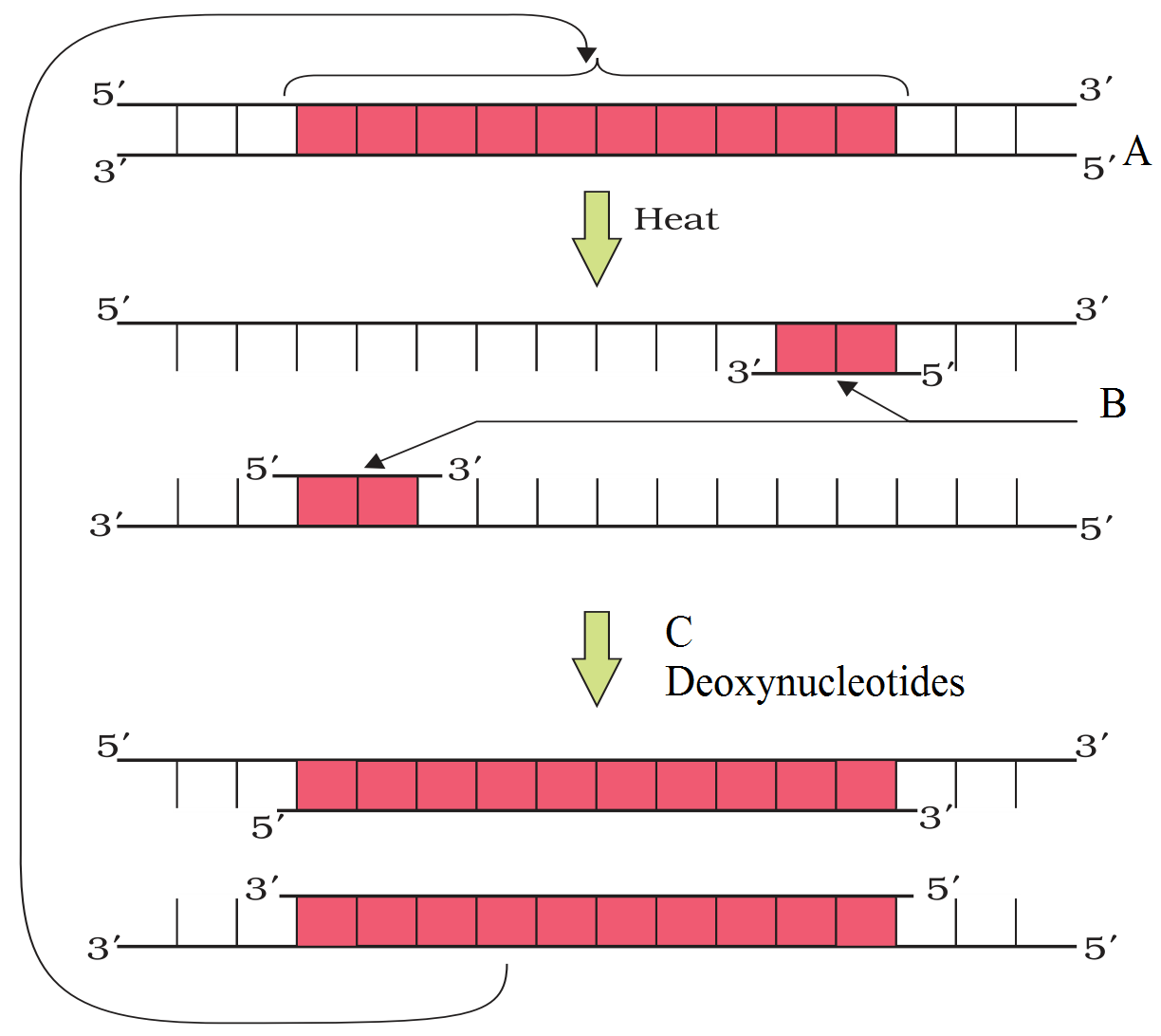
A schematic representation of Polymerase Chain Reaction (PCR) up to the extension stage is given below. Give answers of the following questions.

  1. Name the process A.
  2. Identify B.
  3. Identify C and mention its importance in PCR.