Question
Suppose you are given a chance to repeat the alpha-particle scattering experiment using a thin sheet of solid hydrogen in place of the gold foil. (Hydrogen is a solid at temperatures below 14 K.) What results do you expect?

Answer

In the alpha-particle scattering experiment, if a thin sheet of solid hydrogen is used in place of a gold foil, then the scattering angle would not be large enough. This is because the mass of hvdroqen (1.67 x 10⁻²⁷ kg) is less than the mass of incident a-parttcles (6.64 x 10⁻²⁷ kg). Thus, the mass of the scattering particle is more than the target nucleus (hydrogen). As a result, the Cl particles would not bounce back if solid hydrogen is used in the a-particle scattering experiment.

Need a full question paper?

Generate a complete, print-ready paper with questions like this in minutes — across 16+ boards, with answer keys.
Start Generating Free

Similar questions

A negligibly small current is passed through a wire of length 15m and uniform cross-section $6.0\times10^{-7}\ \text{m}^2,$ and its resistance is measured to be $5.0\ \Omega.$ What is the resistivity of the material at the temperature of the experiment?
Can we conclude from the interference phenomenon whether light is a transverse wave or a longitudinal wave?
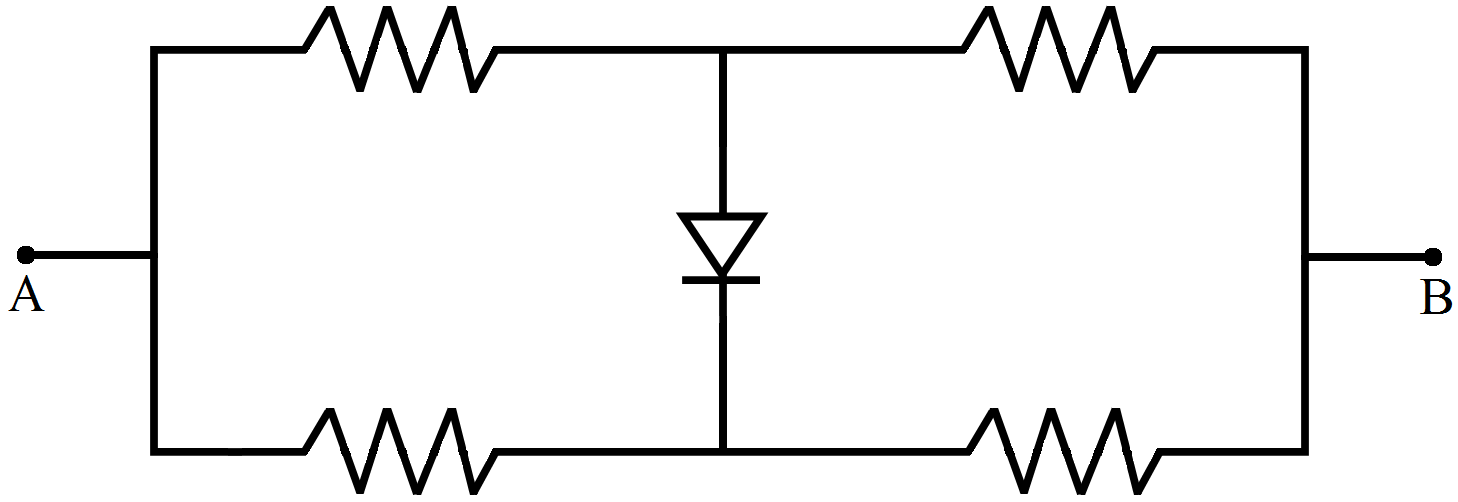
Each of the resistances shown in figure. has a value of $20\Omega.$ Find the equivalent resistance between A and B. Does it depend on whether the point A or B is at higher potential?

Why does microwave oven heats up a food item containing water molecules most efficiently?
In an electrolyte, the positive ions move from left to right and the negative ions from right to left. Is there a net current? If yes, in what direction?
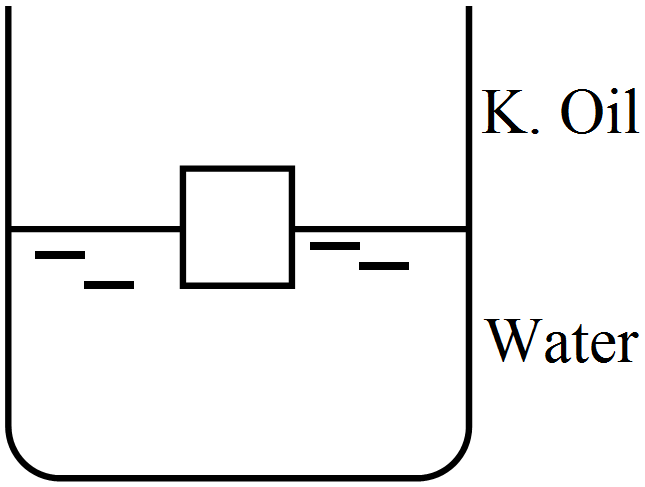
A cube of ice floats partly in water and partly in K. oil  Find the ratio of the volume of ice immersed in water to that in K.oil. Specific gravity of K. oil is 0.8 and that of ice is 0.9.

The force between two point charges kept at a distance r apart in air is F. If the same charges are kept in water at the same distance, how does the force between them change?
If the radius of the nucleus of $Al ^{27}$ is 3.6 Fermi , then what will be the radius of the $Fe ^{125}$ nucleus?
Explain the change in the Energy gap of an intrinsic semiconductor, with temperature
Suppose, in certain conditions only those transitions are allowed to hydrogen atoms in which the principal quantum number n changes by 2. (a) Find the smallest wavelength emitted by hydrogen. (b) List the wavelength emitted by hydrogen in the visible range (380nm to 780nm).